
Hitting the Mark with Intramuscular Injection Sites
The Right Spot Matters: A Guide to Intramuscular Injection Sites
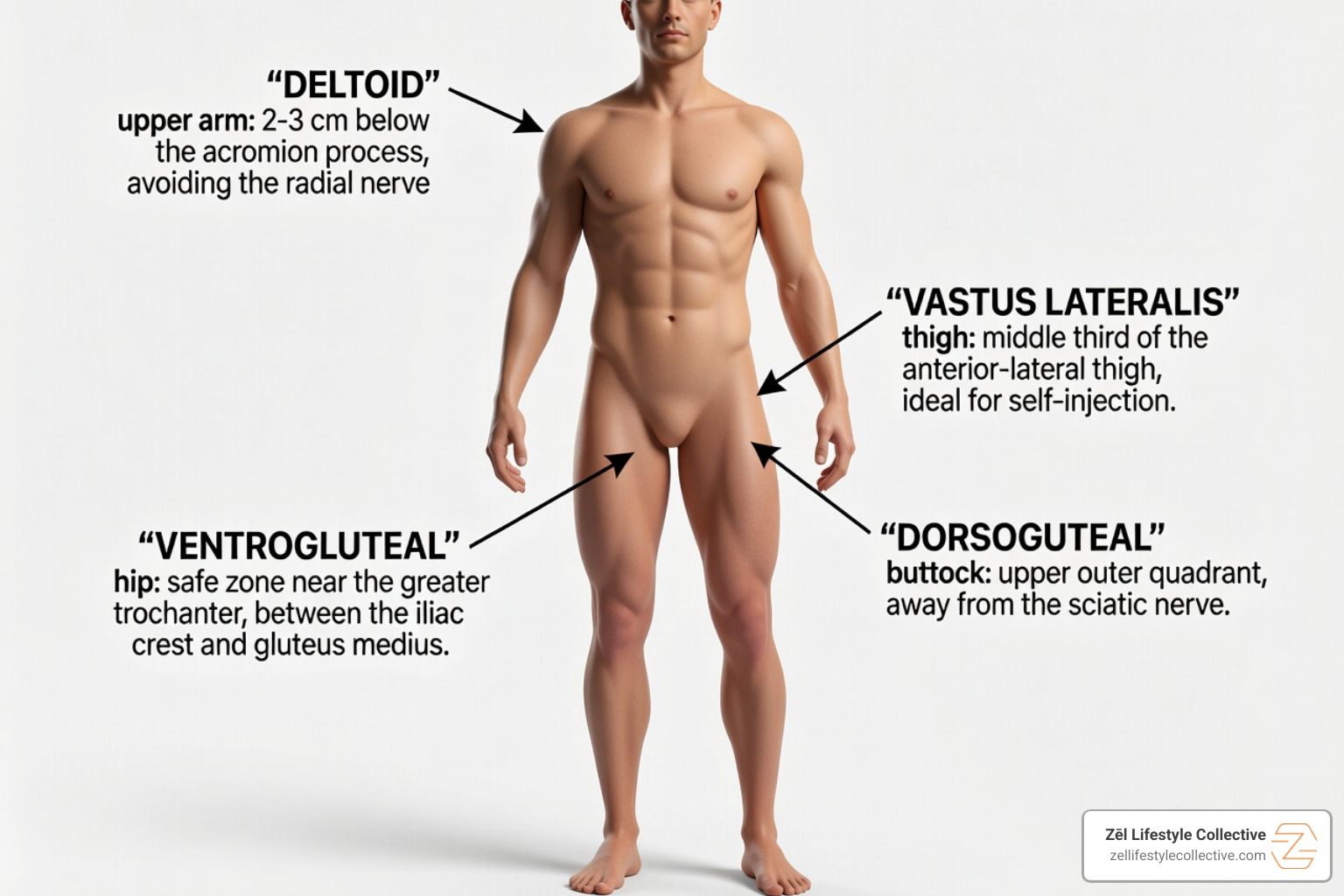
Intramuscular injection sites are specific muscle locations used to deliver medication deep into muscle tissue for fast absorption into the bloodstream. The four primary sites are:
Ventrogluteal (hip) - safest for adults and children over 7 months
Vastus lateralis (outer thigh) - preferred for infants and children under 3
Deltoid (upper arm) - standard for vaccines in adults and children over 3
Dorsogluteal (buttocks) - used with caution; not recommended for children under 3
Choosing the wrong site — or using poor technique — can lead to nerve damage, missed muscle tissue, or serious complications. Research shows that true intramuscular injections are only achieved in 32–52% of cases overall, dropping to just 8% in females. That gap is largely due to improper site selection and technique.
Whether you're managing hormone therapy, receiving vaccines, or administering medications at home, knowing exactly where and how to inject makes a real difference in both safety and effectiveness.
I'm Dr. Serif Krkic, a functional medicine and hormone optimization specialist with hands-on experience guiding patients through safe injection protocols — including intramuscular injection sites used in hormone replacement and peptide therapy. My work at Zēl Lifestyle Collective means I see how proper technique transforms patient outcomes, and I'll walk you through everything you need to know.
Understanding the Intramuscular (IM) Injection
When we talk about an intramuscular (IM) injection, we are referring to a technique used to deliver medication deep into the "belly" of a muscle. But why the muscle? Why not just swallow a pill or use a shallow skin injection?
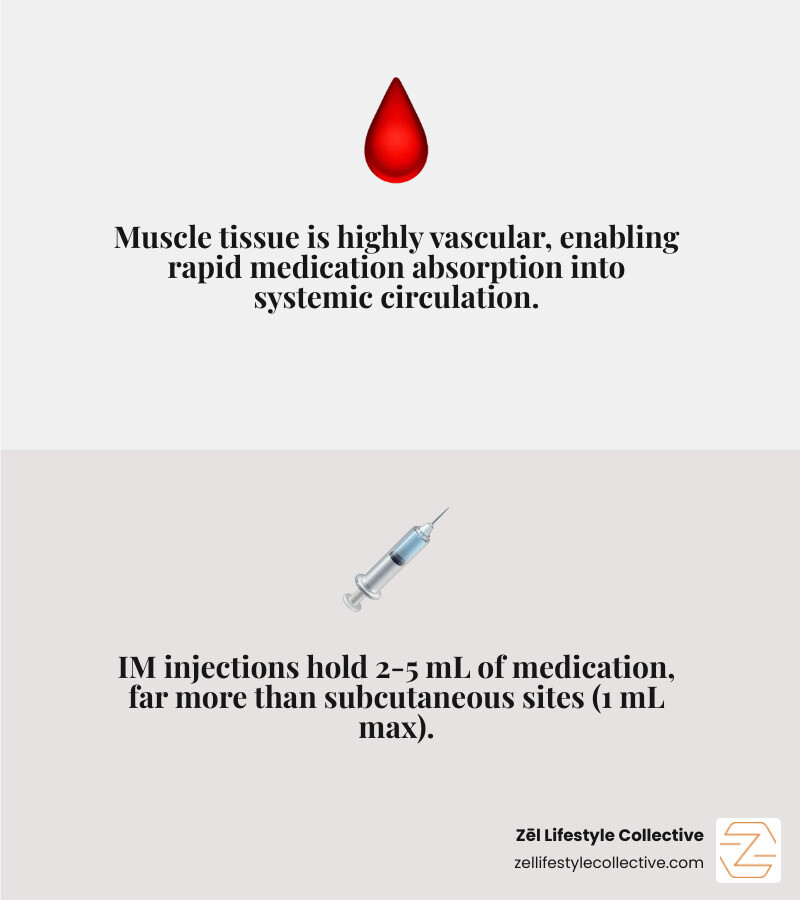
Muscle tissue is incredibly vascular, meaning it is packed with blood vessels. This rich blood supply allows the medication to be absorbed into your systemic circulation much faster than a subcutaneous injection (which goes into the fatty layer just under the skin). In fact, muscles can often hold a larger volume of medication—typically between 2 to 5 milliliters—compared to the limited capacity of fatty tissue.
Another major advantage of using intramuscular injections sites is bypassing "first-pass metabolism." When you take medication orally, it must pass through your digestive system and liver, where much of the active ingredient can be destroyed before it ever reaches your bloodstream. IM injections skip this hurdle entirely. This is why the IM route is the gold standard for many vaccines, hormonal agents like testosterone, and certain antibiotics. At Zēl Lifestyle Collective, we often discuss these delivery methods in the context of IV Therapy and other parenteral treatments to ensure our patients in Tallmadge, Ohio, get the most effective results. For a deeper dive into the clinical mechanics, the Intramuscular Injection resource from NCBI provides excellent technical background.
Primary Intramuscular Injections Sites and Anatomical Landmarks
Locating the correct spot isn't just about "aiming for the middle." It requires identifying specific bony landmarks to ensure we avoid major nerves and blood vessels. If a needle is inserted too high, too low, or too far to the side, we risk hitting the sciatic nerve or causing a shoulder injury.
Proper site selection is a core competency for any healthcare provider and a vital skill for patients who self-administer medications. According to Administering Intramuscular Injections, using anatomical landmarks is the only way to guarantee the needle reaches the intended muscle mass safely.
The Ventrogluteal: The Safest of Intramuscular Injections Sites
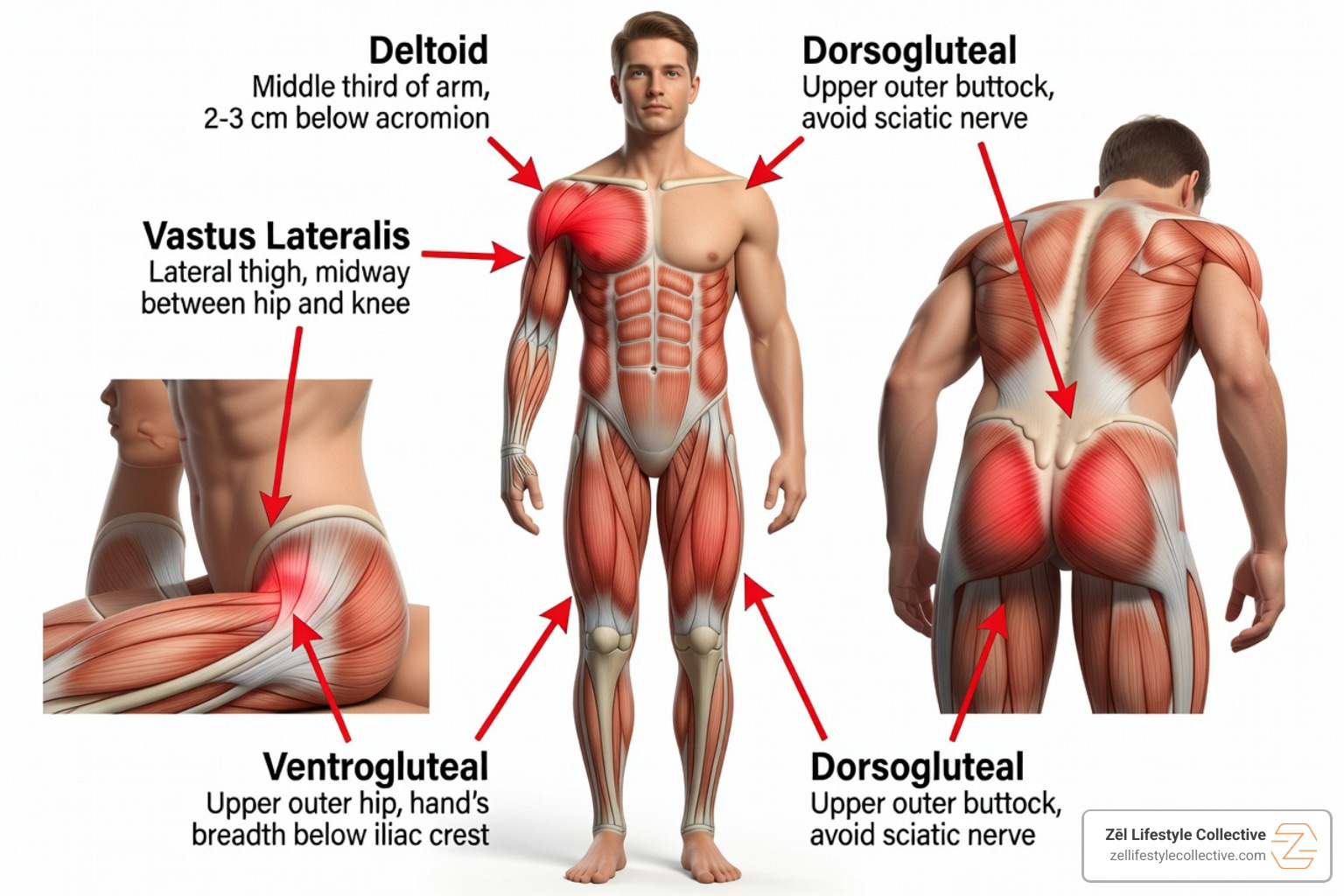
If we had to pick a "gold medalist" of injection sites, it would be the ventrogluteal site (the hip). It is widely considered the safest site for both adults and children over seven months old.
Why is it so safe? The gluteus medius and minimus muscles here are thick, and the layer of overlying fat is usually thin. Most importantly, there are no major pattern of nerves or blood vessels in this specific area. To find it, we use the "V" method:
Place the heel of your hand on the greater trochanter (the bony part of the hip that sticks out).
Point your index finger toward the anterior superior iliac spine (the front "hip bone").
Spread your middle finger back toward the iliac crest, forming a "V."
The injection goes right in the middle of that "V."
Vastus Lateralis: Preferred for Pediatric Intramuscular Injections Sites
For our youngest patients—specifically infants and children under the age of three—the vastus lateralis is the preferred choice. This is the large muscle on the outer side of the thigh. Because this muscle is well-developed even in newborns, it provides a safe, thick target.
To landmark this site, imagine the thigh divided into three equal horizontal sections. The injection should be placed in the middle third, slightly toward the outer side of the leg. This is also the primary site used for epinephrine autoinjectors during allergic emergencies because it is easily accessible for self-administration.
The Deltoid Muscle of the Arm
We all know the deltoid; it’s where most of us receive our annual flu shot. It’s a convenient, easily accessible upside-down triangle muscle on the upper arm. However, it has its limits. Because the deltoid is relatively small, it is generally restricted to small volumes of medication—usually 1ml, though up to 2ml can be administered in well-developed adults.
To find the spot, feel for the acromion process (the bony point at the very top of your shoulder). The safe injection zone is about two to three finger-widths (1 to 2 inches) below that bone, in the center of the muscle triangle. We must be careful here; injecting too low or too far to the side can damage the radial or axillary nerves.
The Dorsogluteal Site: Risks and Precautions
The dorsogluteal site (the traditional "buttocks" shot) was once the standard, but it has fallen out of favor in modern medicine. The primary reason is its proximity to the sciatic nerve. If the needle strikes this nerve, it can cause permanent pain or even paralysis.
Additionally, this site often has a thicker layer of adipose (fat) tissue. Studies have shown that many "intramuscular" injections in the buttocks actually end up in the fat layer, where the medication isn't absorbed as intended. If this site must be used, it requires strict landmarking: dividing the buttock into four quadrants and injecting only into the upper outer quadrant. Because of these risks, we generally recommend the ventrogluteal site instead.
Choosing the Right Needle and Site for Every Patient
One size does not fit all when it comes to needles. Selecting the right gauge (thickness) and length is a critical part of our Functional Medicine approach to personalized care. If a needle is too short, the medication stays in the fat; if it’s too long, it could hit bone.
Generally, we use a 22 to 25 gauge needle for most aqueous (water-based) medications. If the solution is viscous or oil-based—like many hormone therapies—a slightly thicker 21 to 23 gauge needle is better.
Patient Group Recommended Site Needle Length Infants (<18 months) Vastus Lateralis 5/8" to 1" Children (3-18 years) Deltoid or Vastus Lateralis 5/8" to 1.25" Adults (<130 lbs) Deltoid 5/8" to 1" Adults (130-260 lbs) Deltoid or Ventrogluteal 1" to 1.5" Adults (>260 lbs) Ventrogluteal 1.5"
Adipose tissue (body fat) is the biggest variable. For patients with a higher BMI, a longer needle is essential to ensure we actually reach the muscle.
Step-by-Step Guide to Administering an IM Injection
Administering an injection can feel intimidating, but following a standardized process reduces anxiety and ensures safety. Always start with thorough hand hygiene—the CDC recommends scrubbing for at least 20 seconds.
Prepare the Medication: Ensure you have the right drug and dosage. Clean the vial stopper with alcohol.
Locate and Clean the Site: Use the anatomical landmarks we discussed. Clean the skin with 70% isopropyl alcohol for 30 seconds and let it air dry completely to prevent stinging.
The "Dart" Movement: Hold the syringe like a dart. Spread the skin taut with your non-dominant hand.
Insert at 90 Degrees: Insert the needle quickly and firmly at a 90-degree angle to the skin.
Inject Slowly: Push the plunger at a steady rate of about 10 seconds per milliliter. This allows the muscle fibers to expand comfortably.
Withdraw and Apply Pressure: Pull the needle out at the same 90-degree angle. Apply gentle pressure with a sterile gauze pad. Do not massage the area unless specifically instructed, as this can push medication back into the subcutaneous tissue.
For more detailed patient instructions, Giving an IM injection from MedlinePlus is an excellent resource.
Safety Protocols and Sharps Disposal
There is an ongoing debate about "aspiration"—pulling back on the plunger to check for blood before injecting. Current CDC and WHO guidelines state that aspiration is generally unnecessary for most sites (like the deltoid and vastus lateralis) because there are no large blood vessels there. However, some practitioners still prefer to aspirate for 5-10 seconds when using the dorsogluteal site.
Safety doesn't end when the needle comes out. Never recap a used needle. This is the most common way needlestick injuries occur. Immediately place the used syringe into a puncture-proof sharps container. If you are at home in Tallmadge and don't have a professional container, a heavy-duty plastic laundry detergent bottle with a screw-on lid can serve as a temporary alternative.
We also emphasize site rotation. If you are receiving regular injections—perhaps for hormone balance or as part of a Dry Needling session—always move to a different spot each time to prevent the formation of scar tissue or "knots" in the muscle.
Managing Complications and Minimizing Pain
While IM injections are generally safe, complications can occur. One such issue is SIRVA (Shoulder Injury Related to Vaccine Administration), which happens when a shot is given too high in the shoulder, causing inflammation of the bursa or tendons. Other risks include localized abscesses or nerve injury if landmarking is ignored.
To minimize pain, we suggest these "pro tips":
The Cough Trick: Coughing right as the needle enters can distract the brain, as cough impulses travel faster than pain signals.
Temperature Matters: If the medication is refrigerated, let it reach room temperature before injecting.
Numbing: For those with needle phobia, applying ice or a topical numbing cream to the site for 10 minutes beforehand can significantly dull the sensation.
Relax the Muscle: A tensed muscle is much harder to inject into than a relaxed one. Take a deep breath and let the limb hang heavy.
Frequently Asked Questions about Intramuscular Injections Sites
Should I pull back on the plunger (aspirate) before injecting?
For most modern vaccinations and injections in the deltoid or thigh, the answer is no. Major health organizations like the CDC have moved away from this practice because it increases pain and procedure time without a proven safety benefit. The only historical exception is the dorsogluteal site, where some clinicians still check for blood return to ensure they haven't entered a vessel.
What is the Z-track method and why is it used?
The Z-track method is a clever trick to "seal" the medication inside the muscle. You pull the skin and underlying tissue to one side before inserting the needle. After the injection and needle withdrawal, you release the skin. This creates a zigzag path that prevents the medication from leaking back out into the sensitive subcutaneous tissue, which is especially important for irritating or dark-colored medications like iron.
When should I seek medical help after an IM injection?
While a little soreness or redness is normal, you should contact a healthcare provider if you experience:
Signs of an allergic reaction (hives, swelling of the face, or difficulty breathing).
A persistent, painful lump at the site.
Fever or chills.
Drainage or pus at the injection site.
Severe pain, tingling, or numbness that radiates down the limb.
Conclusion
Mastering intramuscular injections sites is about more than just medical "mechanics"—it’s about ensuring that the therapies you rely on are delivered safely and effectively. Whether you’re visiting us for hormone optimization or managing a chronic condition at home, the right technique makes all the difference.
At Zēl Lifestyle Collective in Tallmadge, Ohio, we believe in an integrative, holistic approach to health. We don't just treat symptoms; we look for the root cause. From our weight loss programs to chiropractic care and functional medicine, our goal is to empower you with the knowledge to take charge of your wellness journey. If you have questions about your injection routine or want to explore how our personalized treatments can help you thrive, we invite you to learn More info about our services. Let’s work together to hit the mark on your health goals.