
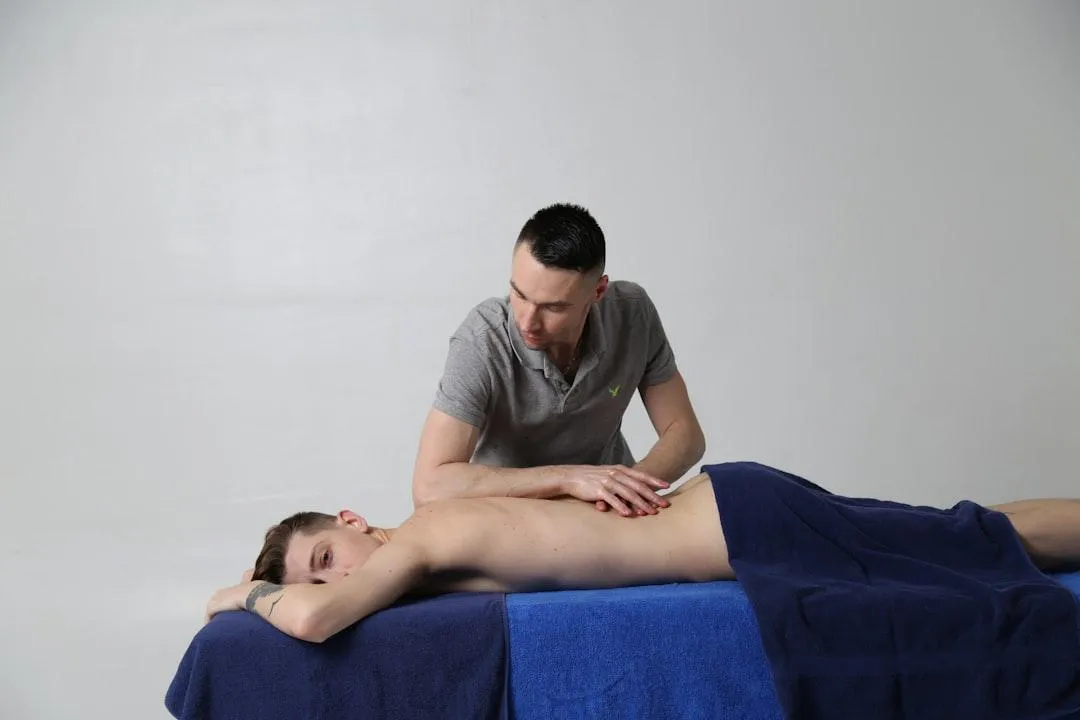
Massage for Back Pain Relief: What Works for Tight, Achy Muscles?
Why So Many People Turn to Massage for Back Pain ReliefMassage for back pain is one of the most common reasons people book a therapy session — and for good reason.
Here's a quick summary of what the evidence says:
Question Quick Answer Does massage help back pain? Yes, especially for short-term pain relief in sub-acute and chronic cases Which type works best? Deep tissue, Swedish, Thai, and trigger point therapy all show benefits Is it safe? Generally yes — no serious adverse events reported in clinical trials How long do benefits last? Strongest in the short term; some functional gains persist up to 6–12 months When should you skip massage? Fractures, active fever, organ-related pain, cauda equina syndrome, or DVT
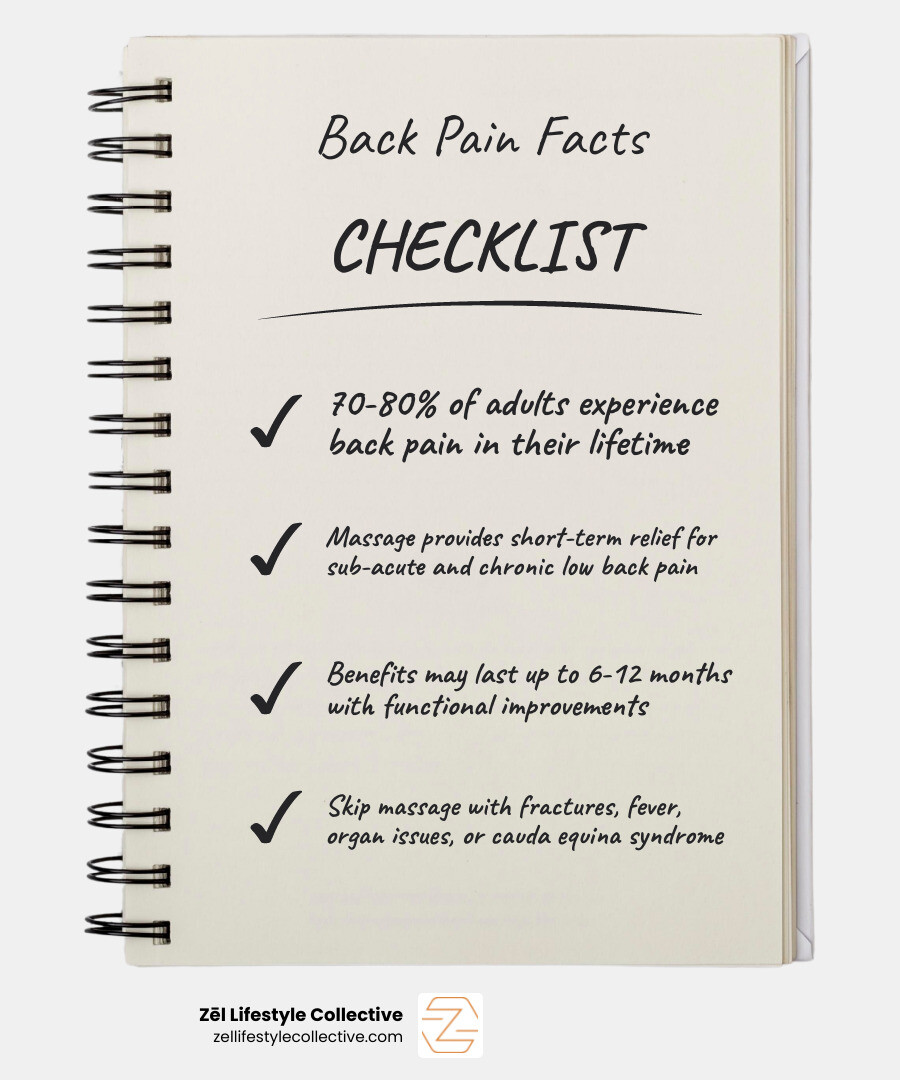
Back pain is incredibly common. Research shows that between 70% and 80% of adults will experience it at some point in their lives. It's also the leading cause of years lived with disability worldwide.
For many people — especially those juggling demanding careers and long hours at a desk — that pain becomes a constant background noise. It affects focus, sleep, and quality of life.
The good news? Massage therapy has solid evidence behind it for reducing pain and improving function, particularly for sub-acute and chronic low back pain.
I'm Dr. Serif Krkic, a chiropractor and functional medicine doctor with a background in exercise physiology and recovery science, and I've helped many patients navigate massage for back pain as part of a broader, root-cause approach to musculoskeletal health. In this guide, I'll walk you through what the research actually shows, which techniques work best, and when it's time to look beyond massage.
The Science Behind Massage for Back Pain
When your back starts acting up, it’s rarely just "one thing." It might be a combination of muscle guarding, inflammation, and poor circulation. This is where massage for back pain steps in. By manipulating the soft tissues, massage helps increase blood flow, break down adhesions (those pesky "knots"), and calm the nervous system.
The scientific research on massage effectiveness generally categorizes back pain into three stages:
Acute: Lasting less than 4 weeks.
Sub-acute: Lasting 4 to 12 weeks.
Chronic: Lasting 12 weeks or longer.
A major systematic review of 25 trials involving over 3,000 participants found that for sub-acute and chronic low back pain, massage was significantly better than "inactive controls" (like doing nothing or being on a waitlist) for improving both pain and function in the short term. Specifically, the pain relief was measured at a Standardized Mean Difference (SMD) of -0.75, which is a substantial margin in clinical terms.
Even when compared to "active controls"—which include things like exercise, physical therapy, or acupuncture—massage held its own. It was found to be more effective for pain relief in both the short-term and long-term follow-ups.

Effectiveness of Massage for Back Pain in Chronic Cases
For those of us living in Tallmadge and dealing with long-term stiffness, the data on chronic cases is particularly encouraging. Evidence on chronic pain massage shows that about 62% to 65% of massage recipients experienced clinically meaningful improvements in their function, compared to only 38% of those receiving "usual care."
In these studies, researchers often use the Roland Disability Questionnaire (RDQ) to measure how much pain interferes with daily life. Massage recipients consistently scored 2.5 to 2.9 points lower on this scale than those getting standard medical care. Perhaps most impressively, nearly 40% of people receiving massage reported that their pain was "much better or gone" after 10 weeks, compared to just 4% in the usual care group.
Understanding the Risks and Side Effects
Is massage a risk-free miracle? Not quite, but it's close. In our clinical experience at Zēl Lifestyle Collective, we always tell patients that "feeling a bit beat up" after a session is normal.
The data backs this up: between 1.5% and 25% of participants in clinical trials report increased pain intensity or soreness after a session. This is often part of "tissue remodeling"—the process where the body heals as chronic adhesions are broken down. Think of it like the soreness you feel after a good gym session.
Importantly, no serious adverse events have been reported in major clinical trials for massage for back pain. To learn more about how we structure these sessions safely, you can visit our page on Massage Therapy.
Choosing the Right Massage for Back Pain Relief
Not all massages are created equal. If you walk into a spa and ask for a "relaxing massage" when you actually have a deep-seated muscle spasm, you might walk out feeling disappointed (and still sore).
Here are the most common modalities we recommend:
Swedish Massage: The "classic" massage. It uses long, gliding strokes to improve circulation and promote general relaxation. It's great for stress-related tension but might not be enough for deep chronic knots.
Structural/Deep Tissue Massage: This focuses on the deeper layers of muscle and connective tissue. It is highly effective for chronic aches and "stuck" muscles.
Thai Massage: Often called "lazy man’s yoga," this involves a lot of stretching and joint mobilization. Research suggests it can reduce chronic musculoskeletal pain by up to 80%.
Shiatsu: A Japanese technique that uses finger pressure on specific points. When combined with standard care, it has been shown to improve both pain and sleep quality.
Hot Stone Massage: The heat helps "melt" muscle tension. A 2024 study even found that hot stone massage three times a week outperformed topical NSAID (anti-inflammatory) patches for pain relief.

Deep Tissue and High-Force Massage for Back Pain
Does "no pain, no gain" apply to massage? Not exactly, but the force does matter.
Research on massage force and relief has compared high-force massage (applying roughly 2kg of pressure or more) to low-force massage. The findings were clear: high-force focal massage produced significantly greater short-term pain reduction.
Interestingly, this study found that younger patients (under 40), those with a lower BMI (under 23), and those with milder disability responded best to higher pressure. If you have a higher body fat percentage or severe disability, a more moderate approach might be more comfortable and effective for you.
Integrative Approaches: Massage and Herbal Therapy
We are big believers in integrative medicine here in Ohio. Sometimes, combining massage with other natural therapies can create a "synergy" that works better than either one alone.
One fascinating study on combined massage and herbal therapy looked at agricultural workers with chronic back pain. They found that combining Thai massage with a specific herbal formula (rich in piperine and cannabidiol) led to the greatest improvements in pain and disability scores. It also improved markers of oxidative stress in the body. While we might not use the exact same Thai formulas in Tallmadge, the principle remains: supporting your body’s chemistry while working on the physical tissues is a winning strategy.
Safe Self-Massage and Home Care Strategies
We know you can't always make it into the clinic for a professional session. Fortunately, you can replicate some professional techniques at home to manage "flares."
Essential Self-Massage Tools:
Tennis Ball: The "gold standard" for home care. It’s firm enough to provide pressure but soft enough to be safe.
Foam Roller: Excellent for the mid-back (thoracic spine) and the glutes, which often contribute to back pain.
Pressure Point Cane: Great for reaching those hard-to-hit spots between the shoulder blades.
The "5-7 Rule": When performing self-massage, aim for a pressure level of 5 to 7 on a scale of 1 to 10. You want to feel a "good hurt" or a release, but you should never be tensing up or holding your breath because of the pain.
Effective Techniques:
The Wall Roll: Place a tennis ball between your sore back muscle and a wall. Lean in and gently roll up and down or in small circles.
Cat-Cow Stretch: On your hands and knees, alternate between arching your back like a cat and dropping your belly while looking up. This "massages" the spinal muscles through movement.
Chest Release: Many people have back pain because their chest is too tight, pulling their shoulders forward. Use your fingertips to stroke from your breastbone toward your shoulder to open things up.
Best Practices for At-Home Relief
Safety first! Even with a tennis ball, you can overdo it.
Avoid the Spine: Never roll tools directly over your vertebrae. Stay on the "meaty" muscles on either side of the spine.
Surface Matters: Use a carpeted floor to keep balls from sliding away, or use a firm-backed chair for resistance. Avoid soft sofas, as you won't get enough leverage.
Listen to Your Body: If a spot feels "electric," numb, or sharply painful, stop immediately.
For more on identifying the root cause of your discomfort, check out our guide: Why Do I Have Back Pain?.
When to Seek Medical Care Instead of Massage
As much as we love massage for back pain, it isn't always the answer. Sometimes, back pain is a "red flag" for something more serious that requires a doctor's intervention.
You should skip the massage and see a healthcare professional if you experience:
Fractures: If you’ve had a recent fall or trauma, a massage can make a fracture much worse.
Organ Issues: Pain that feels like it’s in your back but is actually caused by kidney infections or gallstones.
Cauda Equina Syndrome: This is a medical emergency. Symptoms include sudden bowel or bladder changes and "saddle anesthesia" (numbness in the areas that would touch a saddle).
Neurological Deficits: Progressive weakness in your legs or a foot that "drops" when you walk.
Unexplained Weight Loss or Fever: These can be signs of infection or systemic issues.
If your pain started after a trauma, like a fender bender on West Avenue, you might need specialized care. See our page on Car Accident Chiro Tallmadge for more specific guidance.
Comparing Massage to Other Integrative Treatments
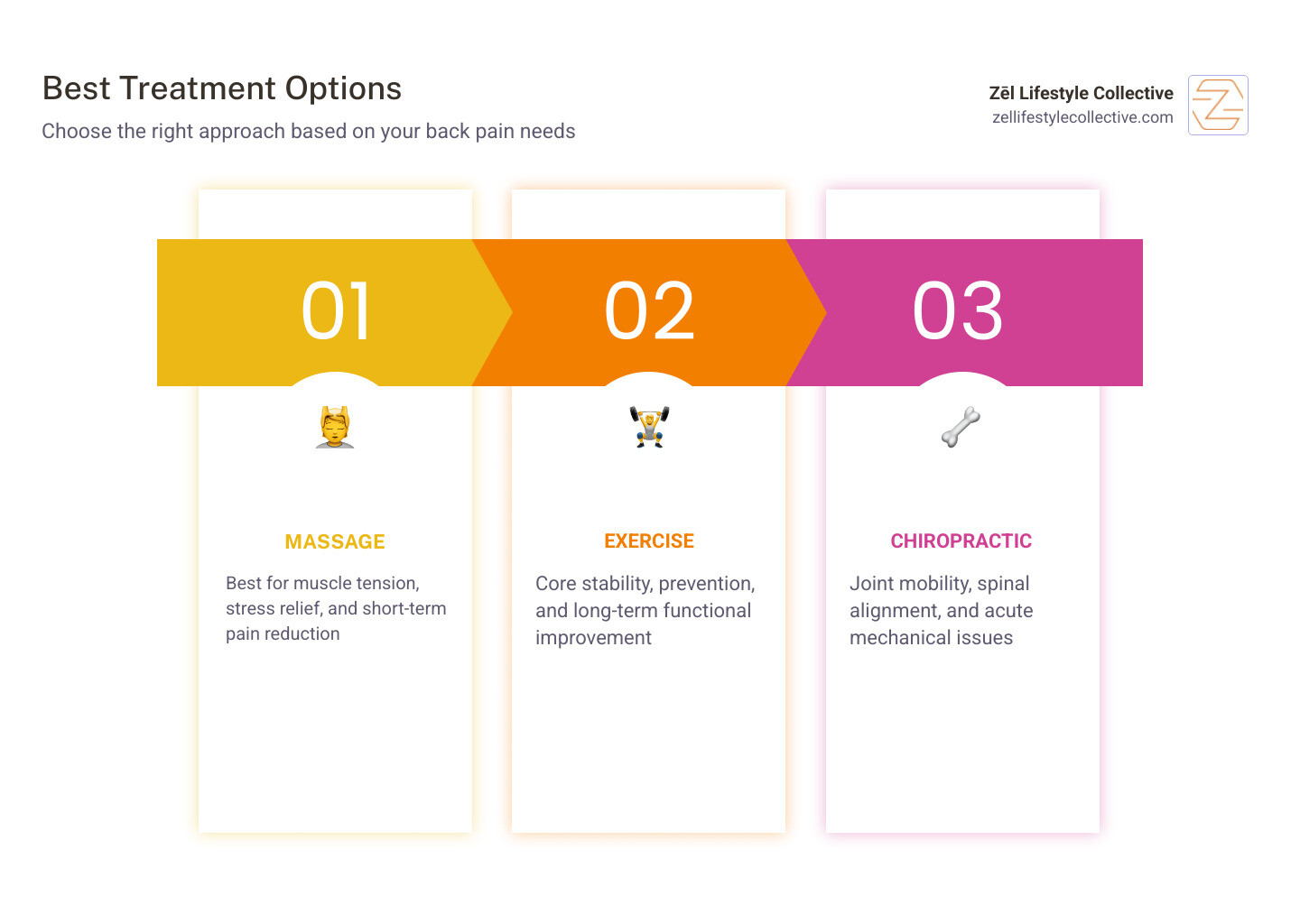
At Zēl Lifestyle Collective, we often use a "multimodal" approach. Massage is fantastic for short-term relief, but how does it stack up against other options?
Treatment Best For... Long-Term Outlook Massage Muscle tension, stress, short-term pain Excellent for "resetting" the body; best when paired with movement. Exercise Core stability, prevention, long-term function The gold standard for preventing recurrence. Chiropractic Joint mobility, spinal alignment, acute "lock-ups" Very effective for mechanical issues. Chiropractic Service. Acupuncture Nerve pain, chronic inflammation, systemic balance Great for those who don't respond well to manual pressure.
A research study on connective tissue massage found that while massage was superior to standard physiotherapy for improving "well-being" and lumbar mobility, it was comparable to exercise and PT for overall pain reduction. This suggests that the best results come from combining these therapies.
Frequently Asked Questions about Back Massage
How long do the benefits of a back massage last?
The immediate "pain-killing" effect usually lasts from a few days to a week. However, the functional benefits—like being able to walk further or sleep better—can persist for several months if you follow up with stretching and proper ergonomics.
Is deep tissue massage better than Swedish for chronic pain?
Generally, yes. Deep tissue and trigger point therapy produce about a 50-70% reduction in pain for chronic cases, whereas Swedish massage often provides more of a temporary "relaxation" effect that lasts 24-48 hours.
Can massage make my back pain worse?
It can cause temporary soreness, especially during "tissue remodeling" between sessions 4 and 6. However, if the therapist uses excessive pressure directly on the spine or if there is an underlying fracture, it can cause injury. Always ensure you are seeing a Licensed Massage Therapist in Ohio.
Conclusion
Massage for back pain is more than just a luxury; for many of our neighbors in Tallmadge, it is a vital tool for staying active and pain-free. Whether you are dealing with the aftermath of a sports injury, chronic desk-bound stiffness, or just the general "wear and tear" of life, the science is clear: massage works.
At Zēl Lifestyle Collective, we don't just "rub where it hurts." We look at the big picture—your posture, your nutrition, and your spinal health—to provide a personalized, root-cause treatment. If you're tired of living with a tight, achy back, we invite you to experience our holistic approach to Massage Therapy.
Let's get you back to feeling like yourself again.