NAD+ Therapy 101
What Is NAD+ Therapy and Why Are So Many People Talking About It?
NAD+ therapy is a treatment that raises levels of nicotinamide adenine dinucleotide (NAD+) in your body — a molecule found in every cell that powers energy production, repairs DNA, and slows cellular aging. Here's a quick breakdown:
What it is: A way to replenish NAD+, either through IV infusion or oral supplements (NMN, NR, niacin)
Why it matters: NAD+ levels drop significantly with age, contributing to fatigue, brain fog, slow recovery, and metabolic decline
Who it's for: Adults experiencing low energy, cognitive decline, chronic fatigue, or those focused on longevity and performance
How it's delivered: IV infusion (fastest, highest bioavailability) or daily oral precursors like NMN or NR
Is it safe? Yes, when administered properly under medical supervision using pharmaceutical-grade compounds
If you're in your 40s and feeling like your energy, focus, and recovery just aren't what they used to be — you're not imagining it. Research confirms that NAD+ levels can decline dramatically with age, and that decline touches nearly every system in your body.
NAD+ isn't a trend. It's one of the most studied molecules in longevity science, with a systematic review of over 1,500 research articles identifying favorable outcomes across a wide range of age-related conditions. The science is real, and it's growing fast.
I'm Dr. Serif Krkic, a longevity-focused physician and co-founder of Zēl Lifestyle Collective, with specialized experience in functional medicine, regenerative health, and performance optimization — including NAD+ therapy as part of personalized, root-cause treatment protocols. In this guide, I'll walk you through everything you need to know to make an informed decision.

The Biological Role of NAD+ and Why Levels Decline
At its core, Nicotinamide Adenine Dinucleotide (NAD+) is a coenzyme derived from Vitamin B3 that exists in every living cell. Think of it as the "fuel" for your cellular engines. Without it, your mitochondria—the powerhouses of your cells—cannot convert the food you eat into adenosine triphosphate (ATP), which is the literal energy currency of life.
However, NAD+ does much more than just provide a spark for energy. It acts as a critical substrate for several classes of enzymes that manage the "maintenance" of your body:
Sirtuins: Often called "longevity genes," these enzymes regulate cellular health, aging, and DNA expression. They are entirely dependent on NAD+ to function.
PARPs (Poly ADP-ribose polymerases): These are your cellular "first responders" that detect and repair damaged DNA. When your DNA is under stress from UV rays or toxins, PARPs go to work, but they consume massive amounts of NAD+ in the process.
As we discuss in our guide on Why Do We Age and How Can We Slow It Down, aging is essentially the accumulation of cellular damage. When NAD+ levels are high, your body is efficient at "cleaning house." When they are low, the damage starts to pile up.

Factors Contributing to NAD+ Depletion
Why can't we just keep our youthful levels of NAD+ forever? Unfortunately, life gets in the way. By the time you reach age 40, your NAD+ levels have already dropped by about 40% compared to your youth. By age 50, you likely have half of what you had at 20.
Several biological "thieves" contribute to this decline:
The CD38 Enzyme: This enzyme is a major NAD+ consumer. As we age, chronic low-grade inflammation (often called "inflammaging") causes CD38 levels to rise, which essentially "eats" your NAD+ before your mitochondria can use it.
Obesity and Metabolic Stress: Carrying excess weight increases oxidative stress, which triggers DNA damage and forces PARPs to drain your NAD+ reserves.
Lifestyle Factors: Alcohol consumption, poor sleep, and a sedentary lifestyle all hasten the depletion of this vital molecule.
At Zēl Lifestyle Collective, we use Functional Medicine to look at these root causes. We don't just want to refill your tank; we want to find out why it’s leaking in the first place.
Precursors and Clinical Evidence for NAD+ Therapy
If you've looked into nad+ therapy, you've likely seen acronyms like NR and NMN. These are "precursors"—the building blocks your body uses to manufacture NAD+. Since the NAD+ molecule itself is quite large and difficult for cells to take up directly when swallowed, these smaller precursors are often used in oral supplements.
Precursor Full Name Common Use Key Characteristic NR Nicotinamide Riboside Oral Supplements / IV Highly efficient at raising blood NAD+ levels; bypasses certain metabolic bottlenecks. NMN Nicotinamide Mononucleotide Oral Supplements A direct "immediate" precursor to NAD+; very popular in longevity research. NAM Nicotinamide Standard Vitamin B3 Part of the "salvage pathway" where the body recycles used NAD+. NA Nicotinic Acid (Niacin) Supplements Can cause "flushing" (redness/itching) but is a potent NAD+ booster.
The "salvage pathway" is the body's way of recycling Nicotinamide (NAM) back into active NAD+. This is crucial because your heart, for example, relies on this recycling for 99.3% of its NAD+ stores. You can learn more about the science behind these building blocks in this Scientific research on NAD+ IV and NR or by exploring our Nutraceuticals page.
Insights from Preclinical and Human Trials
The excitement surrounding nad+ therapy isn't just marketing hype; it's backed by a massive body of evidence. A systematic review of 1,545 articles identified 147 high-quality studies (113 preclinical and 34 clinical) showing that raising NAD+ levels consistently leads to favorable outcomes for age-related disorders.
In human trials, researchers have observed:
Improved Insulin Sensitivity: A study on prediabetic women showed that 250mg of NMN daily significantly improved muscle insulin sensitivity.
Cognitive Support: Early data suggests that replenishing NAD+ can clear "brain fog" and support mitochondrial respiration in brain cells.
Metabolic Boost: As we explore in our article on Why Weight Loss Gets Harder After 40, NAD+ is essential for the metabolic "fire" needed to maintain a healthy weight as we age.
Cardiovascular Benefits of nad+ therapy
Your heart is the most energy-demanding organ in your body. It never takes a day off, which means it requires a constant, massive supply of ATP. Because NAD+ is the key to producing that ATP, the heart is particularly sensitive to NAD+ depletion.
Research in rodents has shown that NAD+ levels can decline by up to 65% in the heart of older animals. In humans, this decline is linked to several serious conditions:
Heart Failure with Preserved Ejection Fraction (HFpEF): This condition affects half of all heart failure patients. Studies suggest that HFpEF hearts are "energy-starved," and replenishing NAD+ can improve diastolic function (the heart's ability to relax and fill with blood).
Hypertension: Oral NR administration (1g daily) has been shown to reduce blood pressure and aortic stiffness in healthy middle-aged and older adults.
Ischemic Cardiomyopathy: By supporting mitochondrial health, nad+ therapy may help the heart recover more effectively from periods of low oxygen or blood flow.
To understand how these metabolic shifts affect your overall vitality, check out our post on The Truth About Hormone Optimization.
Cardiac Metabolism and the Amidated Pathway
The human heart is unique in how it handles NAD+. It doesn't really make NAD+ from scratch using tryptophan (the "de novo" pathway). Instead, it relies almost entirely (99.3%) on the "amidated pathway," which recycles precursors like Nicotinamide (NAM) and NR.
The rate-limiting enzyme in this process is called NAMPT. When we are stressed, obese, or aging, NAMPT levels can drop, leading to an energy crisis in the heart. This is why there have been over 8,700 patent applications related to NAD+ therapies—the medical world recognizes that fixing cardiac metabolism is a primary frontier in heart health.
Administration, Dosing, and Safety Protocols
How you get your NAD+ matters. At Zēl Lifestyle Collective in Tallmadge, Ohio, we focus on the two most effective methods:
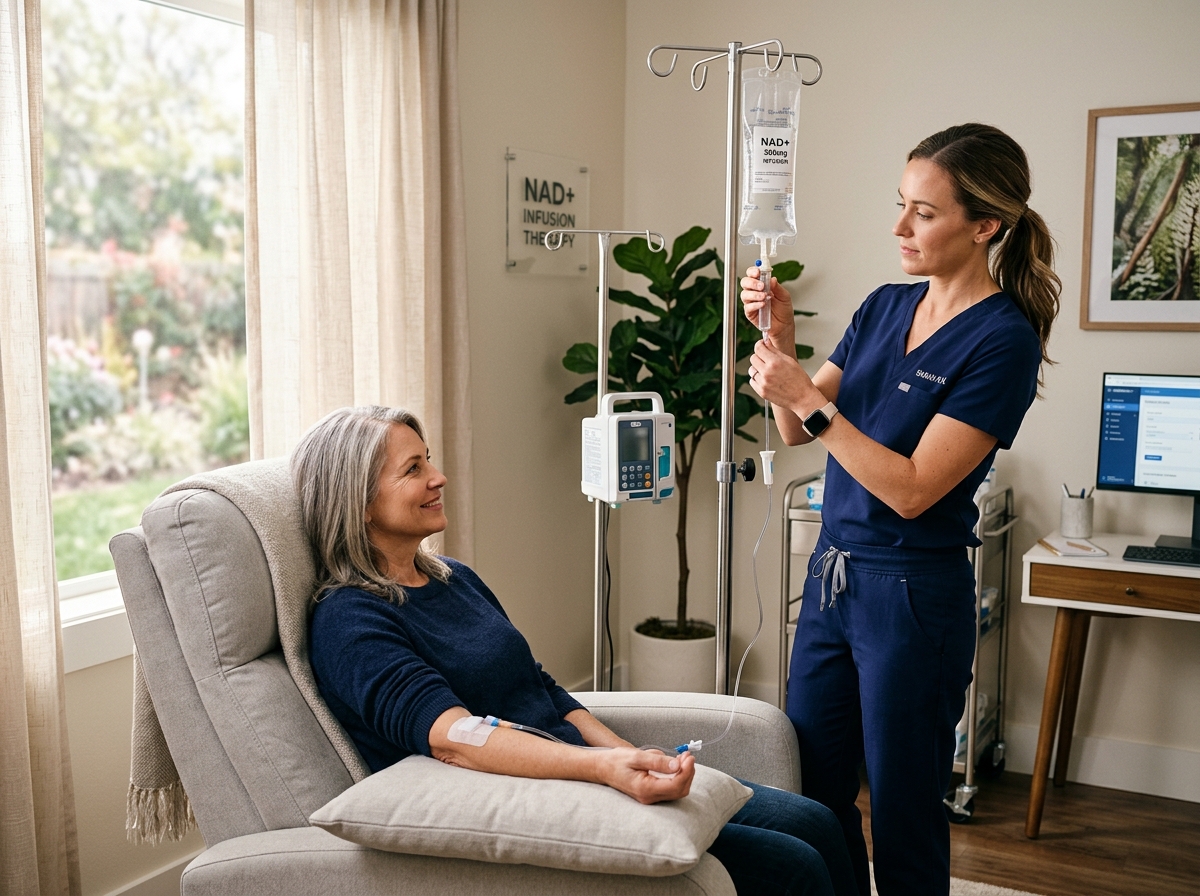
NAD+ IV Therapy: This is the "gold standard" for rapid replenishment. By bypassing the digestive system, we achieve 100% bioavailability. The NAD+ goes directly into your bloodstream and to your brain and heart. Because NAD+ can cause a "flushing" sensation or mild nausea if dripped too fast, our IV Therapy sessions typically last 90 minutes to 3 hours, allowing for a comfortable, slow infusion.
Oral Supplements (Nutraceuticals): High-quality NR or NMN supplements are excellent for daily maintenance. Many of our patients use a "loading dose" of IV therapy to reset their baseline, followed by daily oral precursors to keep the levels high.
We only use pharmaceutical-grade NAD+ sourced from 503B compounding pharmacies. This ensures the highest standards of sterility and purity, which is vital for any injectable treatment.
Potential Risks and Side Effects
While nad+ therapy is generally very safe, it’s important to work with a clinical team that understands the nuances. Temporary side effects during an IV drip can include:
Nausea or stomach cramping
Chest tightness or "heaviness"
Flushing or warmth
Lightheadedness
These are usually solved instantly by slowing the drip rate. Long-term, we also monitor "methylation balance." Because the body uses methyl groups to process and excrete excess Nicotinamide, we often pair nad+ therapy with TMG (Trimethylglycine) or B-vitamins to keep your biochemistry in balance.
If you’re struggling with persistent exhaustion, Chronic Fatigue Is Not Normal. It’s often a sign that your cellular machinery needs professional attention.
Frequently Asked Questions about NAD+ Therapy
Is nad+ therapy safe for everyone?
Most healthy adults and those with age-related decline benefit significantly. However, because NAD+ supports all cellular growth, we generally avoid these therapies in patients with active cancer (tumorigenesis concerns) until more research is available. Medical supervision is non-negotiable to ensure your protocols are tailored to your specific health history.
How long do the effects of nad+ therapy last?
Most patients feel a "lift" in mental clarity and energy within 24 hours of an IV session. For long-term cellular repair, we typically recommend an initial "loading" phase of 4 sessions over a month, followed by maintenance boosters every 6 to 8 weeks. This aligns with the natural turnover rate of your cells.
Can NAD+ help with addiction recovery?
Yes. NAD+ has been used since the 1960s to support alcohol and opioid withdrawal. It helps by replenishing the coenzymes depleted by substance abuse, flushing toxins from the system, and supporting the restoration of neurotransmitters like dopamine and serotonin. This can lead to reduced cravings and a clearer "mental slate" for recovery.
Conclusion
The future of medicine isn't just about treating symptoms; it's about optimizing the very foundation of human life—the cell. NAD+ therapy represents a massive leap forward in our ability to influence how we age, how we think, and how our hearts perform.
At Zēl Lifestyle Collective in Tallmadge, Ohio, we don't believe in one-size-fits-all solutions. We combine the power of NAD+ with functional medicine, chiropractic care, and personalized Weight Loss programs to help you reach your peak potential.
Ready to see what optimized cellular energy feels like? Explore our Nutraceuticals or book a consultation with us today to design your personalized protocol. Your cells will thank you.