
Thinking About B12 IV Treatment? Here’s What to Know First
Is B12 IV Treatment Right for You? Here's the Short Answer
B12 IV treatment delivers vitamin B12 directly into your bloodstream through an intravenous drip, bypassing your digestive system entirely for near-complete absorption.
Quick comparison of your main options:
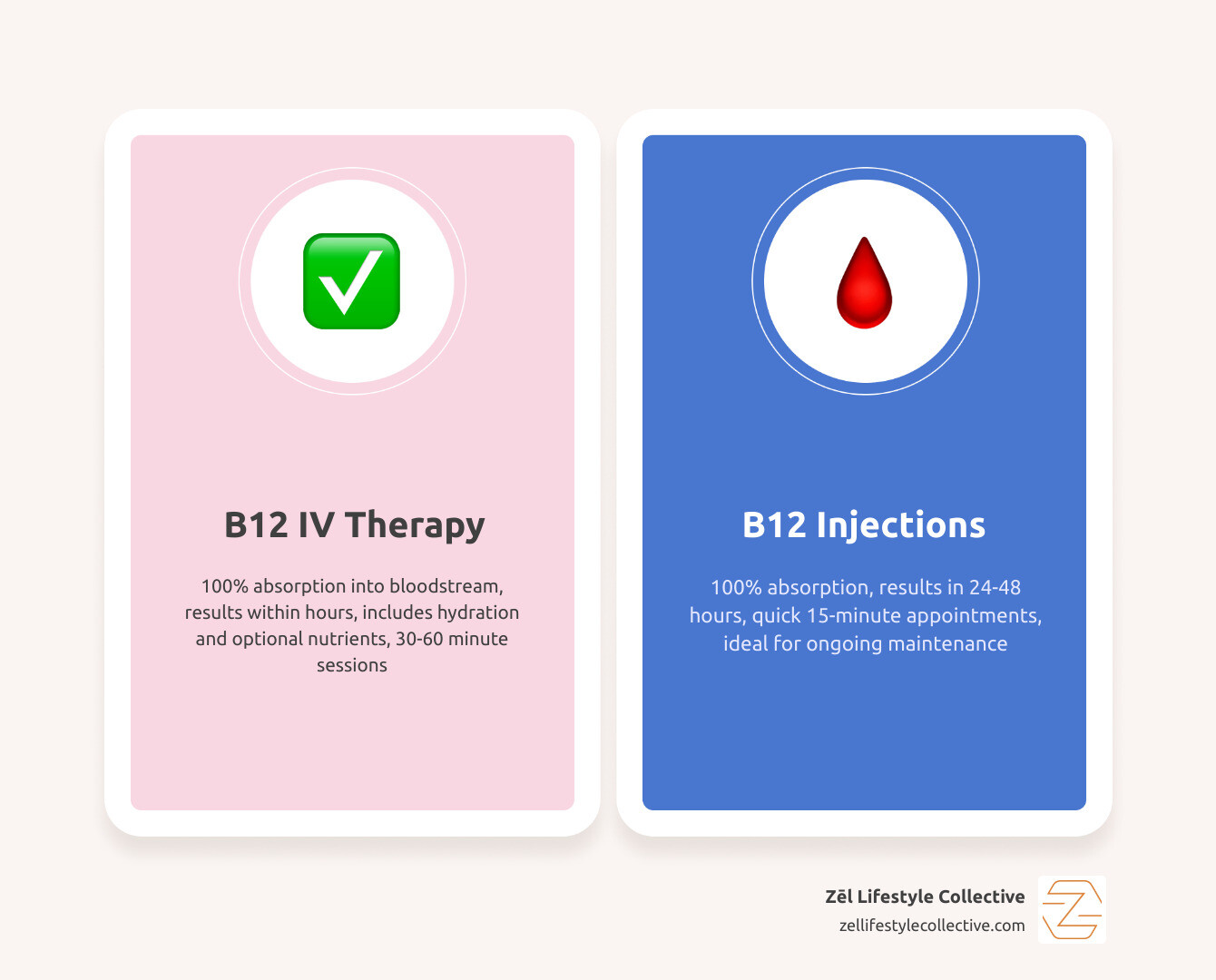
Method Absorption Speed of Effect Session Time Best For B12 IV therapy ~100% Within hours 30-60 min Fast results, multi-nutrient support B12 injection ~100% 24-48 hours Under 15 min Consistent maintenance, deficiency care Oral supplement Up to 50% Days to weeks N/A Mild deficiency, prevention
If you're dealing with fatigue, brain fog, or a known absorption issue, IV therapy may offer faster, more complete relief than pills — but it's not the right fit for everyone.
Up to 15% of Americans are estimated to have a B12 deficiency, yet many go undiagnosed for years. For busy professionals managing chronic fatigue, stress, and a packed schedule, that missing nutrient can quietly drain your energy, mood, and mental sharpness.
The options for getting your B12 levels back up have expanded well beyond daily pills. IV infusions, intramuscular shots, and oral supplements each work differently — and choosing the wrong one can mean slower results or wasted effort.
I'm Dr. Serif Krkic, co-founder of Zēl Lifestyle Collective and a functional medicine and performance health practitioner who incorporates B12 IV treatment into personalized care plans for clients dealing with fatigue, nutrient deficiencies, and recovery challenges. In this guide, I'll walk you through exactly how each option works, who benefits most, and how to make a smart, informed choice.
What Is B12 IV Treatment and How Does It Work?
Vitamin B12 is essential for red blood cell production, nerve function, DNA synthesis, and energy metabolism. When levels are low, people often describe feeling tired, foggy, flat, or just not quite like themselves.
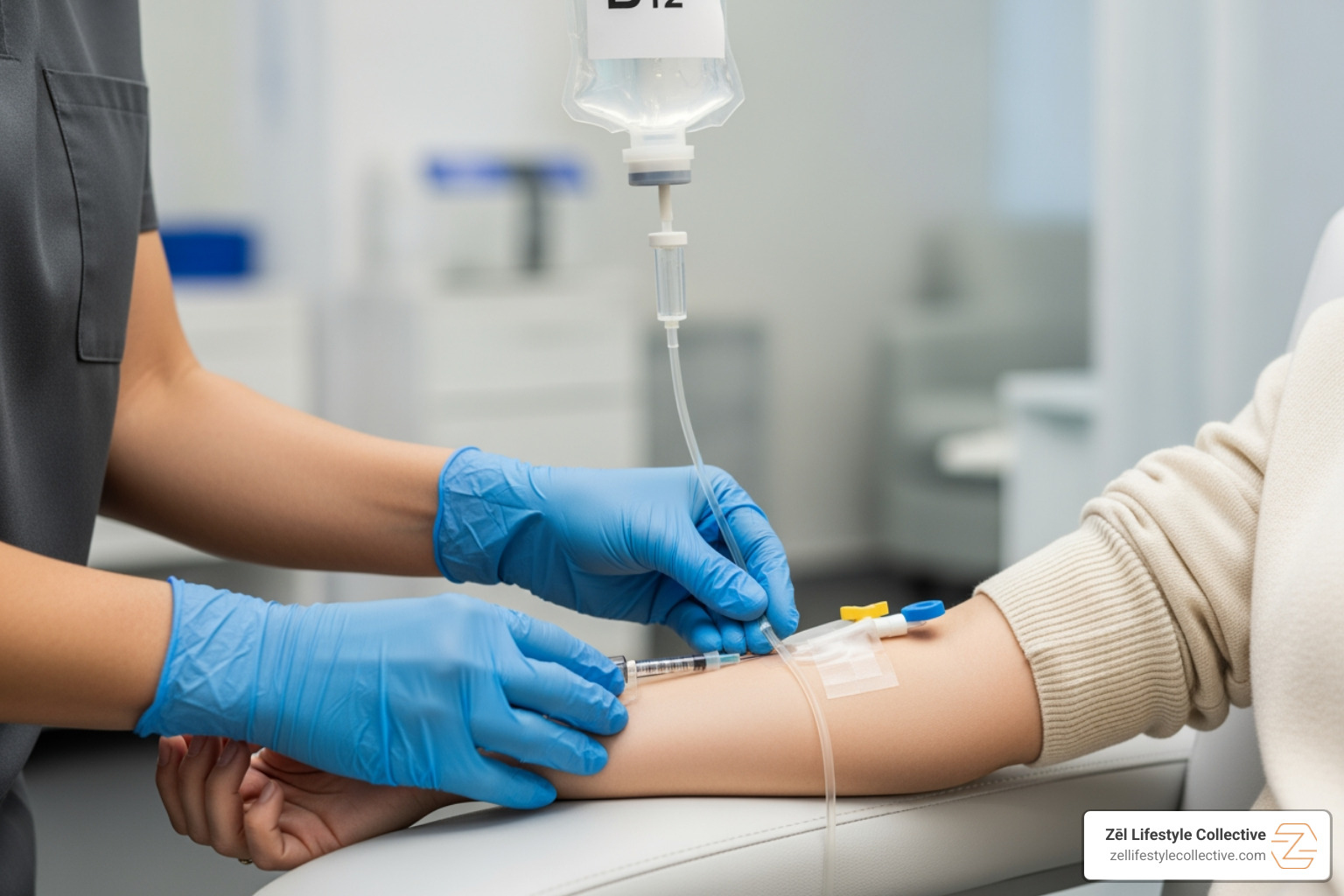
With B12 IV treatment, we place B12 into an IV infusion so it goes directly into the bloodstream. That means it bypasses the stomach and intestines, which is especially important for people who do not absorb nutrients well through the gut.
In plain English: oral B12 has to survive digestion, bind to intrinsic factor, and then be absorbed in the small intestine. IV therapy skips that whole obstacle course.

How b12 iv treatment is different from B12 shots
Both IV therapy and B12 shots bypass the digestive system, but they do it differently.
A B12 shot is usually given intramuscularly, often in the upper arm or thigh. The vitamin is released from muscle tissue over time, so the effect is generally steadier and often longer-lasting.
A B12 IV drip delivers B12 directly into the bloodstream during a 30-60 minute session. That creates a faster rise in circulating levels, which is why some people notice effects within hours.
A few practical differences:
IV therapy is slower to receive but faster to act
Shots are quicker to receive but may feel more gradual
IVs can include fluids and other nutrients
Shots are often simpler for long-term maintenance
One useful clinical point from prescribing data: injectable cyanocobalamin given IV is cleared quickly, with much of the dose lost in urine. That is one reason standard medical treatment for true B12 deficiency has traditionally favored intramuscular or deep subcutaneous injections rather than IV-only dosing for long-term replacement.
How b12 iv treatment compares with oral supplements
Oral supplements can work well for some people, especially if deficiency is mild and digestion is normal. They are affordable, easy, and convenient.
But oral B12 depends on:
healthy stomach acid
intrinsic factor production
adequate small intestine absorption
no major interference from GI conditions or certain medications
That can be a problem for people with:
pernicious anemia
Crohn's disease
celiac disease
IBS or other digestive issues
history of bariatric surgery
long-term metformin use
long-term acid-suppressing medication use
older age-related absorption decline
For these groups, IV therapy or injections may make more sense than hoping a pill does the heavy lifting.
What’s usually in a B12 IV drip besides B12?
In wellness settings, B12 is often combined with other ingredients rather than used alone. Depending on the goal, a drip may include:
fluids for hydration
other B vitamins
magnesium
amino acids
vitamin C
supportive minerals
That customization is one reason many people choose IV therapy. If someone is tired, dehydrated, and run down after travel, stress, or intense training, a broader IV formula may fit better than a single-nutrient shot.
If you want a broader overview of infusion options, see our IV therapy page.
B12 IV Treatment vs Shots vs Oral Supplements: Which Option Fits Best?
Here is the practical side-by-side view most people are really looking for:
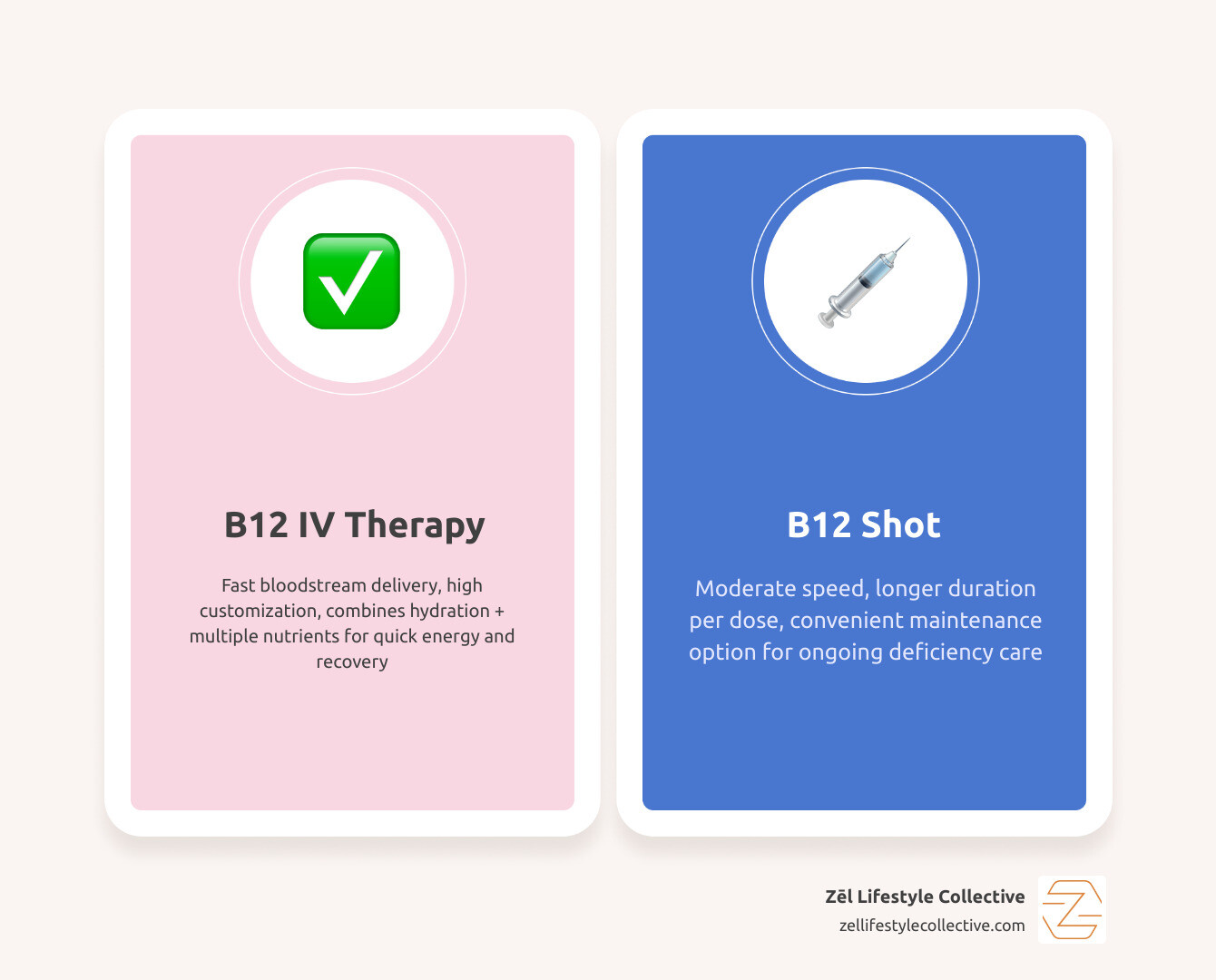
Option Speed Duration Convenience Cost Customization Best Fit B12 IV therapy Fast Shorter Moderate Higher High Fast support, hydration, multi-nutrient goals B12 shot Moderate-fast Longer High Lower-moderate Low-moderate Maintenance, deficiency care Oral B12 Slowest Depends on use Highest Lowest Low Prevention, mild deficiency
Best choice for fast energy and hydration support
If someone wants the fastest noticeable support, especially when dehydration or overall depletion is part of the picture, IV therapy usually wins.
This is often the best fit for:
busy professionals who feel wiped out
athletes in recovery
people feeling run down after travel
those wanting B12 plus hydration and other nutrients
Because the drip can include fluids, B-complex vitamins, and minerals, it may provide broader support than a shot alone. That does not mean it is magically better for every person. It just means it can be more comprehensive.
For more on this type of approach, see our Energy Boost IV Drip.
Best choice for deficiency maintenance and long-term consistency
If the goal is correcting or maintaining B12 levels over time, shots are often more practical.
This is especially true for:
people with diagnosed deficiency
those on structured maintenance plans
patients needing regular replacement
people who prefer a quick visit instead of sitting for an IV
For medically significant deficiency states like pernicious anemia, standard prescribing information supports intramuscular or subcutaneous replacement protocols and ongoing maintenance. In other words, this is where shots have the strongest traditional evidence.
Learn more about our MIC B12 Injections.
Best choice for mild deficiency or prevention
For mild deficiency, low dietary intake, or prevention, oral supplements may be enough.
They make the most sense when:
labs are only mildly low
there are no major gut absorption issues
someone is vegan or vegetarian and wants daily support
budget is a major factor
symptoms are mild or absent
Fortified foods and oral supplements are often reasonable first steps, provided levels are monitored and symptoms are not severe.
Benefits of B12 IV Therapy for Energy, Mood, Brain Function, and Immunity
B12 is involved in several systems at once, so low levels can show up in more ways than simple fatigue.
Potential benefits of B12 IV therapy may include support for:
energy production
red blood cell formation
mental clarity
mood balance
nerve health
immune function
recovery and resilience
That said, the biggest benefits usually show up in people who are actually low, depleted, or absorbing poorly. If your B12 is already fine, the effect may be subtle or nonexistent. Biology can be rude like that.

Energy, stamina, and recovery benefits
B12 helps the body convert food into usable energy and supports healthy red blood cell production. When B12 is low, oxygen delivery and energy metabolism can suffer, which is one reason deficiency often feels like deep fatigue.
People may seek B12 IV support for:
low energy
reduced stamina
recovery after illness
post-travel depletion
workout recovery
fatigue linked to low intake or poor absorption
When B12 is paired with hydration and other supportive nutrients, it may also help people feel better after physically demanding weeks.
For recovery-focused wellness support, see our Recovery IV Therapy Athletes.
Mood, focus, and cognitive support
B12 also matters for neurological health. It plays a role in nerve function and contributes to processes related to neurotransmitter balance.
Low B12 may contribute to:
brain fog
poor concentration
memory complaints
irritability
low mood
Some people notice improved focus or mental clarity within hours to a day after IV therapy, especially if they were depleted. Others notice more gradual change over 24-48 hours. The lower your starting point, the more dramatic the difference may feel.
Who is most likely to benefit from B12 IV therapy?
People most likely to benefit include those with either increased need, poor intake, or poor absorption.
High-risk groups include:
people with confirmed B12 deficiency
people with pernicious anemia
vegans and strict vegetarians
adults over 50
people with Crohn's disease or celiac disease
patients after bariatric or GI surgery
people taking metformin long term
people taking proton pump inhibitors or other acid-lowering medications
athletes with high recovery demands
people with chronic fatigue symptoms and known low levels
For many of these groups, the real question is not "Does B12 matter?" but "Which delivery route makes the most sense?"
How Fast Does B12 IV Therapy Work, How Long Does It Last, and How Often Should You Get It?
The honest answer: it depends on your baseline level, symptoms, hydration status, and why you are doing it in the first place.
When people typically notice results after b12 iv treatment
Some people feel a difference the same day, especially if dehydration and general depletion are part of the picture. Others notice changes within 24 hours, and some over 24-48 hours.
What affects timing?
how low your B12 is
whether dehydration is also being corrected
whether other nutrients are in the drip
your sleep, stress, and overall health
whether symptoms are actually due to B12 deficiency
IV therapy tends to feel faster because nutrients enter circulation right away. But faster does not always mean better for long-term maintenance.
How long the benefits usually last
Reported duration varies a lot.
Some people feel benefits for several days to about a week. Others report improvement for several weeks. In general:
IV effects tend to come on faster
injection effects often last longer
severe deficiency may require repeated treatment
lifestyle stress can make benefits seem shorter
One important scientific nuance: B12 given intravenously may be excreted rapidly. Prescribing information notes that after injection of 100 to 1000 mcg, about 50% to 98% may appear in the urine within 48 hours, and IV administration gives the body less opportunity for liver storage than intramuscular use. That helps explain why IV therapy may feel quick but not always last as long as shots.
How often b12 iv treatment is given compared with B12 injections
A common wellness pattern for IV therapy is every 2-4 weeks, though some people start more frequently based on symptoms or deficiency severity.
B12 shots are often used:
weekly during a loading phase
every 2-4 weeks for maintenance
monthly in long-term deficiency care
For medically diagnosed deficiency, frequency should be guided by labs, symptoms, and cause. We do not recommend guessing. Guessing is for game shows, not nutrient replacement.
Safety, Risks, Costs, and What the Evidence Really Says
B12 therapy is generally well tolerated, but "generally safe" is not the same thing as "for everyone, in every form, at any time."
Common side effects and safety considerations
Potential side effects of B12 IV therapy can include:
headache
nausea
flushing
lightheadedness
vein irritation
mild discomfort at the IV site
temporary urine color changes
Any IV therapy also carries procedure-related risks, such as:
infection
bruising
phlebitis
infiltration
rare allergic reaction
These risks are minimized when therapy is done with proper screening, sterile technique, and licensed medical oversight.
Who should avoid or use caution with B12 IV therapy
Extra caution is important for people with:
known cobalt or B12 allergy
Leber's disease
significant kidney impairment
pregnancy or breastfeeding without provider review
complex medical illness
possible folate deficiency
unexplained anemia or neurologic symptoms that have not been evaluated
Reviewing medications matters too. Certain drugs can contribute to low B12, and others may affect how we interpret symptoms or lab results.
Cost, convenience, and customization: IV therapy vs shots
This is where preferences become very real.
IV therapy:
often costs about $100 to $300 or more per session
usually takes 30-60 minutes
offers hydration and customization
may feel more luxurious or comprehensive
B12 shots:
are usually quicker
are often less expensive per visit
typically take under 15 minutes
work well for routine maintenance
So what are you paying for with IVs? Mostly the extra time, fluids, setup, supervision, and ability to combine nutrients into one visit.
What scientific evidence says about effectiveness
The evidence is strongest for treating documented B12 deficiency, especially when malabsorption is involved.
What we know well:
B12 is essential for neurologic function, red blood cell production, and DNA synthesis
injectable replacement is effective for deficiency states
oral therapy may be less reliable in people with significant absorption problems
intramuscular therapy has established medical dosing protocols
What is less certain:
whether IV B12 is superior to injections for long-term deficiency correction
how much extra benefit healthy, non-deficient people get from elective wellness IVs
the ideal IV dosing and frequency for general wellness
This is where nuance matters. IV therapy makes physiological sense for rapid delivery and digestive bypass. But for classic deficiency treatment, injections often have stronger traditional evidence and may be more practical.
For technical prescribing details, see Scientific research on injectable vitamin B12 and Scientific research on cyanocobalamin prescribing information.
How to Decide Between B12 IV Therapy, B12 Shots, or Other Support
Choosing the right option depends on more than whether you are tired.
We look at:
your symptoms
your lab results
whether the issue is intake or absorption
your schedule
your budget
how quickly you want support
whether hydration or other nutrients are also needed
Questions to ask before choosing a treatment plan
Before starting, it helps to ask:
Is my B12 actually low?
Have we checked methylmalonic acid or other useful labs?
Do I have an absorption problem?
Is my diet low in B12?
Could medications be contributing?
Are my symptoms really from B12 deficiency?
Do I need fast support, long-term maintenance, or both?
Those questions often prevent wasted time and money.
When a personalized, root-cause approach makes the most sense
At Zēl Lifestyle Collective, we take an integrative approach because low B12 is often a clue, not just a stand-alone problem.
A root-cause plan may include:
nutrition review
GI health assessment
medication review
lifestyle and stress evaluation
functional medicine testing when appropriate
a treatment plan that may combine IVs, injections, and nutrition support
That is especially helpful for people with recurring fatigue, chronic stress, digestive issues, or complex wellness goals.
You can learn more about our Functional Medicine approach and our Functional Medicine Clinic Complete Guide.
Frequently Asked Questions About B12 IV Treatment
Is B12 IV therapy better than a B12 shot for energy?
Not always better, but often faster.
If you want quick support and also need hydration or extra nutrients, IV therapy may be the better fit. If you want simple, reliable maintenance with a longer-lasting effect, a shot may be better.
Can you switch between B12 IV therapy and injections?
Yes. Some people use IV therapy for an initial boost or during stressful periods, then transition to injections for maintenance. Others alternate based on schedule, symptoms, and goals.
Will B12 IV therapy help if you are not deficient?
Maybe a little, maybe not much, maybe not at all. The evidence for major benefits in people with normal B12 levels is limited. If you feel tired, the smartest first step is figuring out why rather than assuming B12 is the answer.
Conclusion
B12 IV treatment can be a helpful option when you want fast support, have digestive absorption issues, or need more than just B12 alone. But it is not automatically the best choice for every person. Shots may be better for long-term maintenance, and oral supplements may be enough for mild deficiency or prevention.
The right plan depends on your labs, symptoms, health history, and goals.
At Zēl Lifestyle Collective in Tallmadge, Ohio, we help patients choose the most appropriate path with a personalized, root-cause mindset rather than a one-size-fits-all recommendation. If you are exploring fatigue, brain fog, recovery support, or nutrient deficiencies, learn more about our IV therapy options and how we can help you build a smarter plan.