
The Ultimate Guide to Comprehensive Stool Analysis and Parasite Detection
Why Your Gut Health Could Be the Missing Piece in Your Chronic Symptoms
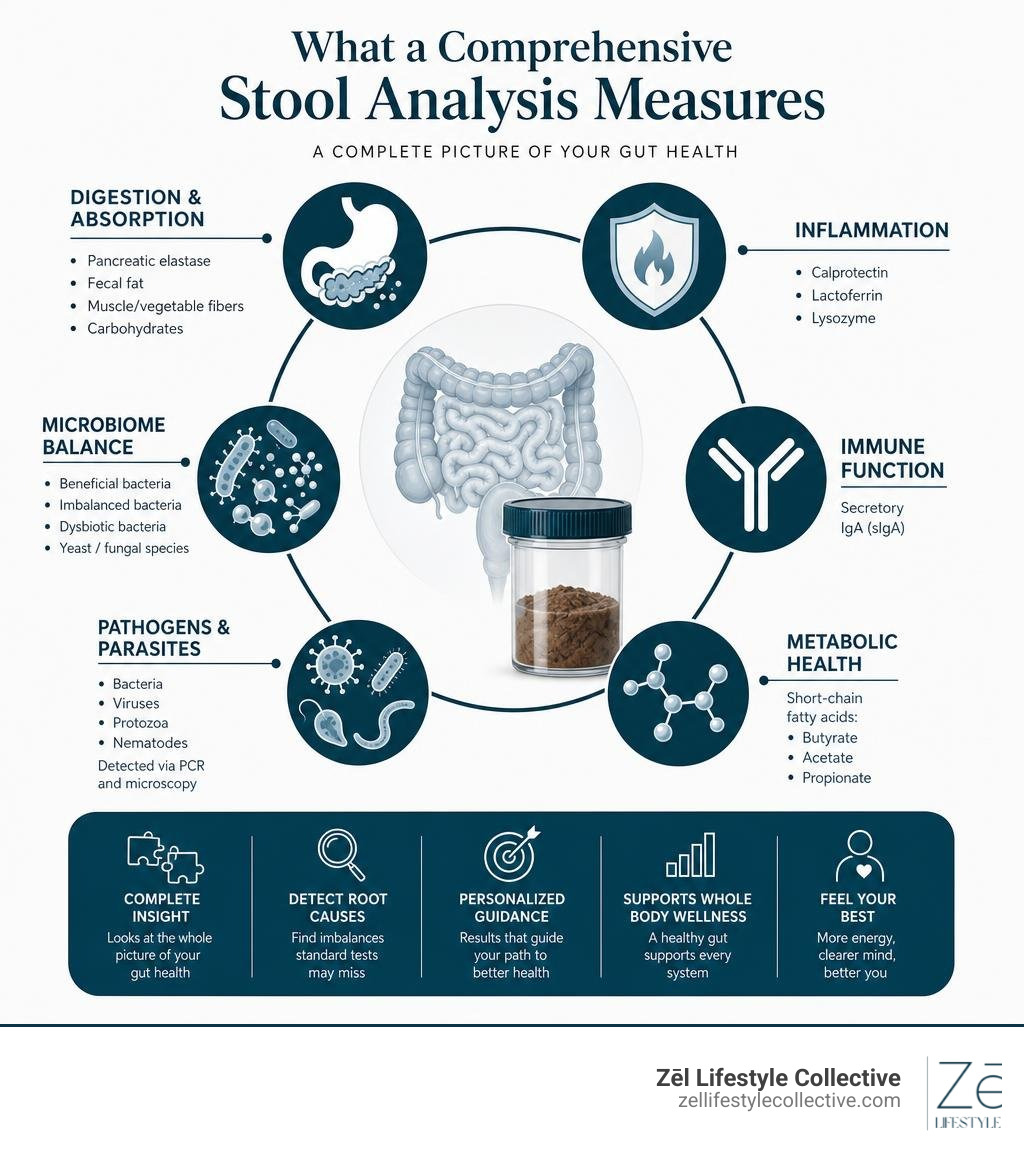
A comprehensive stool analysis is an advanced diagnostic test that evaluates multiple dimensions of gut health in a single panel — including digestion, inflammation, immune function, and the balance of bacteria, yeast, and parasites living in your gut.
Here's what it covers at a glance:
Category What It Measures Digestion & Absorption Pancreatic elastase, fecal fat, muscle/vegetable fibers, carbohydrates Inflammation Calprotectin, lactoferrin, lysozyme Immune Function Secretory IgA (sIgA) Microbiome Balance Beneficial, imbalanced, and dysbiotic bacteria; yeast/fungal species Pathogens & Parasites Bacteria, viruses, protozoa, nematodes detected via PCR and microscopy Metabolic Health Short-chain fatty acids like butyrate, acetate, and propionate
Unlike a standard stool test — which might check for one or two pathogens — a comprehensive stool analysis looks at the whole picture of your gastrointestinal ecosystem.
This matters because gut imbalances don't always cause obvious digestive symptoms. They can show up as fatigue, brain fog, mood changes, skin issues, or chronic pain — the kinds of symptoms that busy professionals in their 40s often chalk up to stress or aging.
The gut is central to nearly every system in your body. When it's off, everything feels harder.
I'm Dr. Serif Krkic, chiropractor and functional medicine practitioner at Zēl Lifestyle Collective, and I regularly use comprehensive stool analysis as a cornerstone diagnostic tool to uncover root causes that standard lab work simply misses. In this guide, I'll walk you through exactly what this test reveals, who needs it, and how to use the results to start feeling like yourself again.
Understanding the Power of a Comprehensive Stool Analysis
In conventional medicine, stool testing is usually reserved for acute crises. If you return from an international trip with severe food poisoning, a doctor might order a basic culture to see if you picked up a common pathogen like Salmonella. If the test comes back negative, you are often sent home with a generic diagnosis of Irritable Bowel Syndrome (IBS) and told to "manage your stress."
In functional medicine, we take a completely different approach. We look at the gut as a complex, living ecosystem. Your gut ecology—the delicate balance of microbes, digestive enzymes, immune cells, and physical barriers—dictates how well you absorb nutrients, how your immune system behaves, and even how your brain functions.
When we use functional lab testing to run a comprehensive stool analysis, we aren't just looking for a single "bad guy." We are looking at the overall state of your digestive health to find the root-cause diagnosis of your symptoms. Whether you are dealing with chronic bloating, joint pain, or brain fog, understanding the terrain of your gut is the first step toward true healing.
How Standard Tests Differ from a Comprehensive Stool Analysis
To understand why a comprehensive stool analysis (CSA) is so revolutionary, it helps to understand the limitations of standard hospital or clinical stool tests.
Standard stool tests typically use basic aerobic culture techniques to look for a very narrow list of major pathogens. However, scientific research shows that more than 95% of commensal gut organisms are anaerobic and are extremely difficult, if not impossible, to recover using traditional aerobic culture techniques. If a lab only uses standard cultures, they are essentially blind to the vast majority of your microbiome.
An advanced Advanced Gut Health Test uses multi-dimensional profiling. It combines state-of-the-art Polymerase Chain Reaction (PCR) DNA technology with microscopic examination and advanced culture methods. This allows us to map out the entire neighborhood of your gut. Instead of checking a single parameter, a CSA measures:
The exact levels of beneficial (commensal) bacteria.
The presence of imbalanced or dysbiotic bacteria (up to 73 different species).
Over 48 possible yeast and fungal species.
Functional biomarkers that tell us exactly how well your pancreas is producing enzymes, how much inflammation is present in your intestinal lining, and whether your gut immune system is actively fighting an invader.
Who Should Consider a Comprehensive Stool Analysis?
Because the gut is the gatekeeper to systemic health, you don’t need to have "stomach issues" to benefit from a comprehensive stool analysis. In fact, assuming that the absence of digestive symptoms rules out the need for GI testing is one of the most common mistakes we see in healthcare.
We frequently recommend this testing for individuals in Tallmadge, Ohio experiencing:
Chronic Digestive Distress: If you deal with daily gas, cramping, diarrhea, constipation, or want to understand why you are always bloated.
Autoimmune Conditions: Conditions like thyroiditis, rheumatoid arthritis, or psoriasis often stem from a hyper-reactive immune system triggered by gut dysbiosis or a compromised gut barrier.
Unexplained Fatigue and Brain Fog: If you wake up tired despite sleeping eight hours, or feel like you are walking through a mental fog, gut-derived toxins could be crossing into your bloodstream and affecting your brain.
Unexplained Weight Changes: Imbalances in specific phyla of bacteria can alter how many calories you harvest from your food, directly impacting metabolic health.
Skin Flare-ups: Eczema, acne, and rosacea are highly correlated with intestinal inflammation and microbial imbalances (often referred to as the gut-skin axis).
Key Biomarkers Measured in Advanced Stool Testing

When we receive your comprehensive stool analysis report, we don't just get a list of microbes. We get a comprehensive report card on how well your digestive system is actually performing its daily duties. Let's break down the key functional categories.
Digestion and Absorption
If you are eating a pristine, organic diet but your body cannot digest or absorb those nutrients, you will still end up nutritionally depleted. The CSA measures several direct markers of digestive capacity:
Pancreatic Elastase-1: This is a gold-standard marker for pancreatic exocrine function. If your elastase is low, your pancreas isn't producing enough digestive enzymes to break down your food, leading to malabsorption, gas, and floating stools.
Fecal Fat: High levels of fat in the stool indicate that you aren't emulsifying or absorbing dietary fats properly, which can lead to deficiencies in vital fat-soluble vitamins (A, D, E, and K).
Muscle and Vegetable Fibers: The presence of fully undigested fibers under microscopic view suggests inadequate chewing, low stomach acid (hypochlorhydria), or rapid transit time.
Inflammation and Immune Markers in the Gut
The gut wall is only a single cell layer thick. It has the monumental task of letting nutrients into the bloodstream while keeping harmful toxins, undigested food particles, and pathogens out. To protect this delicate border, your gut relies on a highly specialized immune system.
Calprotectin: This is a protein released by neutrophils (white blood cells) in response to active inflammation in the bowel. It is an incredibly sensitive marker. Calprotectin is highly elevated prior to and during the active phases of Inflammatory Bowel Disease (IBD) like Crohn's or Ulcerative Colitis, but remains normal in functional disorders like Irritable Bowel Syndrome (IBS).
Lactoferrin: Another powerful marker of neutrophil-driven inflammation, used alongside calprotectin to monitor mucosal healing and rule out active inflammatory states.
Secretory IgA (sIgA): This antibody is the first line of defense in your gut's mucosal immunity. It binds to pathogens and toxins, preventing them from attaching to and breaching your gut lining. High sIgA means your immune system is actively fighting something (like a food allergen or infection). Low sIgA indicates a depleted mucosal immune system, leaving you highly susceptible to infections and "leaky gut." We must remember that autoimmune symptoms are not random; they are deeply tied to this mucosal barrier function.
Microbiome Diversity and Short-Chain Fatty Acids
Your gut is home to trillions of microbes, with each person's unique microbiome containing over 200 distinct species. Some advanced testing platforms, like Genova's Microbiomix, can even detect up to 28,000 species of bacteria, fungi, protists, and archaea.
When analyzing your microbiome, we look closely at:
Commensal (Beneficial) Bacteria: These are the "good guys" (such as Lactobacillus, Bifidobacterium, and Akkermansia muciniphila) that keep opportunistic pathogens in check, produce vitamins, and support your gut barrier.
The Shannon Diversity Index: This is a mathematical metric used to measure overall microbiome diversity. A high diversity index is universally associated with robust health and resilience against chronic diseases, while low diversity is common in metabolic and inflammatory conditions.
Short-Chain Fatty Acids (SCFAs): When your commensal bacteria ferment dietary fiber, they produce SCFAs like butyrate, acetate, and propionate. Butyrate is particularly crucial—it is the primary energy source for the cells lining your colon (colonocytes), keeps the gut barrier tight, and has powerful anti-inflammatory effects throughout the entire body.
Pathogen and Parasite Detection Methodologies

Historically, identifying a gut parasite or bacterial infection was a game of hide-and-seek. A lab technician would look at a single stool sample under a microscope and hope a parasite swam across their field of view. Today, we use much more sophisticated, multi-method approaches to ensure nothing gets missed.
Comparing PCR and Culture Methods
To give you the most accurate results, modern comprehensive stool tests combine two primary methodologies:
Feature PCR (Polymerase Chain Reaction) Traditional Culture What it does Detects the genetic material (DNA) of organisms. Grows live organisms in a laboratory dish. Sensitivity Extremely high; can detect tiny fragments of dead or alive pathogens. Lower; requires the organism to survive shipping and grow in the lab. Speed Very fast turnaround. Takes several days to allow organisms to multiply. Limitations Cannot tell if the organism is currently alive or active. Misses anaerobic organisms that cannot grow in oxygen. Susceptibility Cannot perform susceptibility testing directly on DNA. Excellent; allows the lab to test which agents will kill the live microbe.
By using both methods, we get the best of both worlds: the hyper-sensitivity of PCR DNA testing to find hidden pathogens, and the clinical utility of cultures to see how those pathogens behave in real life.
Detecting Bacteria, Yeasts, and Viruses
A comprehensive stool analysis screen actively looks for a wide array of problematic organisms that can cause local and systemic symptoms:
Pathogenic Bacteria: Such as Clostridioides difficile (C. diff), Helicobacter pylori (linked to ulcers and stomach issues), Campylobacter, and Salmonella.
Opportunistic Bacteria: Overgrowths of microbes like Klebsiella or Pseudomonas which, while not strictly "pathogenic," can cause severe dysbiosis, gas, and inflammation when allowed to multiply out of control.
Yeasts and Fungi: Including Candida albicans and dozens of other fungal species that can contribute to bloating, sugar cravings, and systemic yeast issues.
Parasites (Protozoa and Helminths): The test screens for microscopic protozoa like Blastocystis hominis, Giardia lamblia, and Cryptosporidium, as well as larger parasitic worms (nematodes, cestodes, and trematodes).
To maximize the chances of finding elusive parasites, we often recommend a multi-day collection protocol. Collecting samples over two or three consecutive days significantly increases the likelihood of catching parasites that are shed only intermittently.
The Role of Antimicrobial Susceptibility Testing
One of the most powerful features of a comprehensive stool test is antimicrobial susceptibility testing (also known as sensitivity testing).
If the lab successfully cultures a dysbiotic bacterium or yeast from your sample, they don't just tell you it's there. They actually expose that specific strain to various treatment agents in the lab to see what kills it most effectively.
The lab tests both:
Prescriptive Agents: Standard pharmaceutical antibiotics or antifungals.
Natural Agents: Botanical antimicrobials such as oregano, caprylic acid, uva ursi, berberine, grapefruit seed extract, and silver.
This takes the guesswork out of your treatment. Instead of putting you through a generic protocol, we can use the data from your Comprehensive Stool Analysis with Parasitology to select the exact botanical or prescription agent that your specific overgrowth is highly sensitive to. This targeted approach saves you time, money, and protects your beneficial bacteria from unnecessary broad-spectrum treatments.
How to Prepare for and Undergo Stool Testing
The thought of collecting your own stool sample at home can feel a little intimidating (and let's be honest, slightly unglamorous). However, modern test kits are designed to be incredibly clean, simple, and user-friendly.
Medication and Supplement Guidelines
To ensure your results are highly accurate and reflect your true baseline gut health, you will need to temporarily pause certain medications and supplements before collecting your samples.
2 to 4 Weeks Before: Discontinue antibiotics, antiparasitics, antifungals, and commercial probiotics, as these can artificially suppress pathogens or temporarily alter your microbial readings.
14 Days Before: If you are adding an H. pylori antigen test, temporarily discontinue Proton Pump Inhibitors (PPIs) and bismuth-containing compounds (like Pepto-Bismol), with your prescribing physician's approval.
2 Days Before: Pause non-essential digestive enzymes, aspirin, NSAIDs (like ibuprofen), rectal suppositories, and enemas.
What NOT to stop: Never discontinue medically necessary, prescribed medications without first consulting your healthcare provider.
If you are currently taking supportive nutraceuticals and supplements under our care, we will give you a personalized timeline of exactly what to pause and when.
Step-by-Step Collection and Shipping
When your test kit arrives at your home in the Tallmadge, Ohio area, it will contain detailed, visual instructions. Here is what the typical process looks like:
The Collection Hat: The kit includes a plastic "collection hat" that fits securely over your toilet seat, allowing you to collect the specimen without it touching toilet water or urine (both of which can contaminate the sample).
Filling the Vials: You will use the small spoons attached to the vial caps to transfer small stool samples into the colored vials. Some vials contain a liquid preservative, while others do not.
Temperature Control: Depending on the specific lab (such as Doctor's Data or MosaicDX), some vials must be frozen overnight, while others must be kept refrigerated. The kit includes a specialized ice pack for shipping.
The Shipping Window: Stool specimens are highly time-sensitive. You should only collect and ship your samples on a Monday, Tuesday, or Wednesday. This ensures your package doesn't get stuck in a shipping warehouse over the weekend, which could compromise specimen stability. All samples must be shipped together via the prepaid overnight shipping label within five days of your first collection.
Frequently Asked Questions About Stool Testing
What symptoms indicate I need this test?
If you are dealing with chronic, unresolved symptoms, a comprehensive stool test can provide massive diagnostic clarity. The most common indicators include:
Persistent bloating, gas, or abdominal pain after eating.
Alternating bouts of diarrhea and constipation.
Unexplained nutritional deficiencies (like low iron or B12, despite eating meat).
Brain fog, mood swings, and a feeling that chronic fatigue is not normal for your age.
New or worsening food sensitivities.
Stubborn skin issues like eczema or hives.
How does this test help differentiate IBS from IBD?
This is one of the most clinically valuable aspects of the test. Irritable Bowel Syndrome (IBS) is a functional disorder, meaning the gut looks physically normal but isn't contracting or communicating correctly. Inflammatory Bowel Disease (IBD), such as Crohn's or Colitis, is an organic, inflammatory disease where the immune system actively attacks and damages the gut wall.
Because their symptoms (pain, cramping, diarrhea) can look identical, we use mucosal inflammation markers to tell them apart:
In IBS, inflammatory markers like calprotectin and lactoferrin will be completely normal.
In IBD, calprotectin and lactoferrin will be markedly elevated, signaling active, neutrophil-driven tissue inflammation that requires immediate medical management.
What complementary tests are recommended alongside stool analysis?
While a stool test gives us an incredible look at your large intestine, it is only one piece of the puzzle. To build a complete picture of your health, we often recommend pairing it with:
Organic Acids Test (OAT): A simple urine test that measures metabolic byproducts, giving us insight into mitochondrial function, neurotransmitter balance, and fungal overgrowths in the small intestine.
Food Sensitivity Testing: To identify specific dietary triggers that are currently driving systemic inflammation.
Mycotoxin or Environmental Toxin Panels: If we suspect the silent impact of mold and toxins is the underlying driver of your immune dysbiosis and leaky gut.
Conclusion
Your gut is the foundation upon which your entire health is built. If you have been struggling with stubborn bloating, chronic fatigue, or mystery autoimmune symptoms, you don't have to keep guessing.
At Zēl Lifestyle Collective in Tallmadge, Ohio, we specialize in helping you uncover the true root cause of your symptoms. We don't believe in generic, one-size-fits-all treatments. By utilizing advanced functional medicine principles and cutting-edge functional lab testing, we can map out your unique gut ecology, identify hidden infections, and design a highly personalized roadmap to help you reclaim your energy and vitality.
Are you ready to stop guessing and start healing?