
The Ultimate Guide to Relieving Stress and Back Pain
Shoulder Pain Is Incredibly Common — Here's What Acupuncture Can Do About It
Acupuncture shoulder pain treatment is a real, evidence-backed option — and if you want the short answer, here it is:
Acupuncture can reduce shoulder pain and improve function, especially in the short term (2–4 weeks)
It works by stimulating nerves, releasing natural pain-relieving chemicals, and improving blood flow to the joint
It is most effective when combined with exercise therapy
It is generally safe when performed by a qualified practitioner
Over 131 clinical practice guidelines recommend it for various shoulder pain conditions
Shoulder pain affects a staggering number of people. Research estimates the lifetime prevalence at around 70%, and it accounts for roughly 16% of all musculoskeletal pain consultations. If you're in your 40s and spending long hours at a desk or pushing through workouts, there's a good chance shoulder discomfort has already slowed you down.
The problem? Most people either push through the pain or reach for medication — without ever addressing what's actually causing it.
Acupuncture offers a different path. It's non-invasive, low-risk, and increasingly supported by both clinical guidelines and research.
I'm Dr. Serif Krkic, a chiropractor and functional medicine practitioner with deep experience in regenerative and performance-based care, including acupuncture shoulder pain protocols for high-performing individuals dealing with chronic musculoskeletal conditions. In the sections ahead, we'll break down exactly how acupuncture works for shoulder pain, what the science says, and how to know if it's right for you.
Understanding the Causes of Shoulder Pain
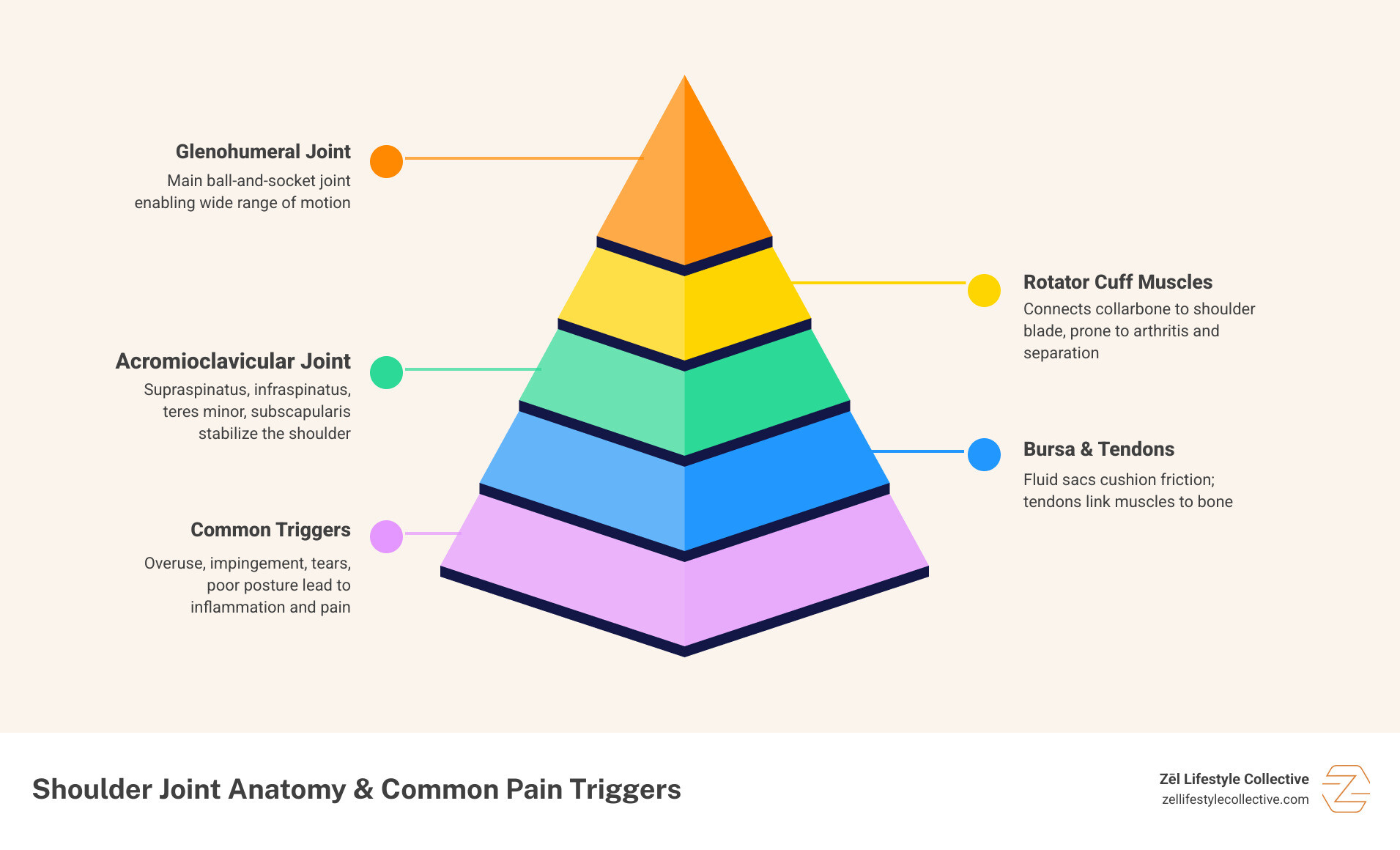
The shoulder is the most mobile joint in the human body, which is a bit of a double-edged sword. While it allows us to reach, lift, and throw, that extreme range of motion makes it prone to wear, tear, and instability. As of April 2026, we see patients in our Tallmadge clinic presenting with a wide variety of shoulder issues, but most fall into a few key categories.
Common Culprits: Rotator Cuff and Beyond
The rotator cuff is a group of four muscles and their tendons that keep the head of your upper arm bone firmly in the shoulder socket. When these tendons become irritated or pinched (subacromial impingement), it leads to sharp pain, especially when reaching overhead.
Other common conditions include:
Frozen Shoulder (Adhesive Capsulitis): Characterized by stiffness and pain that makes it nearly impossible to move the joint.
Subacromial Impingement: Where the shoulder blade rubs against the rotator cuff.
Osteoarthritis: Wear and tear of the joint cartilage over time.
Statistics show that shoulder pain accounts for about 1% of all general practice consultations. For those in the 45–64 age group, the cumulative incidence is approximately 2.4%. If left untreated, conditions like rotator cuff disease can persist for 12 to 18 months, significantly impacting your quality of life.
At Zēl Lifestyle Collective, we believe in a root-cause approach. Often, shoulder pain doesn't exist in a vacuum. It can be linked to posture or even referred pain from the spine. Understanding why do I have back pain can sometimes provide clues into how your body compensates, leading to shoulder strain. This is why we often integrate chiropractic service and specialized massage therapy to ensure the entire musculoskeletal system is aligned and supported.
How Acupuncture Shoulder Pain Relief Works
In our practice, we look at acupuncture shoulder pain relief through two lenses: Traditional Chinese Medicine (TCM) and modern physiological science. Both offer fascinating insights into how those tiny needles create such a big impact.
The TCM Perspective: Restoring Flow
In Traditional Chinese Medicine, health is defined by the smooth flow of "Qi" (energy) and blood. Pain is viewed as a "stagnation" or a blockage. Think of it like a kink in a garden hose; when the flow stops, pressure builds up. Shoulder pain is often seen as a deficiency in Qi or Yang energy, or an invasion of "Cold" or "Dampness" into the joint.
By placing needles at specific points, we aim to:
Move stagnant Qi and blood.
Reduce inflammation.
Strengthen the body's internal healing resources.
The Modern Medical View: Nerve Signaling and Chemistry
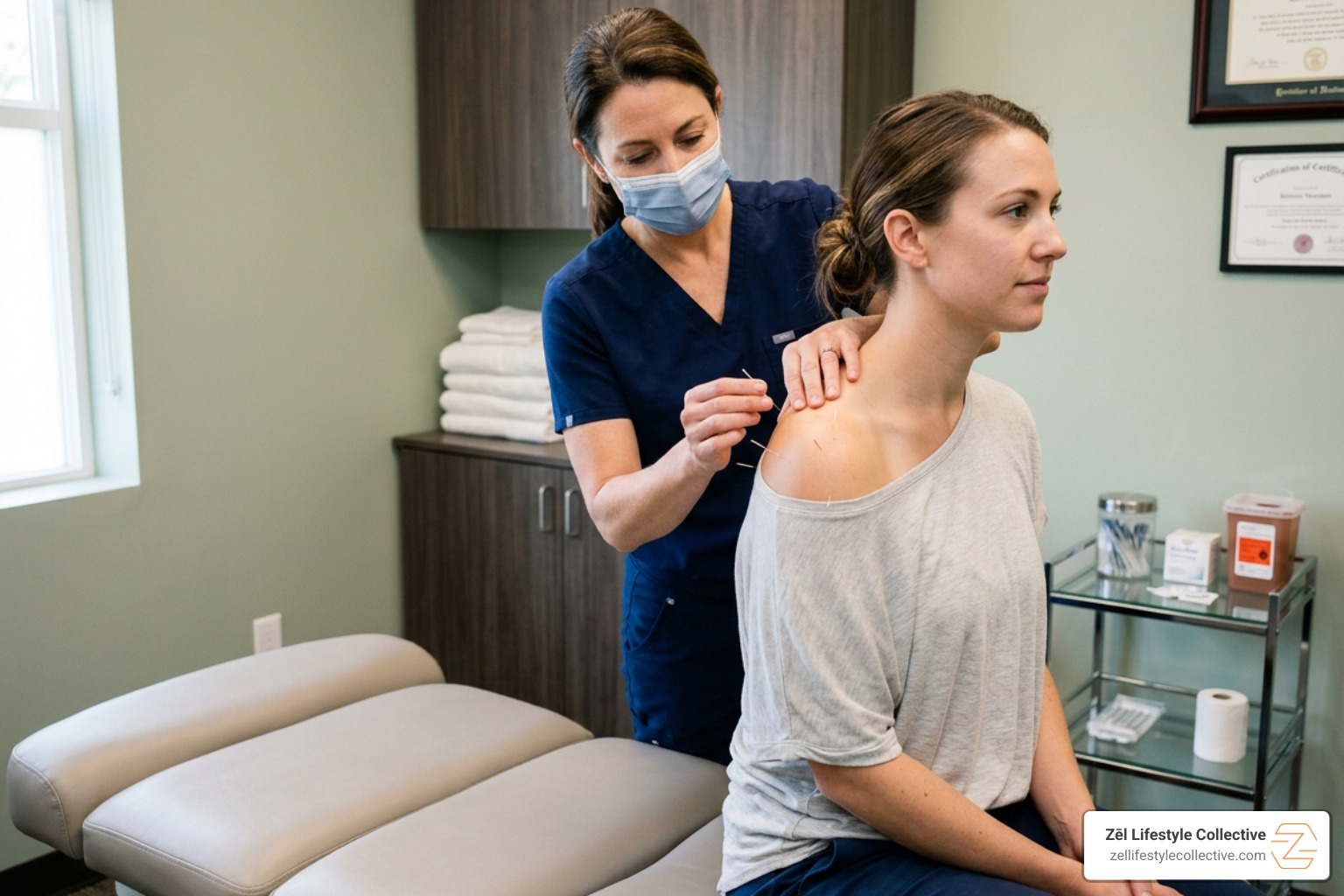
Modern science explains the effectiveness of acupuncture shoulder pain treatments through neurological and biochemical pathways. When a needle is inserted, it stimulates sensory nerves under the skin and in the muscles. This triggers several reactions:
Endorphin Release: The brain releases natural "feel-good" and pain-killing chemicals.
Nerve Signaling: Acupuncture can "override" pain signals before they reach the brain—a concept known as the Gate Control Theory.
Improved Circulation: The micro-trauma of the needle increases blood flow and oxygen to the shoulder joint, which accelerates the repair of damaged tissues.
If you’re curious about the broader applications of this modality, you can read more about how does acupuncture work and who can benefit on our blog.
Clinical Evidence, Specific Conditions, and Safety
As we move through 2026, the body of evidence supporting acupuncture continues to grow. It is no longer considered a "fringe" therapy; it is a mainstream recommendation.
What the Research Says
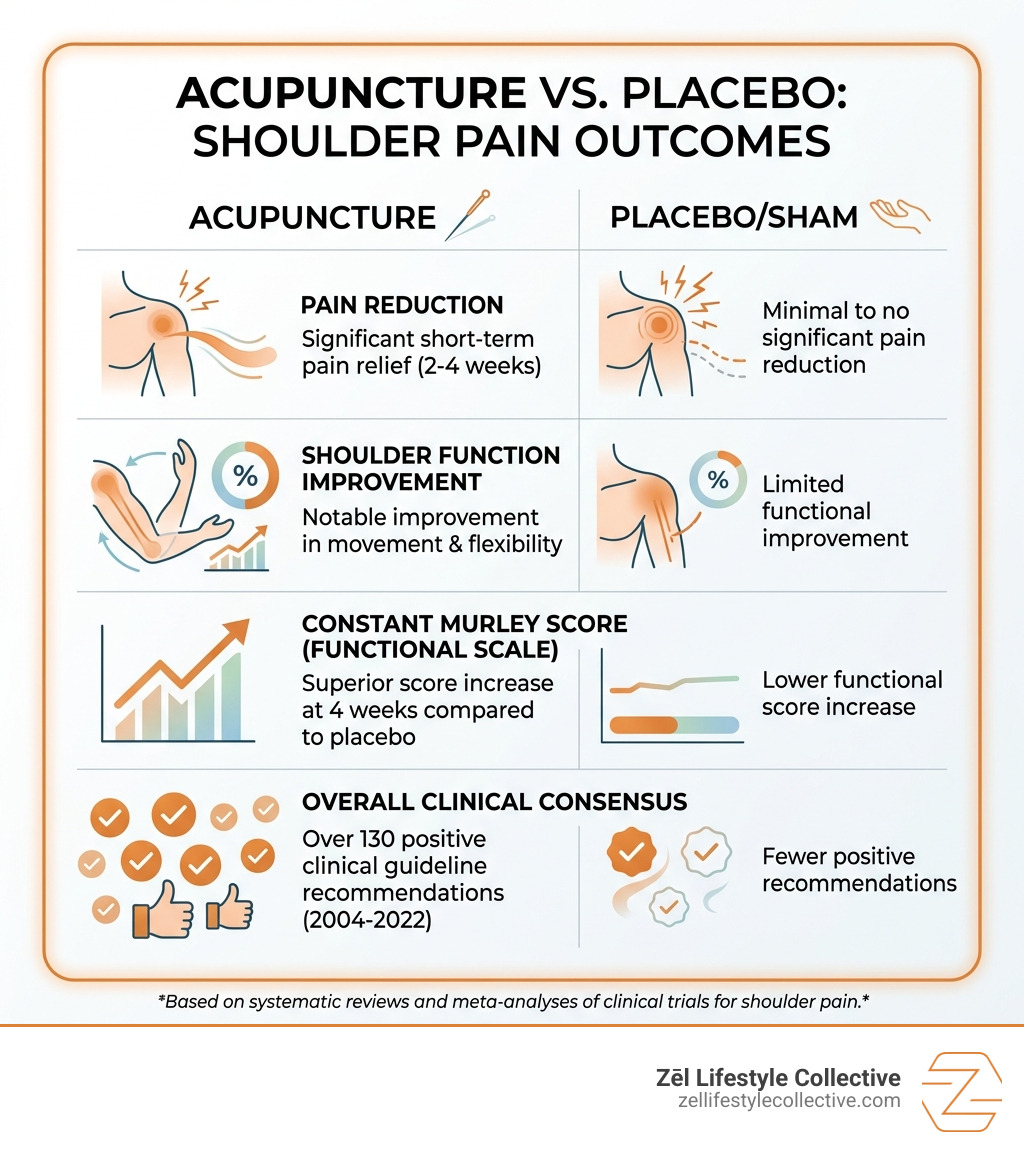
Systematic reviews, including those from Cochrane, have analyzed numerous randomized controlled trials (RCTs). One meta-analysis of 9 trials involving over 500 people showed that acupuncture provides short-term improvements in pain and function that are superior to no treatment and often comparable to or better than placebo for 2–4 weeks.
Interestingly, clinical practice guidelines (CPGs) are even more supportive. Between 2004 and 2022, there were 131 positive recommendations for acupuncture across 12 different shoulder pain subtypes. This suggests that while individual studies may sometimes be small, the overall clinical consensus is that acupuncture is a valuable tool in the pain management toolkit.
Measuring Success: The Constant Murley Score
Researchers often use the Constant Murley Score (a 0–100 scale) to measure shoulder function. Data shows that acupuncture can improve this score by 17.3 points at the 4-week mark compared to placebo. While the difference often narrows over several months, the immediate relief it provides can be the "bridge" a patient needs to begin physical therapy or exercise.
Acupuncture isn't just for musculoskeletal issues, either. Its ability to regulate the nervous system means it is often used for systemic issues, such as acupuncture digestive issues, showing how versatile this treatment can be. For the most up-to-date scientific summaries, you can explore the Acupuncture for shoulder pain | Cochrane reports.
Acupuncture Shoulder Pain and Rotator Cuff Syndrome
One of the most common reasons people seek acupuncture shoulder pain relief is subacromial impingement or rotator cuff issues. A randomized sham-controlled trial published in Scientific research on SIS and acupuncture found that acupuncture, when combined with exercise, led to significant improvements in the Quick DASH (Disabilities of the Arm, Shoulder, and Hand) score and the Western Ontario Rotator Cuff (WORC) index.
The study highlighted that participants receiving real acupuncture had better range of motion (ROM) in flexion, abduction, and rotation compared to those receiving sham treatments.
Managing Frozen Shoulder with Acupuncture Shoulder Pain Protocols
Frozen shoulder (adhesive capsulitis) is notoriously difficult to treat because it involves physical adhesions in the joint capsule. However, acupuncture can be an essential medical specialty for this condition. By increasing blood flow and reducing the "guarding" reflex of the surrounding muscles, it helps patients regain mobility faster than exercise alone.
We often find that patients seeking back pain acupuncture relief also suffer from shoulder stiffness due to the way they carry tension. Addressing both areas simultaneously often leads to much better outcomes.
Frequently Asked Questions about Acupuncture for Shoulder Pain
How many acupuncture sessions are needed for shoulder relief?
While every person is different, a typical clinical protocol involves 2–3 sessions per week for 3–6 weeks. Most patients begin to feel a noticeable difference within the first 4 sessions. For chronic conditions, we might recommend a "loading phase" of frequent visits followed by a maintenance schedule.
Is acupuncture safe for chronic shoulder conditions?
Yes, acupuncture is remarkably safe when performed by qualified professionals using sterile, single-use needles. Side effects are rare and generally mild, such as slight bruising or a temporary "heavy" sensation at the needle site. It is a non-invasive alternative to corticosteroid injections or surgery, which carry higher risk profiles.
Does acupuncture provide long-term benefits for the shoulder?
Evidence suggests that the most significant benefits occur in the short to medium term (up to 5 months). One study showed that the combination of acupuncture plus exercise was significantly better than exercise alone for pain and function for up to 5 months. In some cases, such as a study involving office workers with chronic tension, pain reduction was still reported up to three years after a course of 10 sessions!
Conclusion
Shoulder pain doesn't have to be your "new normal." Whether you are dealing with a recent sports injury, a stubborn case of frozen shoulder, or the wear and tear of a busy life in Tallmadge, Ohio, acupuncture offers a pathway to relief that doesn't rely solely on medication.
At Zēl Lifestyle Collective, we pride ourselves on providing personalized, holistic root-cause treatments. We don't just look at your shoulder; we look at your lifestyle, your movement patterns, and your overall wellness. By combining acupuncture with our other integrative services like chiropractic care and functional medicine, we help you get back to doing what you love without the weight of pain holding you down.
If you're ready to experience the benefits of acupuncture shoulder pain relief for yourself, we invite you to visit us in Tallmadge. Let's work together to restore your mobility and your quality of life.