

Why Everyone is Going Keto for Weight Loss
Why Ketogenic Weight Loss Is Taking Over the Health World
Ketogenic weight loss is one of the most talked-about approaches to shedding body fat today — and for good reason. Here is a quick snapshot of what it involves:
What You Need to Know The Short Answer What it is A very high-fat, very low-carb diet that shifts your body into fat-burning mode How it works Cutting carbs below 50g/day forces your body to burn fat for fuel instead of glucose Typical macros ~70-80% fat, 5-10% carbs, 10-20% protein Weight loss results Up to 10 lbs in the first two weeks; ~2 lbs more than low-fat diets at one year Best for Adults with obesity, type 2 diabetes, metabolic syndrome, or stubborn weight Main risks Keto flu, nutrient deficiencies, poor long-term adherence Who should avoid it People with pancreatitis, liver failure, eating disorders, or on SGLT2 inhibitors
If you are a busy professional in your 40s, you have probably seen keto everywhere — in your social media feed, in your doctor's waiting room, and maybe even in your own kitchen. The promise is simple: eat more fat, cut the carbs, and your body starts burning its own fat stores for energy.
But does it actually work? And is it safe for the long haul?
The science is more nuanced than the headlines suggest. Research shows keto can produce meaningful weight loss — but adherence is hard, and results vary widely from person to person.
This guide cuts through the noise with evidence-based answers.
I'm Dr. Serif Krkic, co-founder of Zēl Lifestyle Collective and a functional medicine practitioner specializing in personalized metabolic health and longevity — including helping clients navigate ketogenic weight loss as part of a root-cause approach to wellness. Through advanced diagnostics and individualized care, I've seen what works, what doesn't, and how to make this diet sustainable for real people with real lives.
What is Ketogenic Weight Loss and How Does It Work?
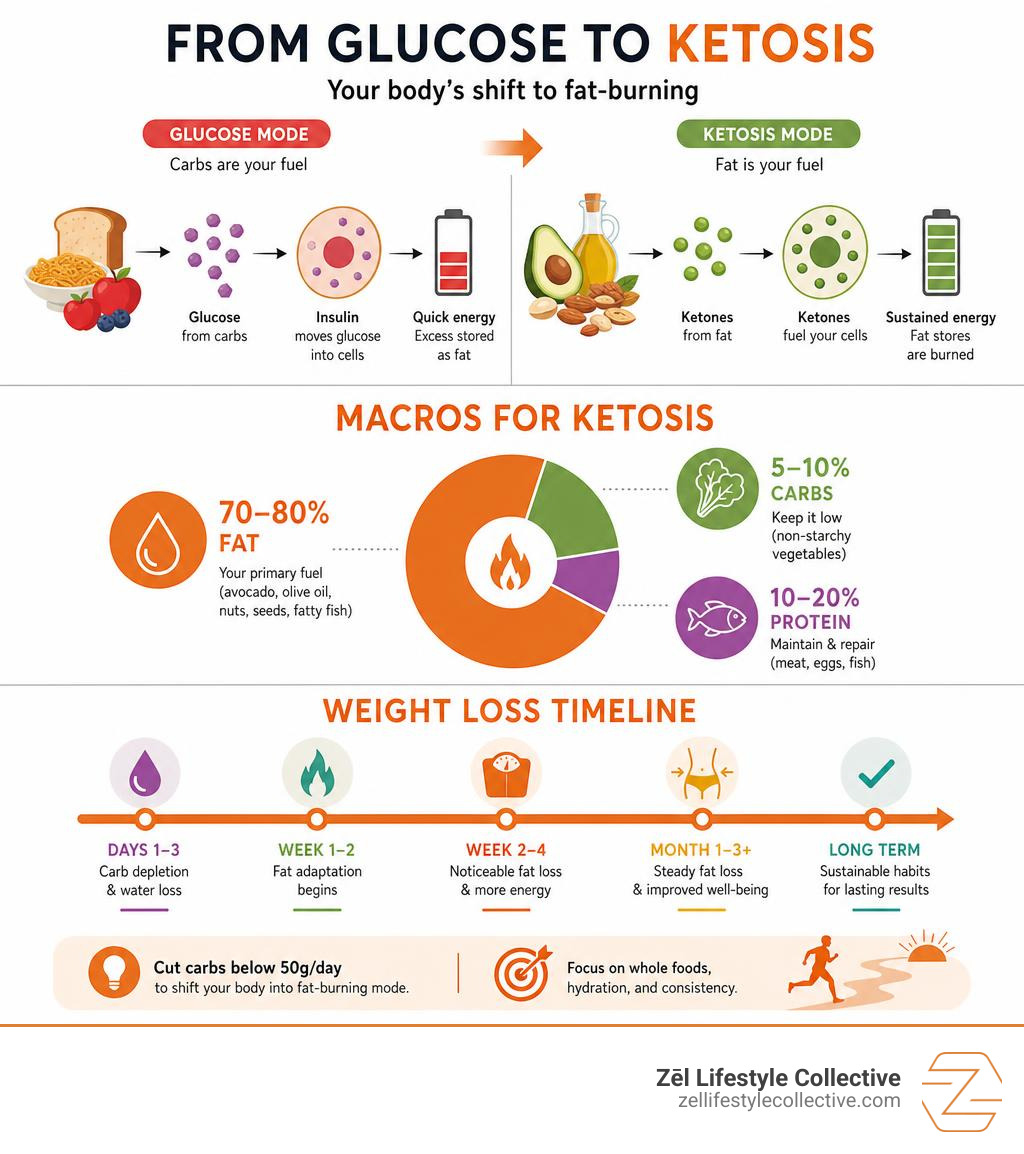
To understand how the ketogenic diet facilitates fat loss, we must look at how our cells produce energy. The human body is remarkably adaptable. Under normal circumstances, our primary source of fuel is glucose, which we get from consuming carbohydrates like bread, pasta, fruit, and starchy vegetables.
Our brain alone demands about 120 grams of glucose daily to function optimally and cannot store it. When we eat carbs, our pancreas releases insulin, a hormone that ushers glucose into our cells to be used for energy. Any excess glucose is stored in the liver and muscles as glycogen, or converted into body fat for long-term storage.
However, when we drastically restrict our carbohydrate intake to less than 50 grams per day, we deplete our glycogen stores within 2 to 3 days. This metabolic crisis triggers an elegant biological backup system. With insulin levels low and glycogen depleted, the body shifts its primary metabolic pathway.
The liver begins breaking down stored body fat and dietary fats into free fatty acids. These fatty acids are then converted in the liver into water-soluble molecules called ketone bodies — specifically beta-hydroxybutyrate (BHB), acetoacetate, and acetone. These ketones cross the blood-brain barrier, providing a highly efficient alternative fuel source for the brain and other non-hepatic organs. This metabolic state is known as nutritional ketosis.

According to scientific research on the impact of a ketogenic diet, this metabolic shift does more than just burn fat; it fundamentally alters cellular energy pathways, reduces systemic inflammation, and influences hunger-regulating hormones.
Nutritional Ketosis for Ketogenic Weight Loss
When you enter nutritional ketosis, your body is no longer relying on the roller coaster of blood glucose and insulin spikes. Because insulin is the primary fat-storage hormone, keeping insulin levels low and stable unlocks your fat cells, allowing free fatty acids to be easily mobilized and burned.
Furthermore, ketone bodies are incredibly efficient fuel sources. From a cellular perspective, ketones yield significantly more adenosine triphosphate (ATP) — the energy currency of our cells — per 100 grams than glucose. Specifically, beta-hydroxybutyrate yields approximately 10,500 grams of ATP per 100 grams, compared to only 8,700 grams of ATP from 100 grams of glucose. This means your mitochondria (the powerhouses of your cells) run cleaner and produce less oxidative stress when fueled by ketones.
During the initial phase of ketogenic weight loss, individuals typically experience rapid weight loss — often up to 10 pounds in the first two weeks. While this is highly encouraging, it is important to understand that a significant portion of this initial drop is due to the diet's natural diuretic effect. Glycogen stores are bound to water in approximately a 1:3 ratio. As your body depletes its glycogen, it releases this stored water, leading to rapid fluid loss and a noticeable reduction in bloating.
Macronutrient Ratios and Allowed Foods
To successfully induce and maintain nutritional ketosis, you must adhere to strict macronutrient ratios. The standard ketogenic diet typically consists of:
Fat: 70% to 80% of total daily calories
Protein: 10% to 20% of total daily calories (moderate intake to prevent gluconeogenesis, where the liver converts excess protein into glucose)
Carbohydrates: 5% to 10% of total daily calories (typically 20 to 50 grams of net carbs per day)
To calculate "net carbs," you subtract the grams of fiber (and certain sugar alcohols) from the total carbohydrates, as fiber is indigestible and does not raise blood glucose or insulin levels.
While a standard ketogenic diet often relies heavily on saturated fats like butter, bacon, and heavy cream, we at Zēl Lifestyle Collective advocate for a whole-food, Mediterranean-style ketogenic approach. This variation prioritizes monounsaturated and polyunsaturated fats, which are far more supportive of long-term cardiovascular health.
Nutrient Standard Ketogenic Diet Mediterranean Ketogenic Diet (Whole-Food) Primary Fat Sources Butter, lard, heavy cream, coconut oil, bacon Extra virgin olive oil, avocados, wild-caught fish, nuts, seeds Protein Sources Red meat, poultry, eggs, pork Fish, seafood, poultry, eggs, moderate wild game Carbohydrate Sources Minimal leafy greens, high-fat dairy Abundant non-starchy vegetables, herbs, garlic, lemon Caloric Source Often formula-based or processed keto products Strictly whole, single-ingredient foods
Allowed foods on a healthy, whole-food ketogenic diet include:
Healthy Fats: Cold-pressed extra virgin olive oil, avocado oil, avocados, olives, and macadamia nuts.
Proteins: Wild-caught salmon, sardines, mackerel, grass-fed beef, pasture-raised eggs, and organic poultry.
Non-Starchy Vegetables: Spinach, kale, broccoli, cauliflower, zucchini, asparagus, and Brussels sprouts.
Low-Glycemic Fruits: Small portions of blackberries, raspberries, and strawberries (in moderation).
Foods to strictly avoid include all grains (wheat, rice, oats), sugars, honey, maple syrup, starchy tubers (potatoes, sweet potatoes), legumes (beans, lentils), most fruits, and highly processed "low-carb" or "sugar-free" packaged snacks that contain inflammatory seed oils and artificial additives.
What the Research Says About Keto vs. Other Diets
When considering any diet, it is vital to look past the social media hype and examine what the clinical literature actually says. Over the past several decades, numerous randomized controlled trials (RCTs) and systematic reviews have compared the ketogenic diet to conventional low-fat, high-carbohydrate diets.
A major meta-analysis of 13 randomized controlled trials found that individuals assigned to a ketogenic diet achieved a small but significantly greater reduction in body weight of about 2 pounds (approximately 0.9 kg) compared with those on a low-fat diet at the one-year mark.
Additionally, a large-scale randomized controlled trial (N=609) comparing healthy low-carbohydrate diets to healthy low-fat diets found that weight loss at 1 year was 6.0 kg (13.2 lbs) for the low-carb group compared with 5.3 kg (11.6 lbs) for the low-fat group. The take-home message from high-quality science is that while keto is highly effective, it is not a magical cure-all; its long-term results are comparable to other high-quality, whole-food dietary approaches when calorie intake is controlled.
Short-Term vs. Long-Term Efficacy
Keto shines brightest in short-term weight reduction and rapid metabolic resetting. For example, a clinical study involving 39 obese adults on a ketogenic very low-calorie diet (VLCKD) for 8 weeks demonstrated a remarkable mean loss of 13% of their starting body weight.
Similarly, another study of 89 obese adults on a structured, two-phase ketogenic diet regimen showed a significant mean 10% weight loss with no weight regain at one year.
However, long-term success with keto is heavily dependent on adherence. Maintaining strict carb restriction is incredibly challenging in our modern food environment. In a 9-month personalized ketogenic intervention, patient retention dropped from nearly complete participation at 3 months to only 23% at 6 months, and plummeted to just 8.4% at 9 months.
This dramatic drop-off highlights the common pitfall of "diet monotony" and the social pressures of eating out. To prevent this, having a structured Sustainable Weight Loss Plan that includes a clear transition phase is essential for maintaining your hard-won results.
Body Composition and Muscle Preservation
One of the most critical aspects of any weight loss journey is ensuring that the weight lost comes from fat tissue, not precious skeletal muscle. This is especially true as we age, when maintaining muscle mass is vital for metabolic rate, mobility, and longevity.
Interesting insights have emerged from recent research on body composition, particularly in women. A randomized controlled feeding trial published in 2024 investigated the effects of a ketogenic diet on body composition in women who were healthy, young, and of normal weight.
The study found that the ketogenic low-carb, high-fat (LCHF) diet led to significant reductions in both lean mass (-1.45 kg) and fat mass (-0.66 kg). Surprisingly, the loss of lean mass was approximately twice that of fat mass loss, despite the participants maintaining a high protein intake of about 1.8 grams per kilogram of body weight.
There are a few key reasons for this. First, glycogen depletion naturally reduces intramuscular water, which DXA scans register as a loss of "lean mass." Second, ketogenic states can sometimes inhibit the mTORC1 pathway (which governs muscle protein synthesis) due to low insulin levels.
To mitigate this risk, we strongly advise that anyone following a ketogenic diet — especially normal-weight individuals or women over 40 — engage in deliberate, progressive strength training to protect and preserve skeletal muscle.
Health Benefits and Clinical Applications of Ketosis
While most people seek out the ketogenic diet for its aesthetic benefits, its origins and primary clinical applications are deeply rooted in metabolic and neurological therapy. The ketogenic diet was originally developed in the 1920s at the Mayo Clinic as a treatment for pediatric epilepsy, and it remains a guideline-supported therapy for drug-resistant seizures today.
Beyond epilepsy, nutritional ketosis acts as a powerful metabolic intervention. By bypassing glucose metabolism, it gives the pancreas a rest, lowers circulating insulin, and triggers cellular clean-up processes (autophagy). Many patients find that the benefits of this metabolic shift extend far beyond the scale, reporting improved mental clarity, stable energy, and reduced systemic pain.
For a real-world look at how profound these changes can be, you can read this Cleveland Clinic patient story on ketogenic success, which details how a personalized ketogenic program helped a local psychologist completely transform his health and vitality.
Managing Type 2 Diabetes and Insulin Resistance
The ketogenic diet is exceptionally effective for managing and even reversing type 2 diabetes and insulin resistance. Because type 2 diabetes is fundamentally a disease of carbohydrate intolerance and chronically elevated insulin, removing the dietary trigger (carbs) directly addresses the root cause.
In a randomized crossover trial in type 2 diabetes, participants demonstrated significant reductions in body weight alongside dramatically improved glucose regulation. Clinical trials show that patients with type 2 diabetes following a ketogenic diet can achieve an average weight loss of 26.2 pounds over two years, resulting in profound reductions in HbA1c (a 3-month average of blood sugar levels) and a significant decrease in — or complete elimination of — the need for glucose-lowering medications.
However, if you are taking medications for blood sugar or blood pressure, it is absolutely critical to work with a healthcare provider to adjust your dosages before you start cutting carbs, as your requirements will drop rapidly. If you are exploring medical weight loss options in Ohio, you might also find our guide on GLP-1 Weight Loss Ohio helpful for understanding how modern medical therapies compare and coordinate with metabolic diets.
Neurological and Cardiovascular Impacts
The brain is highly receptive to ketone bodies. In pediatric epilepsy, a strict ketogenic diet has been shown to reduce seizure frequency by 50% or more in over half of children who do not respond to traditional anti-seizure medications. Emerging research is also exploring the neuroprotective benefits of ketones for neurodegenerative diseases like Alzheimer's and Parkinson's, as these conditions are characterized by "type 3 diabetes" — a state where the brain loses its ability to effectively metabolize glucose but can still readily use ketones for energy.
From a cardiovascular perspective, the impact of a ketogenic diet is often positive, though it requires careful monitoring. Multiple studies show that a well-formulated ketogenic diet leads to a significant increase in HDL ("good") cholesterol and a dramatic reduction in fasting triglycerides. Blood pressure also typically improves due to the loss of excess water weight and reduced arterial stiffness.
However, in a subset of individuals (often referred to as "hyper-responders"), a high intake of saturated fats can cause a sharp rise in LDL cholesterol and ApoB (a marker of cardiovascular risk). This is why we emphasize healthy, unsaturated fats and routine blood work.
Potential Risks, Side Effects, and Contraindications
As powerful as the ketogenic diet is, it is not a casual lifestyle change. It is a major metabolic intervention that comes with potential side effects, risks, and strict contraindications.
Managing the Keto Flu and Short-Term Side Effects
As your body transitions from burning sugar to burning fat, you may experience a cluster of transient symptoms commonly known as the "keto flu." These symptoms typically appear within the first 2 to 7 days of starting the diet and can include:
Headaches and brain fog
Fatigue and lethargy
Nausea and mild dizziness
Muscle cramps
Constipation or diarrhea
Halitosis (fruity or metallic-smelling "keto breath" caused by the excretion of acetone)
Fortunately, these symptoms are largely preventable. Because the kidneys excrete sodium and water rapidly when insulin levels drop, most keto flu symptoms are simply the result of mild dehydration and electrolyte depletion.
You can easily manage this by drinking plenty of water and actively supplementing with high-quality electrolytes — specifically sodium, potassium, and magnesium. Incorporating targeted Nutraceuticals and Supplements into your daily routine can also help bridge any micronutrient gaps and support your liver and gallbladder as they adapt to processing higher amounts of dietary fat.
Contraindications for Ketogenic Weight Loss
The ketogenic diet is a therapeutic tool, meaning it is not safe for everyone. There are absolute contraindications where the diet must be strictly avoided:
Pancreatitis: The pancreas cannot handle the high enzymes required to digest large amounts of fat.
Liver Failure: The liver is responsible for converting fatty acids into ketones; compromised liver function can lead to severe metabolic complications.
Fat-Metabolism Disorders: Rare genetic conditions (such as carnitine palmitoyltransferase deficiency) prevent the body from transporting and burning fats.
History of Eating Disorders: The highly restrictive nature of keto can trigger or exacerbate disordered eating behaviors.
Pregnancy and Lactation: The high nutrient demands of pregnancy and the risk of lactation-induced ketoacidosis make keto unsafe during these phases.
SGLT2 Inhibitor Medications: Taking these specific type 2 diabetes medications (such as Jardiance or Farxiga) while on a ketogenic diet drastically increases the risk of a life-threatening medical emergency called euglycemic diabetic ketoacidosis.
Sustainability, Monitoring, and Long-Term Success
Can you stay on keto forever? For most people, the answer is no — and that is completely fine. At Zēl Lifestyle Collective, we view ketogenic weight loss as a highly effective phase of a broader, lifelong wellness journey, rather than a permanent destination.
Clinical Monitoring and Biomarker Testing
If you choose to utilize a ketogenic diet, objective monitoring is essential to ensure safety and track progress. While urine ketone strips are cheap and convenient for beginners, they only measure acetoacetate excreted in the urine, which becomes less accurate as your body becomes keto-adapted and highly efficient at utilizing ketones.
For accurate tracking, we recommend using a blood ketone meter to measure beta-hydroxybutyrate (BHB). A reading between 0.5 and 3.0 mmol/L indicates optimal nutritional ketosis for weight loss.
Equally important is routine blood work. We advise our clients to get regular lab panels to monitor:
Fasting Lipid Profiles: To track how your cholesterol and triglycerides are responding to the high fat intake.
Renal Function (Kidney Health): To monitor kidney filtration rates, especially since high-protein or rapid weight loss diets can sometimes increase the risk of kidney stones or elevated uric acid.
Electrolyte Levels: To ensure sodium, potassium, and magnesium remain balanced.
To learn more about the scientific discussion surrounding the long-term sustainability of this approach, you can read this informative Ohio State Health article on long-term weight loss.
Strategies to Improve Long-Term Adherence
Because strict keto can feel socially isolating and difficult to maintain, we often help our clients implement strategies that build flexibility into their lives.
One of the best ways to improve long-term adherence is to transition from a strict, formula-based ketogenic diet to a whole-food, Mediterranean-style ketogenic diet. This approach allows for a wider variety of colorful, fiber-rich vegetables, fresh herbs, and healthy fats, making meals far more satisfying and culturally integrated.
Another excellent strategy is incorporating intermittent fasting (such as a 16:8 fasting schedule). Fasting naturally depletes glycogen and accelerates your entry into ketosis, allowing you to maintain metabolic flexibility without needing to restrict carbohydrates to extreme levels 100% of the time.
This is especially helpful for women, as metabolic needs change over time. If you are noticing that your metabolism is shifting, our deep dive into Why Weight Loss Gets Harder After 40 offers valuable insights into how to adapt your nutrition and lifestyle habits to match your changing biology. Working with a dedicated professional through Integrative Nutrition Health Coaching can provide the personalized accountability and meal-planning strategies you need to make these changes stick.
Frequently Asked Questions about Keto
How much weight can you lose in the first two weeks on keto?
Most people experience rapid weight loss during the first two weeks, often ranging from 5 to 10 pounds. However, it is important to remember that the majority of this initial loss is water weight. When you cut carbohydrates, your body burns through its stored glycogen. Because glycogen holds a significant amount of water, depleting these stores results in a rapid release of fluids through urine and sweat. Actual fat loss begins to occur more steadily after this initial phase, typically at a rate of 1 to 2 pounds per week.
Is nutritional ketosis the same as diabetic ketoacidosis?
No, they are completely different metabolic states. Nutritional ketosis is a safe, natural physiological state where blood ketone levels are controlled and typically range from 0.5 to 3.0 mmol/L, with blood sugar remaining normal or low.
Diabetic ketoacidosis (DKA) is a life-threatening medical emergency that occurs primarily in type 1 diabetics (and occasionally type 2 diabetics on certain medications) who have an absolute lack of insulin. Without insulin, the body cannot get glucose into the cells, causing blood sugar to skyrocket to dangerous levels while simultaneously flooding the bloodstream with massive amounts of ketones (often exceeding 8.0 to 10.0 mmol/L). This combination makes the blood highly acidic and requires immediate emergency medical attention.
Can exogenous ketone supplements replace a low-carb diet?
No. While exogenous ketone supplements (like ketone salts or esters) can temporarily raise your blood ketone levels, they do not trigger the same metabolic benefits as a low-carbohydrate diet. When you eat a ketogenic diet, your body is actively breaking down its own stored body fat to produce ketones.
When you take a supplement, you are simply consuming energy from an external source. While some studies suggest exogenous ketones may help suppress appetite or provide temporary mental clarity, there is no clinical evidence showing that they lead to spontaneous fat loss if you continue to eat a high-carbohydrate diet.
Conclusion
The ketogenic diet is a remarkably powerful tool for rapid weight loss, insulin sensitization, and metabolic resetting. However, because it is a significant metabolic intervention, it is not a one-size-fits-all solution. Achieving lasting results requires a personalized approach that takes your unique biochemistry, hormones, lifestyle, and preferences into account.
At Zēl Lifestyle Collective in Tallmadge, Ohio, we specialize in providing personalized, holistic, root-cause treatments to help you achieve your health and weight loss goals safely and sustainably. Our signature Thrive3 program combines advanced metabolic testing, functional medicine, targeted nutrition, and lifestyle support to help you build a body that thrives.
Whether you are looking to explore ketogenic weight loss, optimize your metabolic health, or find a sustainable path to lifelong vitality, we are here to guide you every step of the way. Explore our personalized health services today to schedule your comprehensive consultation.