

The Ultimate Guide to Reliable Lab Testing
Why Lab Testing Is the Foundation of Smarter Health Decisions
Lab testing is the process of analyzing biological samples — like blood, urine, or saliva — to measure key health markers, detect disease, and guide treatment decisions.
Here's a quick overview of what lab testing covers:
What It Tests Examples Why It Matters Blood chemistry Glucose, cholesterol, hormones Flags metabolic and cardiovascular risk Complete blood count Red cells, white cells, platelets Detects infection, anemia, immune issues Metabolic panels Kidney, liver, electrolyte function Monitors organ health Hormone levels Thyroid, cortisol, testosterone Guides energy, mood, and weight management Urinalysis Kidney markers, infection signs Screens for renal and urinary conditions Specialty/functional tests Gut microbiome, toxins, nutrients Uncovers root causes standard tests miss
Over 70% of healthcare decisions are based on diagnostic results. Yet most people only get tested when something already feels wrong — missing the window where early action matters most.
If you're a busy professional in your 40s dealing with fatigue, weight changes, or chronic pain, the answers you've been searching for are often hiding in your bloodwork. The challenge isn't getting tested — it's knowing which tests to run, how to read them, and what to do with the results.
I'm Dr. Serif Krkic, a functional medicine doctor and longevity specialist who uses advanced lab testing as the cornerstone of every personalized health plan at Zēl Lifestyle Collective. My background in functional medicine and hormone optimization means I look beyond standard reference ranges to find what's actually driving your symptoms.
The Critical Role of Lab Testing in Modern Healthcare
When we think of healthcare, we often think of the treatments: the prescriptions, the therapies, the adjustments, and the lifestyle overhauls. But how do we know exactly what to treat? That is where diagnostic testing comes in. Diagnostic testing acts as the ultimate GPS for your biochemistry. Without it, even the most well-meaning healthcare plan is just educated guesswork.
In modern medicine, we use diagnostic markers for early detection, disease monitoring, preventive care, and personalized medicine. Rather than waiting for a full-blown disease to manifest, we can track subtle shifts in your biomarkers to stop chronic conditions in their tracks. For those seeking to transition from simply "not sick" to truly thriving, utilizing advanced Functional Lab Testing provides the deep insights required to optimize your health.
How Clinical Lab Testing Guides Medical Decisions
Every year, millions of Americans complete routine blood draws. In fact, major reference networks like Quest Diagnostics perform over 200 million tests annually, helping patients of all ages find answers. These diagnostic results form the absolute backbone of clinical treatment planning.
When you sit down with a healthcare provider, your lab data dictates whether you need a dietary intervention, a targeted supplement protocol, or a referral to a specialist. In conventional medicine, clinical outcomes are heavily tied to these numbers. However, in our practice, we use Functional Medicine to view these markers through a narrower, optimal lens. Instead of waiting for your blood sugar or liver enzymes to cross the threshold into a diseased state, we look at optimal reference ranges to correct imbalances before they disrupt your life.
Preventive Care and Early Detection Through Routine Screening
The human body is incredibly resilient. It will compensate for imbalances for months, or even years, before you feel a single symptom. This is why biomarker tracking is so critical. Routine screening allows us to catch chronic disease processes—such as insulin resistance, cardiovascular inflammation, and thyroid dysfunction—in their infancy.
For example, standard cardiovascular screening often stops at basic cholesterol levels. But advanced biomarker tracking looks at specific inflammatory markers and lipid particle sizes to assess your actual risk. Similarly, monitoring your hormonal pathways can explain why you are suddenly struggling with brain fog, sleep issues, or stubborn weight gain. By implementing proactive testing, we can craft a personalized strategy for health optimization, which is particularly evident when exploring The Truth About Hormone Optimization.
Main Types of Diagnostic and Functional Evaluations

To understand how lab testing works, it helps to understand the different modalities available. Clinical laboratories analyze samples across several specialties, including chemistry, hematology, immunology, and pathology.
While standard blood chemistry and metabolic panels are excellent for assessing general organ function, functional evaluations go a step further. They assess how your systems interact, looking at digestive health, environmental toxic loads, and cellular energy production.
Standard Blood Panels and Metabolic Markers
If you have ever had routine bloodwork done at a conventional doctor's office, you likely received a standard suite of tests. These typically include:
Complete Blood Count (CBC): Measures red blood cells, white blood cells, and platelets. It is the primary tool for detecting anemia, active infections, or immune system strain.
Basic Metabolic Panel (BMP) & Comprehensive Metabolic Panel (CMP): These assess your blood sugar, kidney function (BUN and creatinine), liver enzymes (ALT and AST), protein levels, and electrolyte balance.
Lipid Panel: Measures total cholesterol, HDL, LDL, and triglycerides to evaluate basic cardiovascular markers.
These standard markers are highly valuable, but they only tell part of the story. If you want to understand how these baseline markers fit into a broader, holistic view of your health, our Functional Medicine Clinic Complete Guide explains how we interpret these standard metrics differently. You can also view the comprehensive list of baseline chemistry, hematology, and therapeutic drug monitoring components in the Lab-in-a-Box® Test Menu .
Advanced Functional Lab Testing for Root-Cause Analysis
Standard labs are designed to diagnose pathology. Functional labs, on the other hand, are designed to find the root cause of chronic, unexplained symptoms. If you are struggling with persistent bloating, fatigue, joint pain, or brain fog, standard bloodwork often comes back "completely normal." That is because standard tests rarely look at the gut microbiome, cellular nutrient levels, or toxic exposures.
Advanced functional testing includes:
Comprehensive Microbiome Analysis: Your gut is the epicenter of your immune system, neurotransmitter production, and nutrient absorption. A Comprehensive Stool Analysis looks at beneficial bacteria, opportunistic pathogens, yeast overgrowth, and inflammatory markers in the digestive tract.
Advanced Hormone Mapping: Rather than a single snapshot in time, functional hormone testing tracks cortisol curves, estrogen metabolites, and progesterone ratios over a 24-hour cycle.
Mycotoxin and Environmental Toxin Screens: Chronic exposure to heavy metals, pesticides, or mold can severely damage your mitochondrial function and trigger systemic inflammation. Uncovering these hidden stressors is key to addressing The Silent Impact of Mold and Toxins.
Preparing for Your Appointment and What to Expect

Getting your lab work done should not be a source of anxiety. Knowing what to expect and how to prepare can make the entire process seamless and ensure your results are highly accurate. Proper preparation is particularly important because minor daily habits—like your morning cup of coffee or your evening vitamins—can significantly skew certain biomarkers.
If you are dealing with chronic, unexplained symptoms, getting clean, accurate data is the first step to finding relief. For those struggling to find answers to persistent exhaustion, understanding how to prepare for your diagnostic workup is crucial, as we discuss in Chronic Fatigue Is Not Normal.
Step-by-Step Patient Preparation Guidelines
To get the most accurate snapshot of your health, follow these essential preparation guidelines:
Observe the Fasting Window: Many common tests, such as fasting glucose, insulin, and lipid panels, require you to fast for 8 to 12 hours before your blood draw. This means no food or beverages other than plain water.
Stay Well-Hydrated: Drink plenty of water before your appointment. Hydrated veins are much easier for a phlebotomist to locate, making the blood draw quicker and more comfortable. Hydration also prevents your blood sample from being artificially concentrated.
Manage Your Medications and Supplements: Some vitamins can drastically interfere with lab assays. For example, biotin (vitamin B7) is famous for skewing thyroid panel results. Be sure to discuss your current supplement regimen with your provider. For more details on how specific nutrients interact with your biochemistry, read our guide on Nutraceuticals and Supplements.
Avoid Strenuous Exercise: Intense workouts the day before a test can temporarily elevate liver enzymes, muscle breakdown markers (like creatine kinase), and inflammatory proteins. Stick to light movement the day before your draw.
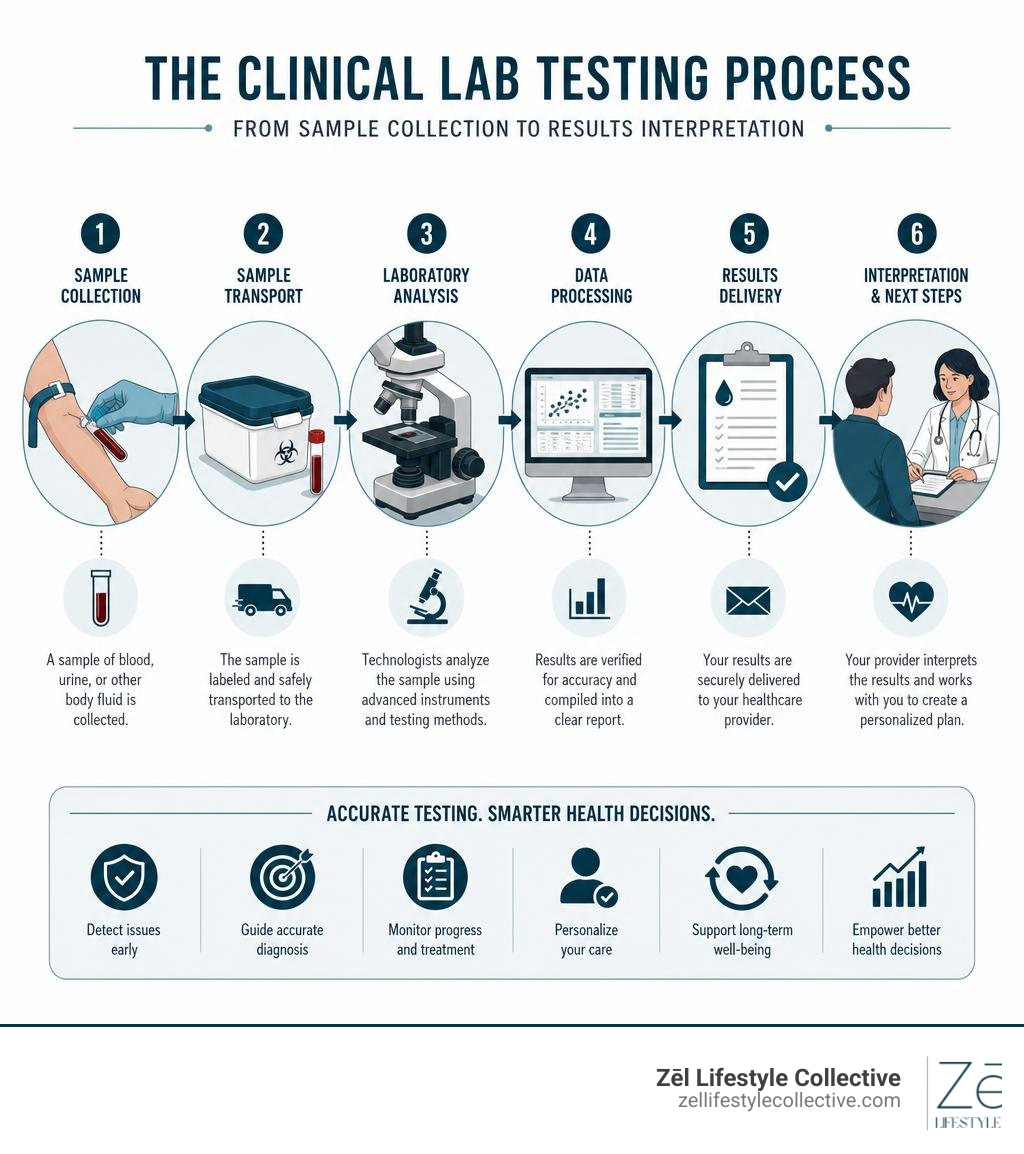
Understanding the Sample Collection Process
Depending on the specific markers we are investigating, your sample collection might take a few different forms:
Venipuncture (Blood Draw): The most common method. A phlebotomist will place a tourniquet around your arm, clean the area, and use a small needle to collect blood into sterile tubes. The process typically takes less than two minutes.
Urine Collection: Often used to check kidney function, detect urinary tract infections, or analyze hormone metabolites. You will usually be asked to provide a "clean catch" midstream sample.
Saliva Testing: Frequently used for adrenal hormone mapping (cortisol curves) because it measures the "free," active hormones in your system. This is typically done at home at specific times throughout the day.
Stool Collection: Used for comprehensive digestive analysis. This is completed in the privacy of your own home using a specialized kit, which is then mailed directly to the processing laboratory.
Navigating Lab Providers, Accreditations, and At-Home Options
Where you get your labs processed matters. Not all laboratories operate under the same standards of quality control, and the convenience of at-home testing must be weighed against the clinical validity of the processing facility.
To help you understand your options, let us compare the different types of testing providers available to patients in Ohio:
Provider Type Examples / Ohio Resources Best For Key Considerations National Reference Labs Tallmadge-North - Quest Diagnostics Routine testing, insurance coverage, local convenience High volume, can feel impersonal, strict scheduling Hospital System Labs [Laboratory Services Ohio State Medical Center ](https://wexnermedical.osu.edu/laboratory-services) Inpatient care, specialized pathology, local urgent care Often requires direct physician orders, higher cost Independent Regional Labs Ohio Independent Laboratories LLC A world-class laboratory in ... Rapid local processing, personalized service May have fewer direct-to-consumer options Retail Clinic Partnerships [Blood Tests in Tallmadge, OH 2 Lab Locations - Rite Aid ](https://riteaid.com/locations/oh/tallmadge) Quick routine draws, local walk-ins Limited test menus compared to main hubs At-Home Self-Collection Direct-to-consumer kits Convenience, preliminary screening, privacy Risk of user error, sample degradation in transit
Evaluating Clinical Laboratory Reliability and Standards
When choosing a lab provider, clinical accuracy is paramount. High-quality laboratories must comply with the CDC Clinical Laboratory Improvement Amendments (CLIA), which regulate all laboratory testing performed on humans in the United States.
Additionally, premier facilities obtain accreditation from the College of American Pathologists (CAP). CAP accreditation means the laboratory meets the highest standards of quality control, accuracy, and pathologist oversight. For instance, major reference centers like Mayo Clinic Laboratories perform 28 million tests annually, utilizing a menu of over 4,300 specialized tests backed by thousands of consulting physicians and scientists. You can learn more about their advanced diagnostic capabilities directly at Home - Mayo Clinic Laboratories .
Working with accredited labs ensures that your reference ranges are accurate and that your results are reliable. This level of reliability is critical when investigating complex, systemic issues, such as autoimmune conditions, where subtle antibody markers can make or break a diagnosis. To understand how we navigate these complex immune pathways, read our article on why Autoimmune Symptoms Are Not Random.
Pros and Cons of At-Home Self-Collection Kits
At-home testing has exploded in popularity, offering unprecedented convenience. While these kits have democratized access to health data, they come with distinct limitations:
The Pros: You can collect your sample (usually saliva, stool, or a finger-prick blood spot) on your own schedule in the comfort of your home. It is private, convenient, and excellent for initial screening or ongoing wellness tracking.
The Cons: Finger-prick blood samples are more prone to "hemolysis" (ruptured blood cells), which can ruin the sample. There is also a higher risk of user error during collection, and samples can degrade if they sit in a hot delivery truck during transit.
For definitive clinical diagnoses and treatment planning, we almost always recommend a professional in-office blood draw over a finger-prick kit to ensure absolute clinical validity.
Interpreting Your Results and Taking Action
Receiving your lab results can feel like getting a document written in a foreign language. You see a long list of chemical names, numbers, and perhaps a few flagged markers indicating that a value is "high" or "low."
A standard laboratory reference range is calculated using a bell curve of the "average" population that visits that lab. But remember: the average person getting lab work done is often not feeling well. At Zēl Lifestyle Collective, we do not want you to settle for "average" health. We look for optimal ranges—the tight window where your body functions at its absolute best.
Rather than looking at each marker in isolation, we perform longitudinal tracking. By comparing your biomarkers over time, we can see trends before they cross into pathological territory. This holistic, big-picture analysis is what sets our Functional Medicine Clinic Complete Guide apart from conventional, symptom-based care.
Frequently Asked Questions About Diagnostic Testing
Navigating healthcare can be confusing. Here are some of the most common questions we hear from patients in our Tallmadge community:
Do I need a doctor's order to get a blood test?
Traditionally, yes—you needed a physician's prescription to get bloodwork done. However, direct-to-consumer testing has made it easier than ever to order your own panels. You can easily Compare Blood Testing Labs in Ohio to explore self-ordering options.
There are also innovative programs like Free Blood Tests with Blood Donation — GoodLabs , which partner with blood centers to offer donors free wellness panels as an incentive for saving lives. While self-ordering is a fantastic tool for self-advocacy, we always recommend reviewing your results with a trained clinical expert who can help you put those numbers into a comprehensive treatment plan.
How long does it take to receive my lab results?
Turnaround times depend heavily on the complexity of the test:
Routine Panels (like a CBC or CMP): Typically processed very quickly. If you visit a local facility like Summa Health Tallmadge Urgent Care , basic results are often ready within 24 to 48 hours.
Specialty and Functional Tests: Advanced hormone mapping, heavy metal screens, or stool analyses must often be sent to specialized reference laboratories. These comprehensive panels typically take 1 to 2 weeks to process, compile, and deliver via secure digital portals.
What should I do if my lab results are outside the normal reference range?
First, do not panic. An out-of-range marker is not an immediate medical emergency; it is simply a clue. It requires clinical correlation—meaning we must look at that number in the context of your symptoms, your diet, your stress levels, and your medical history.
One abnormal reading often warrants a repeat test or follow-up evaluations to confirm the finding. Our primary goal is always a root-cause investigation: we do not just want to throw a medication at a flagged number; we want to understand why that number is out of range in the first place.
Conclusion: Taking Control of Your Health Journey
Your health is your most valuable asset, and reliable lab testing is the key to protecting it. By moving away from reactive, symptom-based care and embracing a proactive, data-driven approach, you can optimize your energy, protect your longevity, and truly understand how your body functions.
At Zēl Lifestyle Collective, we are proud to offer a comprehensive, holistic approach to wellness. Whether you are looking for advanced functional testing, chiropractic care, acupuncture, or integrative medical consultations, our team is here to guide you every step of the way.
If you are ready to stop guessing and start knowing, visit our Integrative Health Tallmadge Clinic to meet our team, or explore our specialized options for Functional Lab Testing to begin your journey toward optimal health today.