

Understanding Your Metabolism for Better Weight Loss
Why Metabolic Weight Loss Is the Smarter Approach to Lasting Fat Loss
Metabolic weight loss is a science-based approach that goes beyond simply eating less. Instead of counting calories alone, it focuses on how your body produces and uses energy — and fixes the underlying reasons why fat loss stalls in the first place.
Quick answer: What is metabolic weight loss?
It targets the root causes of weight gain (hormones, insulin resistance, muscle loss, metabolic slowdown)
It preserves muscle mass while reducing body fat
It uses tools like GLP-1 medications, nutrition therapy, and behavioral coaching
It produces more sustainable results than traditional calorie-restriction diets
It is managed by a clinical team, not a one-size-fits-all app or meal plan
Here's the hard truth most people don't hear: a slow metabolism is rarely the main reason someone gains weight. According to Mayo Clinic, weight depends primarily on how much you eat and drink combined with how much you move. But that doesn't mean your metabolism is irrelevant — far from it.
When you lose weight the wrong way, your body fights back. It slows your resting metabolic rate, breaks down muscle for energy, and makes it harder to keep the weight off. Research shows that for every 50 calories per day your metabolism adapts downward, you can lose up to half a kilogram less than expected — even if you're sticking to your diet perfectly.
That's the gap metabolic weight loss is designed to close.
I'm Dr. Serif Krkic, chiropractor, longevity-focused physician, and co-founder of Zēl Lifestyle Collective, where I specialize in functional medicine and personalized health optimization — including metabolic weight loss strategies that address root causes rather than surface-level symptoms. In this guide, I'll walk you through the science and the practical steps so you can make smarter decisions about your own weight loss journey.
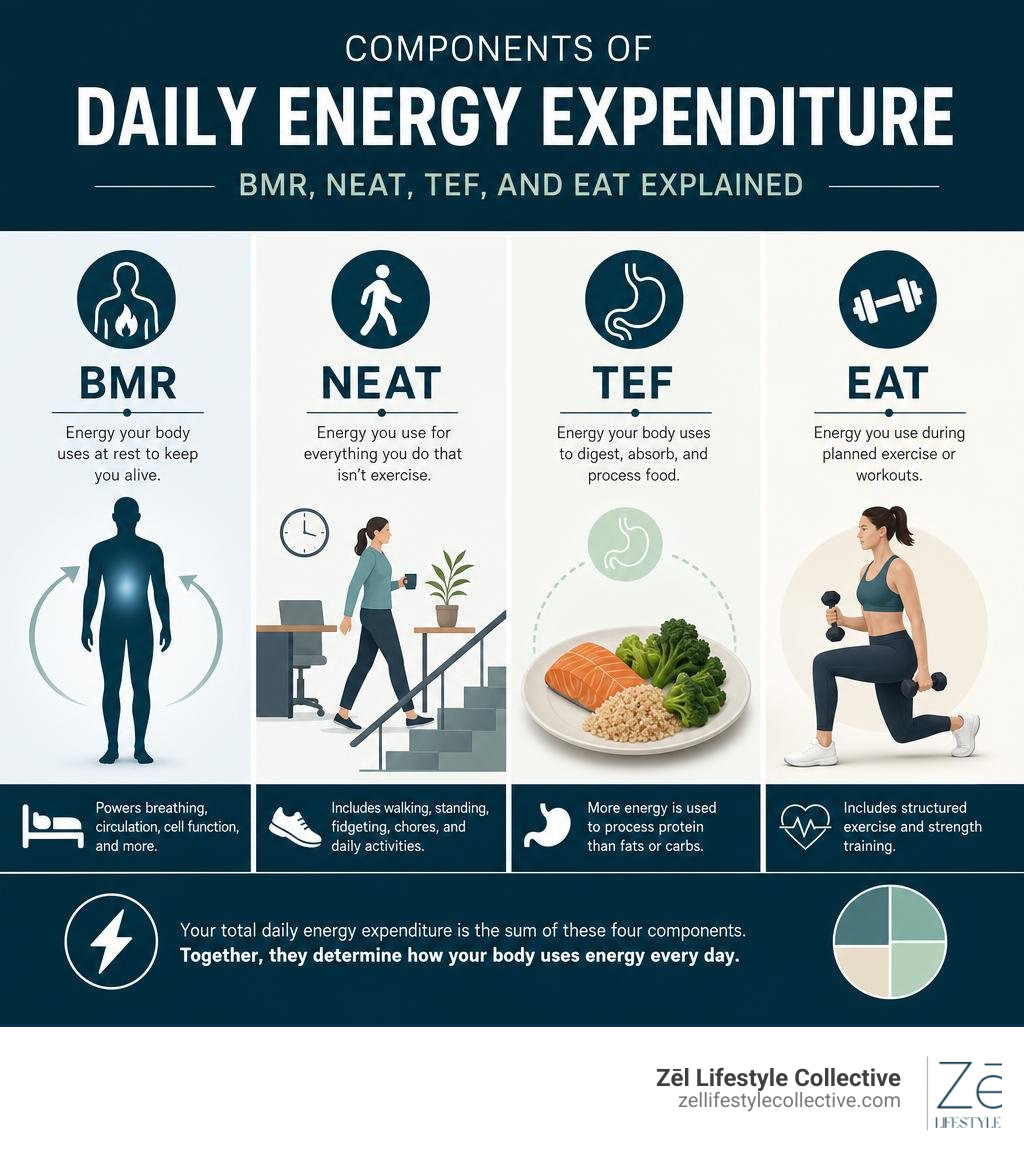
What is Metabolic Weight Loss and How Does It Work?

At its core, metabolic weight loss is not just about forcing the number on the scale to go down. It is an approach that optimizes your overall metabolic health—the complex biochemical process by which your body converts food into cellular energy.
When your metabolism is functioning optimally, your cells efficiently burn glucose and fatty acids for fuel. However, for many of the 650 million individuals globally affected by obesity, this system is compromised. Issues like insulin resistance block your cells from accessing energy properly, signaling your body to store fat rather than burn it.
By restoring metabolic flexibility, a structured program helps your body switch effortlessly between burning carbohydrates and burning fat. At Zēl Lifestyle Collective, we design our Zel Lifestyle Collective Medical Weight Loss protocols around this exact biological blueprint, ensuring that your body works with you, not against you.
Metabolic Weight Loss vs. Traditional Calorie Restriction
Traditional weight loss methods rely almost entirely on a simple, aggressive calorie deficit. While eating fewer calories is necessary to lose weight, doing so without considering your metabolic rate and hormonal balance is a recipe for long-term failure.
When you severely restrict calories, your body perceives a state of famine. In response, it downregulates thyroid hormones, increases stress hormones like cortisol, and actively burns through calorie-expensive muscle tissue to lower its daily energy needs. This explains Why Weight Loss Gets Harder After 40, when hormone levels naturally begin to shift and muscle mass naturally declines.
Feature Traditional Calorie Restriction Metabolic Weight Loss Primary Focus Scale weight reduction Fat loss & muscle preservation Hormonal Impact Increases hunger hormones (ghrelin) Balances insulin, leptin, and thyroid hormones Metabolic Rate Often causes significant slowdown Preserves resting metabolic rate (RMR) Sustainability High rate of weight regain Designed for a Sustainable Weight Loss Plan
Obesity-Related Medical Conditions Improved by Metabolic Reset
Losing weight through a metabolic reset is about far more than fitting into smaller clothes; it is a critical medical intervention. Obesity is a primary driver of chronic, systemic inflammation that compromises almost every organ system. By reversing metabolic dysfunction, patients frequently see dramatic improvements or complete resolution of:
Type 2 Diabetes: Restoring insulin sensitivity allows the body to manage blood sugar naturally, often leading to the reduction or elimination of diabetic medications.
Cardiovascular Disease: Reducing visceral fat (the dangerous fat surrounding internal organs) lowers blood pressure and normalizes cholesterol levels.
Obstructive Sleep Apnea: Weight loss reduces airway obstruction, drastically improving sleep quality and daytime energy.
Non-Alcoholic Fatty Liver Disease (NAFLD): A metabolic reset prevents excess fat accumulation in liver cells, reversing liver inflammation.
Fertility Issues: Hormonal balance is closely tied to insulin levels; regulating metabolism can restore normal ovulatory function and improve reproductive health.
To understand exactly which markers are holding your health back, we utilize advanced Functional Lab Testing to look at your thyroid function, inflammatory markers, and insulin sensitivity before customizing your plan.
Non-Surgical Interventions and the Role of Pharmacotherapy

Achieving permanent weight loss does not have to mean undergoing invasive surgery. Today, highly advanced medical weight management programs offer non-surgical solutions that achieve profound results. These programs combine cutting-edge pharmacotherapy with precise lifestyle modifications to safely shift body composition toward a healthier, leaner state.
At Zēl Lifestyle Collective, our Zel Lifestyle Collective Programs utilize these evidence-based strategies to help patients lose weight safely and consistently—typically aiming for a steady, sustainable 1 to 2 pounds per week.
GLP-1 Agonists and Peptides in Metabolic Weight Loss
In recent years, the landscape of metabolic medicine has been revolutionized by GLP-1 (glucagon-like peptide-1) and GIP (glucose-dependent insulinotropic polypeptide) receptor agonists, such as semaglutide and tirzepatide.
These naturally occurring hormones are responsible for appetite regulation and satiety. When administered as part of a clinical weight loss program, they work by:
Delaying gastric emptying, keeping you feeling full for longer after meals.
Signaling the brain's satiety centers to quiet the constant "food noise" or cravings.
Improving pancreatic insulin secretion in response to glucose, which stabilizes blood sugar.
For residents looking for specialized care, utilizing a structured program for GLP-1 Weight Loss Ohio ensures that these powerful medications are prescribed alongside expert medical supervision to minimize side effects and maximize long-term fat loss.
Comparing Non-Surgical Interventions and Clinical Programs
Not all non-surgical interventions are created equal. Some programs rely on aggressive meal replacements, while others focus purely on behavioral therapy or prescription medications.
To help you understand how these options compare in clinical effectiveness, we have outlined the primary pathways below:
Intervention Type Key Mechanism Average Effectiveness Best Suited For Intensive Meal Replacement Structured, low-calorie liquid/bar diets under medical monitoring Moderate-High (rapid initial loss) Patients needing rapid weight reduction before a medical procedure Pharmacotherapy (GLP-1s) Hormonal regulation of appetite, satiety, and insulin sensitivity High (15-20%+ body weight loss) Patients with chronic obesity or metabolic syndrome Behavioral & Lifestyle Therapy Cognitive restructuring, dietary tracking, and habit building Moderate (highly sustainable long-term) Everyone; essential as a foundation for all other treatments
For those looking for a comprehensive, multi-layered approach, our Zel Lifestyle Thrive6 program combines the medical power of targeted peptides with personalized nutrition and behavioral coaching to deliver life-changing results.
Preserving Muscle Mass and Preventing Metabolic Adaptation
One of the greatest dangers of rapid weight loss is the loss of fat-free mass (muscle). When you lose muscle, your resting metabolic rate plummets, your physical strength decreases, and you become highly susceptible to rapid weight regain. Preserving muscle is the single most important factor in keeping your metabolism healthy during and after weight loss.
Ketogenic Therapy vs. Low-Calorie Diets for Muscle Preservation
When combining weight loss medications like tirzepatide with dietary changes, the type of diet you choose matters immensely. A groundbreaking study published in the Journal of Nutrition & Metabolism compared patients using tirzepatide combined with either a low-energy ketogenic therapy (LEKT) or a standard low-calorie diet (LCD).
The findings were striking:
Fat Mass Loss: The tirzepatide + ketogenic group lost significantly more fat mass (-13.4%) compared to the low-calorie diet group (-10.2%).
Muscle Preservation: The low-calorie diet group lost a concerning 4.29% of their fat-free mass, while the ketogenic therapy group lost virtually none (-0.50%).
Muscle Strength: The low-calorie group experienced a 4.1% reduction in handgrip strength, compared to a negligible -0.3% in the ketogenic group.
Resting Metabolic Rate: The low-calorie group saw their RMR drop by 5.3%, whereas the ketogenic group maintained their RMR with only a non-significant -1.2% change.
This occurs because nutritional ketosis produces ketone bodies, which act as alternative fuel sources for the brain and muscles. This process exerts a protein-sparing effect, preventing your body from breaking down its own muscle tissue for amino acids.
To learn more about implementing this strategy safely, explore our guide on Ketogenic Weight Loss, and read the full Tirzepatide and Ketogenic Therapy Study for the detailed scientific data.
Understanding and Mitigating Metabolic Adaptation
Metabolic adaptation—often referred to as "starvation mode"—is your body's natural defense mechanism against weight loss. When you consume fewer calories, your body responds by decreasing its total energy expenditure to match your lower intake, which can trigger a frustrating weight loss plateau.
In a clinical study investigating this phenomenon, researchers analyzed 71 participants with obesity undergoing an 8-week low-energy diet. The study, detailed in the Metabolic Adaptation Study, found that metabolic adaptation varied widely among individuals, ranging from -337 to +352 kcal/day.
Crucially, the researchers determined that every 50 kcal/day increase in metabolic adaptation was associated with losing half a kilogram less weight and fat mass. This proves that metabolic adaptation is a real, biological obstacle—not a lack of willpower. To mitigate this, clinical programs must focus on preserving muscle tissue through adequate protein intake, resistance exercise, and calculated metabolic support.
Designing Your Personalized Path to Sustainable Success
No two metabolisms are exactly alike. A cookie-cutter diet plan found online ignores your unique genetics, hormonal profile, gut microbiome, and lifestyle. To achieve true, lasting success, your path to weight loss must be completely personalized and backed by multidisciplinary support.
The Role of Coaching, Behavioral Therapy, and Nutrition
While medication can quiet the physical hunger, it cannot rewrite your relationship with food. Sustainable weight loss requires changing deep-seated habits, managing emotional eating, and learning how to fuel your body correctly.
This is where personalized coaching comes in. Working with an expert in Integrative Nutrition Health Coaching provides you with the accountability, education, and emotional support needed to navigate social situations, stress, and lifestyle changes without reverting to old habits.
Determining Clinical Eligibility for Medical Weight Loss
Before starting any medical weight loss program, a thorough clinical evaluation is essential. This process determines your clinical eligibility and ensures the selected therapies are safe for your individual health profile.
Key indicators evaluated during this assessment include:
BMI Assessment: A Body Mass Index of 30 or greater (or 27+ with weight-related comorbidities like high blood pressure or type 2 diabetes) typically indicates clinical eligibility for medical weight loss.
Body Composition Scans: Measuring your exact ratio of fat mass to lean muscle mass, rather than relying solely on scale weight.
Hormonal & Metabolic Indicators: Evaluating fasting insulin, HbA1c, thyroid hormones, and liver enzymes to identify underlying metabolic barriers.
Frequently Asked Questions about Metabolic Weight Loss
How does metabolic adaptation affect long-term weight loss?
Metabolic adaptation causes your body to burn fewer calories at rest as you lose weight. While this is a normal survival mechanism, significant adaptation can stall your progress and lead to plateaus.
By preserving your fat-free mass through resistance training and targeted nutrition, you can minimize this drop in resting metabolic rate. For a deeper dive into the mechanics, read the Metabolic Adaptation Study.
Are very low-calorie ketogenic diets safe when combined with GLP-1 medications?
Yes, when conducted under strict clinical supervision. Combining GLP-1 medications like tirzepatide with a low-energy ketogenic therapy has been shown to be incredibly effective at protecting muscle mass and maintaining physical strength compared to standard low-calorie diets.
However, because both therapies powerfully suppress appetite, medical monitoring is required to ensure you are consuming enough protein and essential micronutrients. Check out the Tirzepatide and Ketogenic Therapy Study for more details.
Does insurance typically cover comprehensive metabolic weight loss programs?
Insurance coverage varies widely depending on your specific provider, plan, and whether you have associated comorbidities like type 2 diabetes or cardiovascular disease. Many insurance plans will cover diagnostic blood work and physician visits, while coverage for specific anti-obesity medications like GLP-1s depends on your employer's plan benefits.
Our team at Zēl Lifestyle Collective helps you navigate these accessibility questions and coordinates care to make your journey as seamless as possible.
Conclusion
Losing weight shouldn't feel like a constant battle against your own biology. By shifting the focus from simple calorie deprivation to comprehensive metabolic weight loss, you can protect your hard-earned muscle, keep your resting metabolic rate strong, and reverse chronic health conditions.
At Zēl Lifestyle Collective in Tallmadge, Ohio, we believe in holistic, root-cause medicine. We combine advanced functional medicine, personalized nutrition, and medical weight loss support to help you achieve lasting vitality.
Ready to take control of your metabolism and start your personalized journey? Schedule a Consultation with our team in Tallmadge today!