
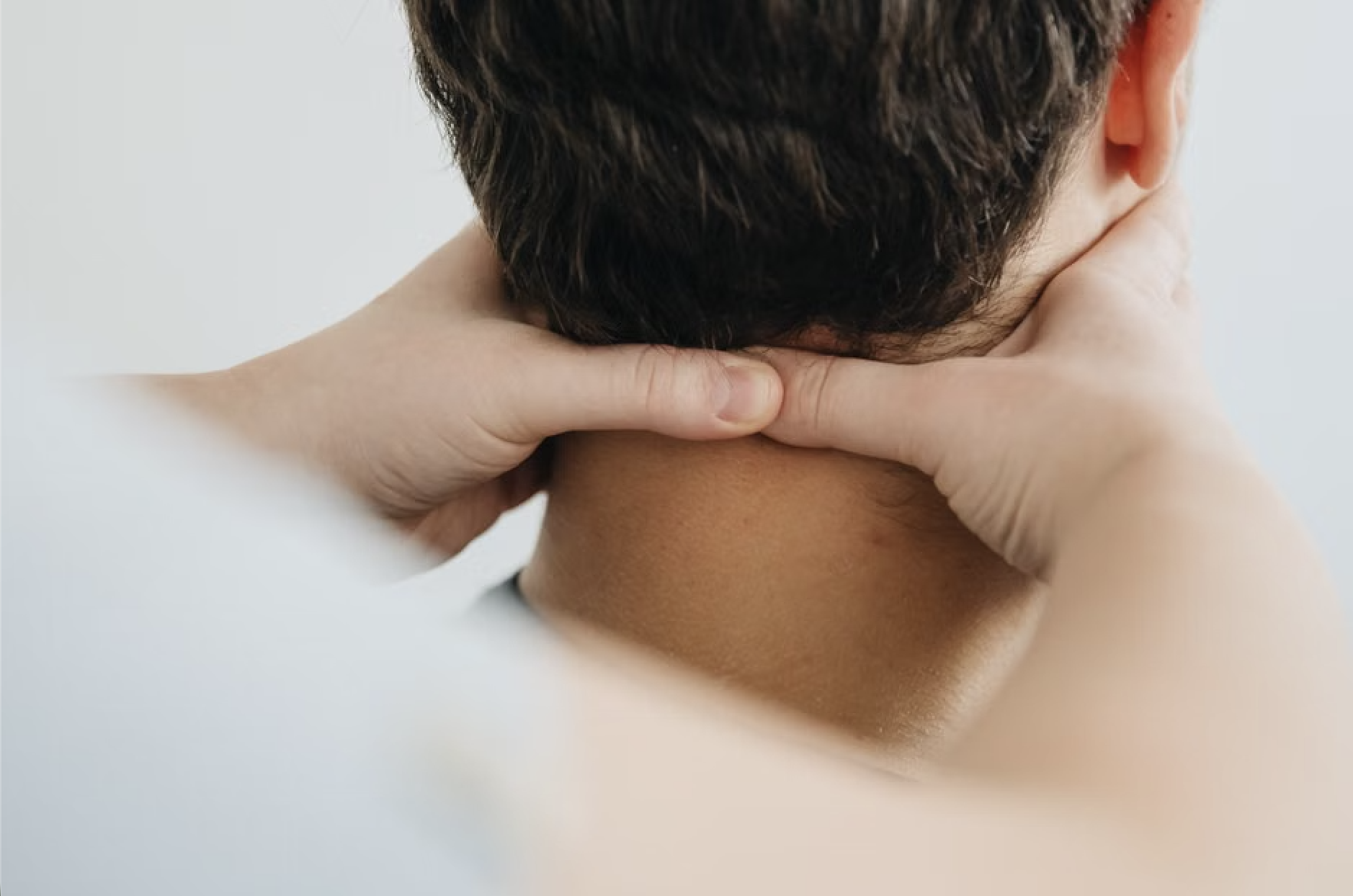
The Science of Soothing: Does Massage Actually Work for Chronic Neck Pain?
Why So Many People Turn to Massage for Neck Pain — And What the Science Actually Says
Massage for neck pain is one of the most common reasons people seek out hands-on therapy — and it's easy to see why. Neck pain affects up to 40% of people in any given year, and for many busy adults, it becomes a stubborn, recurring problem that disrupts work, sleep, and daily life.
Quick answer: Does massage help neck pain?
Question Short Answer Does massage reduce neck pain? Yes, especially short-term — evidence supports modest pain relief and improved function What type works best? Myofascial release, ischemic compression, and multimodal massage show the strongest results How many sessions do you need? At least 8 sessions over 4 weeks, each lasting 30+ minutes, for meaningful benefit Is it safe? Generally yes — side effects are usually mild and temporary Does it work alone? Better when combined with exercise and lifestyle changes
Neck pain is rarely just about the neck. It often involves the upper back, shoulders, jaw, and even how you sleep. That's why a massage session that only addresses the neck itself may fall short — and why understanding the full picture matters before you book an appointment.
The research tells an interesting story. A major Cochrane systematic review found that while massage is widely used, the evidence on its effectiveness has historically been limited by poor study quality and inconsistent dosing. More recent data suggests that higher-dose protocols — more sessions, longer durations — produce meaningfully better outcomes than the single-session approaches tested in most trials.
I'm Dr. Serif Krkic, a chiropractor and functional medicine practitioner with a background in exercise physiology, and helping patients find lasting relief from chronic musculoskeletal pain — including through massage for neck pain as part of a personalized, root-cause care plan — is central to what I do at Zēl Lifestyle Collective. In this guide, I'll walk you through what the evidence actually shows, what works, what to avoid, and how to get results that last.
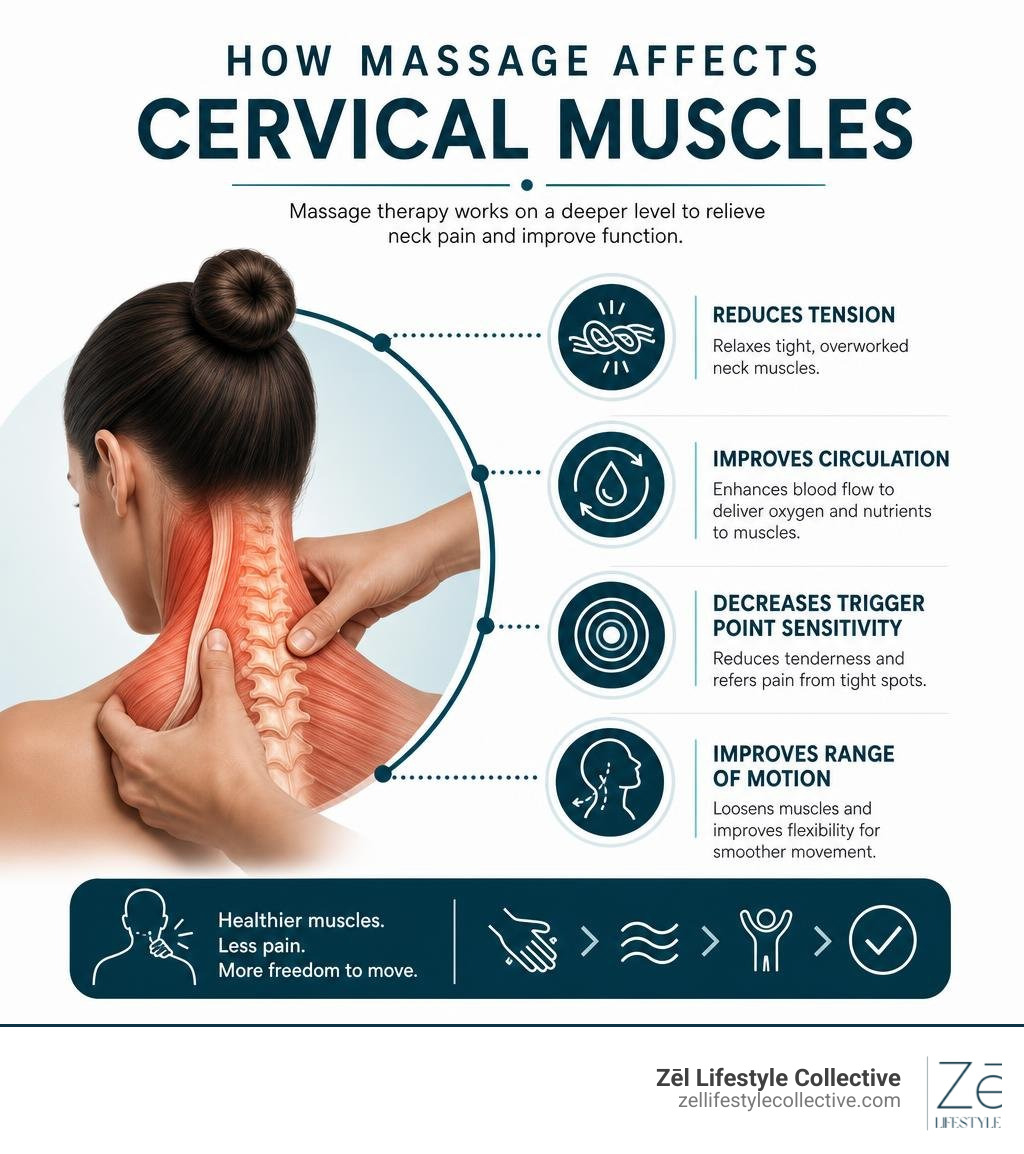
Clinical Evidence: Does Massage for Neck Pain Actually Work?

When your neck feels like a rusted hinge, "does it work?" is the only question that matters. To find the answer, we have to look past the relaxing music and lavender-scented air of the spa and dive into clinical trials, systematic reviews, and meta-analyses.
Historically, clinical studies on massage have been notoriously difficult to run. Unlike testing a new medication where you can easily hand out identical-looking sugar pills, it is incredibly difficult to "blind" a patient or a therapist to a massage. (Imagine trying to convince someone they didn't just get rubbed down for an hour!) However, researchers have gotten creative, comparing active massage therapy to sham treatments—such as light, non-therapeutic touching or deactivated lasers—and no-treatment control groups.
The baseline of our scientific understanding comes from comprehensive systematic reviews. To understand the complete landscape of hands-on healing, you can read our Massage therapy complete guide 2026. When we narrow our focus specifically to the cervical spine, the results are highly nuanced.
One of the most rigorous benchmarks in medical research is the Cochrane systematic review on mechanical neck disorders. This massive undertaking evaluated the existing literature on how manual tissue manipulation impacts mechanical neck pain. The review highlighted a persistent challenge in the field: while patients consistently report feeling better, the overall certainty of the evidence remains low to very low because many past trials suffered from small sample sizes, high risks of bias, and a lack of standardized treatment protocols.
However, when we zoom in on well-designed, pragmatic trials, the clinical benefits of massage for neck pain become much clearer. A landmark Randomized trial of therapeutic massage for chronic neck pain published in the archives of internal medicine compared clinical massage therapy against a self-care education book. The researchers found that participants receiving real-world therapeutic massage showed clinically significant improvements in both neck disability and symptom severity at 4 and 10 weeks compared to the self-care group.
This tells us that while the broader scientific community still calls for larger, more rigorous trials, real-world clinical practice consistently shows that massage is a powerful tool for taking the edge off chronic neck discomfort.
Comparing Massage for Neck Pain to Placebo and Sham Treatments
To truly understand if massage has a physiological effect or if it is simply a very expensive placebo, we have to look at how it stacks up against sham therapies in clinical trials.
According to consolidated data from multiple randomized controlled trials (RCTs), massage probably results in little to no difference in pain, function-disability, and health-related quality of life when compared directly against a placebo for subacute-to-chronic neck pain at up to 12 weeks of follow-up.
Let's look at the hard numbers from the clinical trials:
Pain Intensity: Across 8 studies involving 403 participants, the mean pain score in the placebo/sham groups was 20.55 points on a 0-to-100 scale. Those who received massage improved by an average of 3.43 points more than the placebo group (95% Confidence Interval [CI]: 8.16 points better to 1.29 points worse). While this shows a slight mathematical favor toward massage, it does not cross the threshold of a massive, standalone clinical breakthrough.
Function and Disability: When measuring how neck pain limits daily life, researchers use the Neck Disability Index (NDI), scored from 0 to 100. Across 2 studies with 68 participants, the mean disability score in the placebo group was 30.90 points. The massage group improved by an average of 9.69 points more than the placebo group (95% CI: 17.57 points better to 1.81 points better). This is a highly encouraging finding, as a 9.69-point shift is considered a clinically meaningful improvement in physical function.
What does this mean for you? It suggests that while the pure "pain-killing" effect of a standard massage might occasionally overlap with the placebo effect (the simple comfort of being cared for in a quiet room), the functional benefits—your ability to turn your head to check your blind spot, sit at your desk without aching, and sleep through the night—are distinctly superior when you receive actual therapeutic tissue manipulation.
The Impact of Dosage: Sessions, Duration, and Frequency
If you take a fraction of an aspirin, your headache won't go away. The same pharmacological logic applies to physical therapies: dosage is everything.
One of the primary reasons some clinical trials show lackluster results for massage is that they utilize a "suboptimal dose"—such as a single 15-minute session—and expect it to cure ten years of desk-slouching.
When researchers performed a subgroup analysis looking specifically at the dosage of massage, they discovered a major breakthrough. There is a clear, clinically important difference favoring a high-dose protocol for managing subacute and chronic neck pain.
What constitutes a high-dose protocol?
Frequency: At least 8 sessions.
Timeline: Distributed over a 4-week period (roughly 2 sessions per week).
Duration: At least 30 to 60 minutes per session.
When patients receive this concentrated, high-dose therapy, the cumulative benefits begin to build. The nervous system is repeatedly sent signals to downregulate threat perception, blood flow to ischemic (oxygen-starved) tissues is consistently restored, and tight muscle fibers are systematically lengthened. If you are seeking lasting relief, booking a single, sporadic massage when your neck totally locks up is a band-aid. True rehabilitation requires a structured, multi-week plan.
Comparing Massage Modalities and Techniques
Not all massage is created equal. If you walk into a clinic and ask for a generic massage, you might get a light-pressure relaxation session that does little to release deep-seated muscle tension. To help you navigate your options, let's break down how different techniques stack up.
For a broader look at finding the right care nearby, check out our guide on finding a Neck massage near me. To see how specific techniques compare, we can look to the Cochrane review on massage for neck disorders, which analyzed various manual modalities.
Massage Modality Primary Mechanism Best For Clinical Evidence Level Myofascial Release Slow, sustained pressure to stretch and release the connective tissue (fascia) surrounding muscles. Chronic stiffness, restricted range of motion, postural tightness. Moderate Ischemic Compression Sustained, localized pressure directly onto a trigger point (muscle knot) to temporarily cut off blood flow, followed by a rush of fresh oxygenated blood upon release. Active trigger points, localized "knots," referred pain patterns (e.g., pain traveling to the temple or shoulder). Moderate to High (especially when paired with passive stretching) Traditional Chinese / Thai Massage Dynamic stretching, rhythmic compression along energy lines, and passive joint mobilization. Improving overall flexibility, reducing global muscle tension, and restoring joint play. Low to Moderate Swedish Massage Long, gliding strokes (effleurage), kneading (petrissage), and circular friction. Stress reduction, mild localized tension, improving general circulation. Low (primarily short-term relaxation)
Myofascial Release and Ischemic Compression
If you have ever pressed your thumb into a spot on your shoulder and felt a sharp, satisfying ache that seems to shoot straight up into your temple, you have found a myofascial trigger point. These "muscle knots" are localized areas of intense microscopic spasm, where muscle fibers are locked in a constant state of contraction, starving themselves of oxygen and nutrients.
Ischemic compression is a highly targeted clinical technique used to break this cycle. The therapist applies direct, steady pressure to the trigger point for 20 to 30 seconds. This temporarily restricts local blood flow. When the pressure is released, it triggers a physiological phenomenon known as reactive hyperemia—a sudden, powerful rush of fresh, oxygen-rich blood to the area that flushes out metabolic waste products and allows the muscle fibers to finally relax.
Scientific evidence indicates that ischemic compression is most effective when it is immediately followed by passive stretching of the target muscle. This combination helps to "re-educate" the muscle fibers, restoring them to their optimal, lengthened state.
Myofascial release takes a broader approach, focusing on the web of connective tissue (fascia) that wraps around every muscle in your body. When you have chronic inflammation or poor posture, this fascia becomes thick, sticky, and restrictive. By applying slow, shearing forces, a therapist can stretch this tissue, releasing the "straightjacket" surrounding your neck muscles and restoring free, painless movement.
Traditional and Eastern Massage Approaches
Traditional Eastern modalities, such as Thai massage and traditional Chinese massage (Tui Na), offer a completely different experience than Western table massage. Instead of oil-slicked gliding strokes, these techniques rely on rhythmic compression, acupressure point stimulation, and passive, assisted stretching.
In Eastern systems, the body is viewed as an interconnected network. For example, a traditional practitioner treating neck pain may spend a significant amount of time working on the hands, arms, and upper back before ever touching the neck itself. Physically, this makes incredible biomechanical sense: the muscles that stabilize your neck (like the levator scapulae and trapezius) attach directly to your shoulder blades and upper back.
Furthermore, Eastern techniques often incorporate gentle cervical mobilization—moving the neck through its natural range of motion while applying soft tissue traction. Very low-certainty evidence suggests that these traditional approaches can be highly effective at improving both neck range of motion and local pressure pain thresholds, offering a dynamic alternative for those who find static deep-tissue work uncomfortable.
Safety, Adverse Events, and Risk Mitigation

When discussing any medical or therapeutic intervention, we must always weigh the potential benefits against the risks. Because massage is a non-invasive, drug-free therapy, it is widely perceived as entirely risk-free. While it is incredibly safe compared to options like long-term NSAID use or spinal surgery, it is not without its caveats.
To put this in perspective, we can look at the data on adverse events. In clinical trials, the relative risk (RR) of experiencing any adverse event with massage compared to a control group is 0.99 (95% CI: 0.08 to 11.55). This very low-certainty evidence indicates that you are no more likely to experience a negative outcome from a professional massage than you are from sitting quietly. However, minor, transient side effects do occur, and understanding the difference between normal recovery and a true complication is vital.
If you are dealing with broader spinal issues, you might find our guide on Why do I have back pain understanding causes and solutions helpful for mapping out your symptoms. When it comes to the neck, the anatomy is particularly delicate, housing major blood vessels, nerve pathways, and the cervical spine.
Identifying Red Flags and Contraindications
Before you jump onto a massage table, it is crucial to identify if your neck pain is a simple muscle strain or a symptom of a more serious underlying issue. This is where professional clinical assessment becomes invaluable.
At Zēl Lifestyle Collective in Tallmadge, Ohio, we screen every patient to rule out absolute contraindications and "red flags" that require medical imaging or specialized care rather than standard massage.
Key clinical red flags include:
Radiculopathy (Pinched Nerve): If your neck pain is accompanied by sharp, shooting, electric-like pain, numbness, tingling, or weakness that travels down your arm and into your fingers, you may have a herniated disc or bone spur compressing a cervical nerve root. Aggressive massage directly over the nerve can severely worsen inflammation.
Whiplash / Acute Trauma: If you were recently in a car accident or sustained a sports injury, your neck ligaments may be stretched or torn (spinal instability). Massaging an unstable neck before getting proper X-rays can be highly dangerous.
Severe, Unremitting Headaches: While tension headaches respond beautifully to massage, a sudden, explosive headache (often described as the "worst headache of your life") or a headache accompanied by fever, stiff neck, and confusion requires emergency medical attention.
Cervical Artery Dissection Risk: The vertebral arteries run directly through the bones of your neck to supply blood to your brain. While incredibly rare, aggressive, high-velocity twisting or deep, heavy pressure over the front and sides of the neck can damage these vessels. Professional therapists know to never apply heavy pressure to the anterior triangle of the neck (the throat and side-neck areas).
How to Prevent Post-Massage Soreness
It is incredibly common to feel a bit beat up the day after a deep tissue session. This is known as post-massage soreness, and it is physiologically very similar to the delayed-onset muscle soreness (DOMS) you feel after a heavy workout. To learn more about navigating this recovery phase safely, read our clinical guide on Post-massage neck pain management.
To keep this soreness to a minimum and protect your delicate cervical tissues, keep these best practices in mind:
Hydrate: Drink plenty of water before and after your session to help your kidneys flush out the metabolic wastes released from tight muscle tissues.
Communicate in Real Time: Do not play the hero. If the pressure feels too intense, speak up. Effective massage should feel like a "productive, satisfying hurt," not a toe-curling, breath-holding agony. If you tense up against the therapist's hand, your muscles will guard themselves, leaving you far more bruised and sore the next day.
Warm Up the Tissue: Applying a warm compress or taking a hot shower before your session can pre-relax your muscles, allowing your therapist to access deeper layers of tissue without needing to use excessive, painful force.
Gentle Movement: Instead of collapsing onto the couch after a massage, go for a light 10-minute walk. This gentle, full-body movement keeps your circulation pumping and prevents your muscles from tightening right back up.
The Power of Combination: Massage as an Adjuvant Therapy
While a great massage can make you feel like you are floating on a cloud, the reality is that the relief is often temporary. If you get a massage, walk out to your car, slouch over your steering wheel, and spend the next eight hours staring down at a laptop, your neck pain will return with a vengeance.
That is because massage is a passive therapy—it is something done to you. To achieve permanent, structural relief, you must pair passive therapies with active therapies.
In clinical research, this is known as multimodal care. Massage works best as an adjuvant therapy—a supportive treatment that opens a "window of pain relief" and improved range of motion, allowing you to perform the active exercises and structural corrections needed to fix the root cause of your pain.
If you are also struggling with discomfort lower down the spine, you can read about our comprehensive approach to Massage for back pain.
Integrating Exercise with Massage for Neck Pain
What does an effective, combined active-passive program look like? We can find a brilliant blueprint in a recent Integrated cervical stabilization and Thai self-massage study.
This single-blind randomized controlled trial evaluated young adults suffering from chronic nonspecific neck pain. One group performed simple stretching exercises, while the other group engaged in an integrated program combining cervical stabilization exercises with traditional Thai self-massage using a specialized wooden tool.
The results were striking: the integrated stabilization and massage group achieved significantly greater reductions in both pain intensity and neck disability compared to the stretching-only group, with the clinical benefits fully maintained at their two-week follow-up.
This works because chronic neck pain is almost always associated with a muscle imbalance: the deep, stabilizing muscles in the front of your neck (the deep cervical flexors) become weak and inactive, while the superficial muscles (like the upper trapezius and sternocleidomastoid) have to work overtime to hold your head up, leading to chronic spasm.
An optimal combined routine includes:
Passive Release (Massage): Downregulates overactive, tight superficial muscles (upper traps, levator scapulae).
Active Activation (Cervical Stabilization): Simple exercises like chin tucks and towel-supported nodding to wake up the deep cervical flexors.
Progressive Strengthening: Isometric wall presses or light resistance band training to build endurance in the neck and upper back.
By using massage to quiet the screaming, overactive muscles, you can safely and painlessly strengthen the weak, underactive ones, creating a balanced, pain-free system.
Lifestyle Habits to Lock In Massage Benefits
Think of your massage as a "reset button" for your musculoskeletal system. Once you hit reset, you must be highly intentional about how you program your daily habits to prevent the system from crashing again.
To lock in your clinical results, implement these three non-negotiables:
Ergonomic Micro-Breaks: Set a timer on your phone for every 30 to 45 minutes. When it goes off, take just 30 seconds to perform three relaxed shoulder rolls, a gentle chin tuck, and look up at the ceiling. This simple habit breaks the static posture loop and prevents muscle fatigue from setting in.
Optimize Sleep Posture: You spend a third of your life in bed. If you sleep with your head propped up at a bizarre angle on three fluffy pillows, you are undoing all the progress made during your therapy sessions. Choose a supportive cervical pillow that keeps your neck in a neutral, straight line, whether you sleep on your back or your side. (And please, avoid sleeping on your stomach, which forces your neck to stay rotated to one side for hours at a time).
Vary Your Movement: Our bodies crave variety. If you sit in the exact same chair, holding the exact same posture day after day, your tissues will adapt by tightening up. Mix up your daily routine with light mobility work, walking, and regular stretching.
Frequently Asked Questions about Neck Massage
What is the recommended frequency for chronic neck massage?
For chronic, long-standing neck pain, clinical guidelines and research trials support an initial, intensive phase of care consisting of 2 sessions per week for 4 weeks (a total of 8 sessions), with each session lasting at least 30 to 60 minutes.
Once your pain is under control and your functional movement is restored, you can transition to a maintenance or preventative phase, which typically looks like one session every 2 to 4 weeks, paired with daily home exercises.
Is it normal for my neck to hurt after a massage?
Yes, mild to moderate soreness for 24 to 48 hours after a deep tissue massage is entirely normal. This is a natural inflammatory response as your body heals and flushes out metabolic waste from previously restricted tissues.
However, if your pain lasts longer than 72 hours, is sharp or shooting, or is accompanied by numbness or tingling in your arms, this is not normal. To understand how to manage this recovery phase, refer to this guide on Managing post-massage soreness.
Can neck massage help with tension headaches?
Absolutely. Most tension headaches are actually cervicogenic in nature—meaning they originate from issues in the neck. Tightness in the tiny muscles at the very base of your skull (the suboccipitals) can compress local nerves and refer a dull, aching pain that wraps around your head in a "headband" pattern.
Slowing down and releasing these suboccipital muscles, along with the upper trapezius, can dramatically reduce both the frequency and intensity of tension headaches.
Conclusion
At the end of the day, the science confirms what our bodies have always known: massage is a highly effective, deeply therapeutic tool for managing neck pain—provided it is done with the right technique, at the right clinical dosage, and as part of a comprehensive, active recovery plan.
At Zēl Lifestyle Collective in Tallmadge, Ohio, we don't believe in assembly-line healthcare. We know that your neck pain might be driven by a poorly designed desk setup, an old sports injury, chronic stress, or spinal misalignment. That's why we combine expert, hands-on clinical massage with chiropractic care, acupuncture, and functional medicine to get to the absolute root cause of your discomfort.
If you are ready to stop managing your symptoms and start truly healing, we invite you to explore our Personalized massage therapy services and schedule a comprehensive evaluation with our team today. Let's work together to get your neck moving freely, so you can get back to living your life to the fullest.