
10 Pressure Points for Anxiety Relief That Actually Work
What Are the 10 Pressure Points for Anxiety Relief?
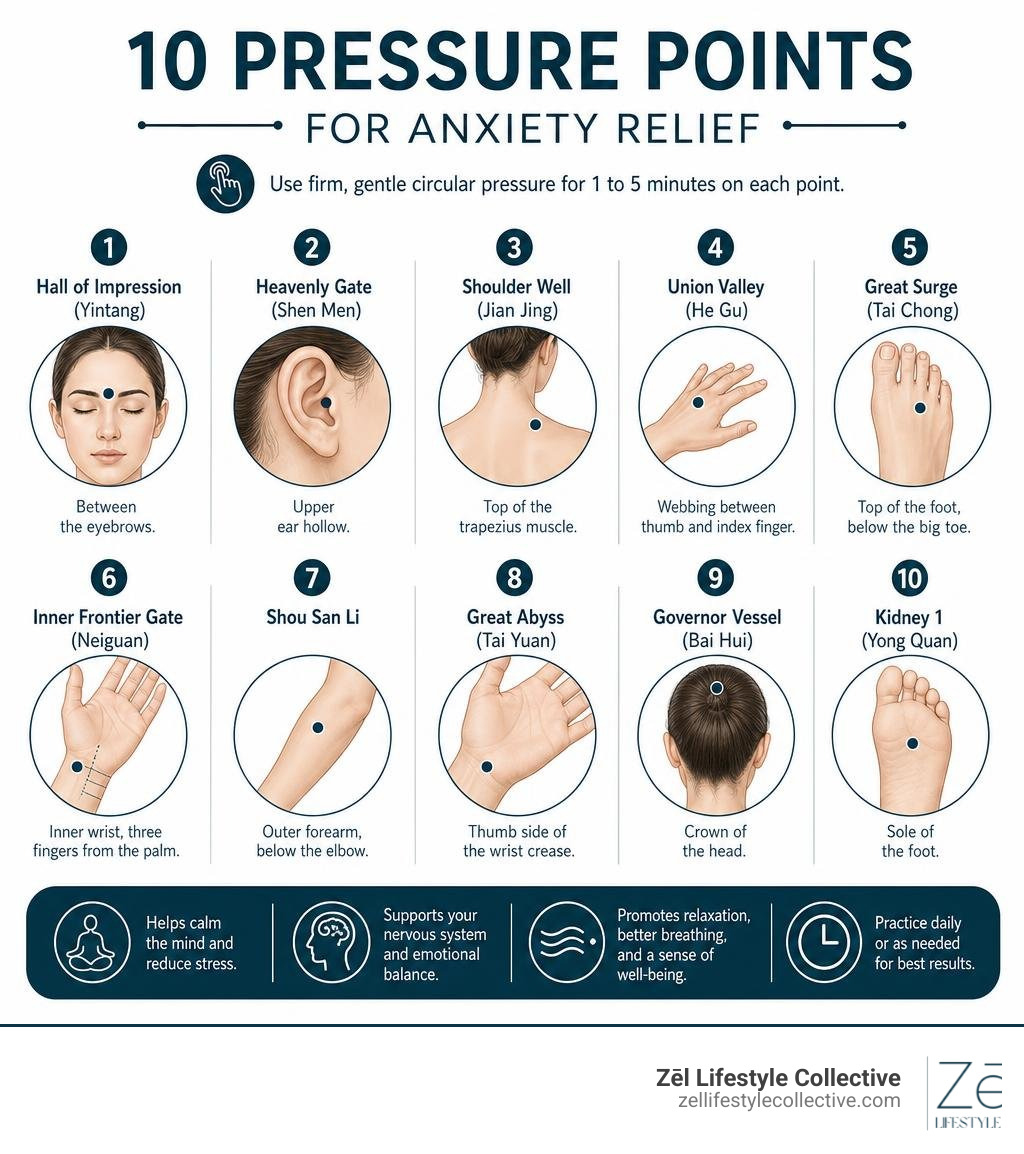
The 10 pressure points for anxiety relief most commonly used in acupressure are:
Hall of Impression (Yintang) - between the eyebrows
Heavenly Gate (Shen Men) - upper ear hollow
Shoulder Well (Jian Jing) - top of the trapezius muscle
Union Valley (He Gu) - webbing between thumb and index finger
Great Surge (Tai Chong) - top of the foot, below the big toe
Inner Frontier Gate (Neiguan) - inner wrist, three fingers from the palm
Shou San Li - outer forearm, below the elbow
Great Abyss (Tai Yuan) - thumb side of the wrist crease
Governor Vessel (Bai Hui) - crown of the head
Kidney 1 (Yong Quan) - sole of the foot
Each point can be stimulated with firm, gentle circular pressure for 1 to 5 minutes to help reduce anxiety symptoms.
Anxiety doesn't just live in your mind. It shows up in your body — tight shoulders, a racing heart, shallow breathing, restless nights. If you've tried deep breathing or mindfulness and still feel wound up, you may not have tried working directly with your nervous system through acupressure.
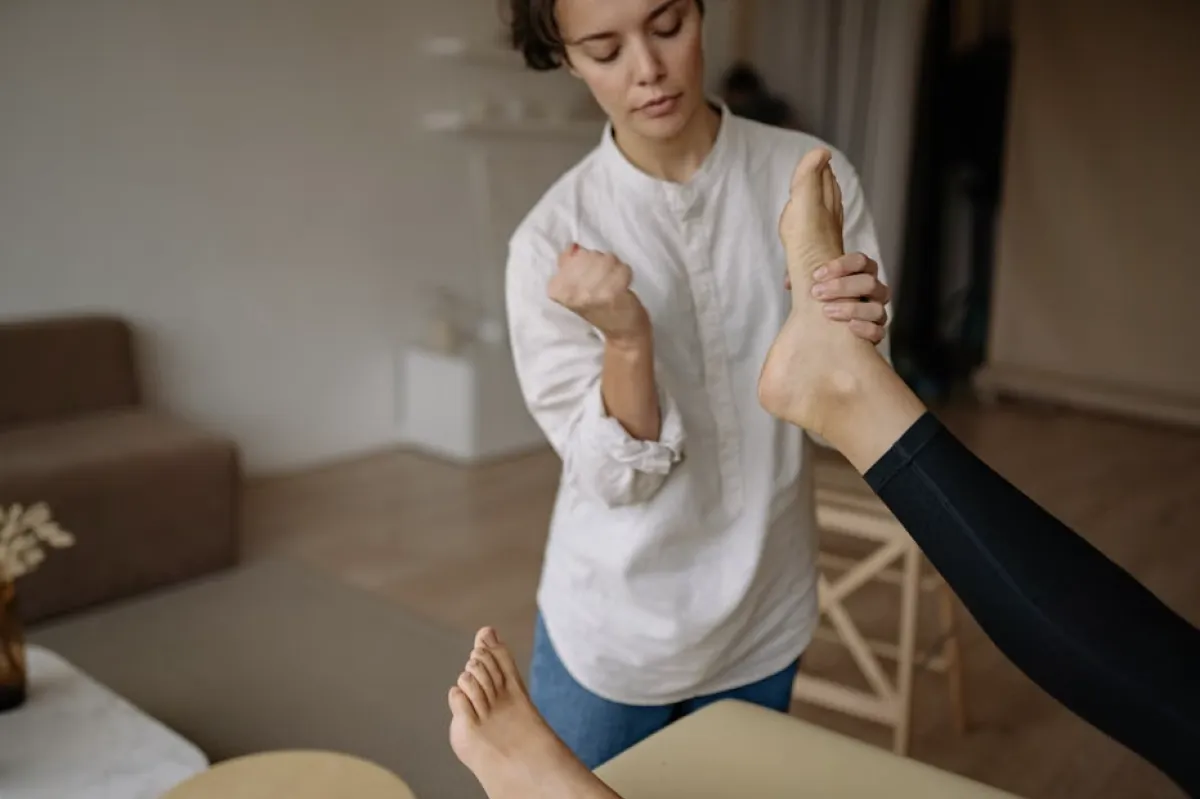
Acupressure is a form of traditional Chinese medicine (TCM) that applies targeted pressure to specific points on the body. The goal is to shift your body out of its fight-or-flight stress response and into a calmer, more balanced state. A 2024 meta-analysis found that acupressure can provide near-instant anxiety relief with a medium effect size — and you can do it yourself, anywhere, without any equipment.
I'm Dr. Serif Krkic, chiropractor and co-founder of Zēl Lifestyle Collective, and I've spent years helping high-performing professionals address the root causes of stress, tension, and chronic fatigue using evidence-based, holistic approaches — including the 10 pressure points for anxiety relief covered in this guide. Read on for exactly where to find each point and how to use it.
How Acupressure Works to Reduce Stress and Anxiety
To understand how acupressure calms a racing mind, we have to look at both ancient Traditional Chinese Medicine (TCM) and modern neuroscience.
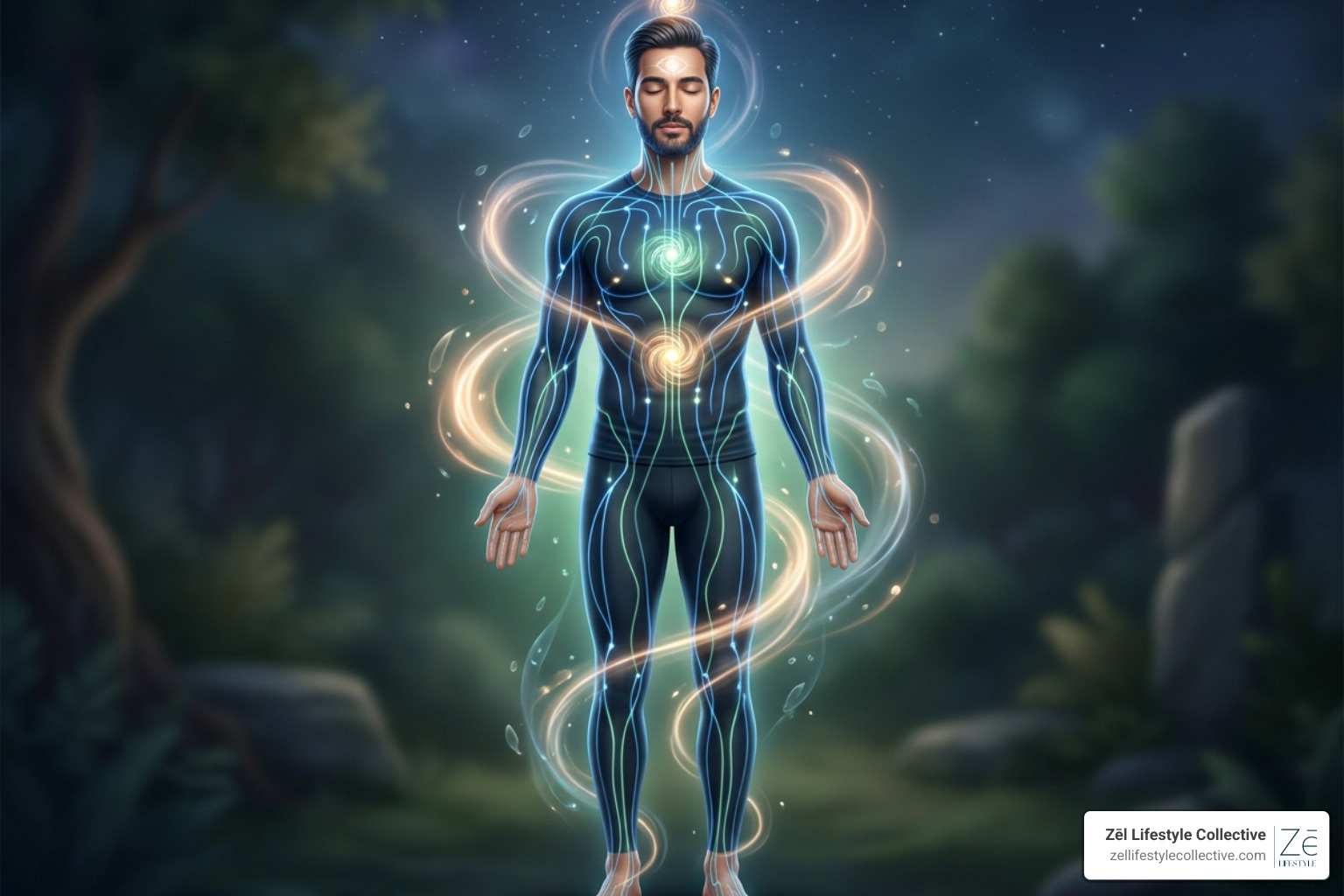
In TCM, your body’s vital life force—known as Qi (pronounced "chee")—flows along specific pathways called meridians. When you experience chronic stress, trauma, or emotional overwhelm, this energy can become blocked or stagnant, leading to physical tension and psychological distress. Stimulating specific acupoints along these meridians helps clear these blockages, restoring a smooth, balanced flow of energy.
Modern clinical research explains this phenomenon through the lens of the nervous system. When you apply firm pressure to an acupoint, you are stimulating sensory nerves beneath the skin. This stimulation sends a direct signal to your brain—specifically the limbic system and the hypothalamus—to alter your brain chemistry.
Here is what happens physiologically when you practice acupressure:
Cortisol Reduction: It lowers your body's primary stress hormone, signaling to your adrenal glands that you are safe.
Endorphin Release: It triggers the release of endorphins and neurotransmitters like dopamine and serotonin, which naturally elevate mood and relieve pain.
Vagus Nerve Stimulation: Many key calming points (especially those on the ear and wrist) directly stimulate the vagus nerve, which acts as the master "off-switch" for your sympathetic (fight-or-flight) nervous system, activating your parasympathetic (rest-and-digest) response.
Clinical studies back this up. For instance, a 2024 literature review found that acupressure significantly decreased anxiety in people during the highly stressful COVID-19 pandemic compared to those who did not receive therapy. Furthermore, a 2018 study demonstrated that regular acupressure sessions reduced anxiety and stress for individuals undergoing emotionally taxing fertility treatments.
While acupressure is an incredible, self-administered tool for managing day-to-day stress, it is helpful to understand how it compares to its sister modality, acupuncture. If you are struggling with persistent, deep-seated stress, combining self-acupressure with professional clinical treatments can offer profound, long-term chronic stress relief.
Acupressure vs. Acupuncture: What is the Difference?
Feature Acupressure Acupuncture Method Physical pressure using fingers, thumbs, elbows, or specialized tools. Insertion of hair-thin, sterile needles into specific acupoints. Accessibility 100% DIY. Can be done anywhere, anytime, completely free of charge. Must be performed by a Licensed Acupuncturist in a clinical setting. Intensity Mild to moderate physical sensation; highly customizable. Minimal sensation; can access deeper tissue layers for stronger energetic shifts. Best For In-the-moment stress relief, daily maintenance, and mild symptoms. Chronic anxiety, severe sleep disturbances, hormonal imbalances, and systemic healing.
According to scientific research on acupressure benefits, both methods successfully calm the nervous system, but they work beautifully as a tag-team approach. You might visit a clinic for a deep, restorative acupuncture session, and then use self-acupressure at home to maintain those peaceful results between appointments.
10 Pressure Points for Anxiety Relief
Now that you know the science behind how this therapy works, let's look at the specific points you can use to calm your mind and relax your body.
When anxiety strikes, your sympathetic nervous system hijacks your body, causing your heart to race, your breathing to become shallow, and your muscles to lock up. By targeting these specific points, you can improve blood circulation, release localized muscle tension, and encourage a rapid shift toward relaxation.
In fact, a 2023 review focused on preoperative anxiety relief showed that stimulating these points can successfully calm patients' nerves right before major medical procedures.
Why these 10 pressure points for anxiety relief are highly effective
These specific 10 pressure points for anxiety relief are highly regarded because they act as somatic "reset buttons." Somatic therapy recognizes that emotional stress is physically stored in our tissues.
By applying physical pressure to these points, you are not just thinking your way out of anxiety; you are physically releasing the tension patterns that keep your brain trapped in a cycle of worry. This dual action of physical release and nervous system regulation makes these ten points incredibly powerful tools for holistic healing.
1. Hall of Impression (Yintang)
Often referred to as the "third eye" point, the Hall of Impression is located directly between your eyebrows, just above the bridge of your nose. In acupuncture, this is one of the most widely used points for calming the spirit, easing a racing mind, and relieving frontal headaches.
How to locate and apply pressure:
Sit or lie down in a comfortable, relaxed position.
Place your index finger or thumb directly on the midpoint between your eyebrows.
Apply firm, steady pressure and massage the point in slow, gentle circular motions.
Close your eyes, take slow, deep breaths, and continue for 2 to 3 minutes. Feel the tension in your forehead and jaw begin to melt away.
2. Heavenly Gate (Shen Men)
Located in the upper shell of your ear, within the triangular hollow (the triangular fossa), the Heavenly Gate point is incredibly powerful. Because the outer ear is rich in vagus nerve endings, stimulating this point sends an immediate calming signal directly to your heart and lungs, making it highly effective for panic, insomnia, and acute stress.
How to locate and apply pressure:
Locate the triangular hollow at the top part of your ear cartilage.
Pinch this point gently between your thumb (resting on the back of your ear) and your index finger (resting on the front).
Apply firm, steady pressure, massaging in circular motions for at least 2 minutes.
You can also use a cotton swab or pre-packaged "ear seeds" to apply sustained, gentle pressure to this point during high-stress workdays.
3. Shoulder Well (Jian Jing)
The Shoulder Well point is located at the highest point of your shoulder muscle (the trapezius), exactly halfway between the base of your neck and the outer edge of your shoulder. This is where almost everyone instinctively holds their stress, leading to tight shoulders, neck pain, and tension headaches.
How to locate and apply pressure:
Locate the muscle at the top of your shoulder by pinching it with your opposite hand.
Use your thumb, index, and middle fingers to firmly pinch the muscle.
Apply deep, steady pressure for 4 to 5 seconds, then release.
Gently massage the area in circular motions to encourage blood flow.
Pregnancy Warning: Do not use this point if you are pregnant, as stimulating Jian Jing is known to stimulate uterine contractions and can induce labor.
4. Union Valley (He Gu)
Union Valley is located in the fleshy webbing between your thumb and index finger on either hand. It is one of the most extensively studied points in clinical research, celebrated for its ability to regulate pain, ease stress, relieve headaches, and get stagnant emotional energy moving again.
How to locate and apply pressure:
Open your hand and locate the highest point of the muscle in the webbing between your thumb and first finger.
Pinch this webbing firmly using the thumb and index finger of your opposite hand.
Apply deep, steady pressure that creates a dull, heavy ache (but not sharp pain).
Hold for 4 to 5 seconds while taking a deep, slow breath, then massage in small circles for another 5 seconds. Repeat on the other hand.
Pregnancy Warning: Like the Shoulder Well point, Union Valley is highly contraindicated during pregnancy because it can induce labor.
5. Great Surge (Tai Chong)
The Great Surge point is located on the top of your foot, in the hollow between your big toe and second toe, about two to three finger-widths down from where the toes meet. In TCM, this point belongs to the Liver meridian, which is closely tied to anger, frustration, irritability, and bottled-up emotional stress. Stimulating it provides deeply grounding energy.
How to locate and apply pressure:
Sit comfortably and cross one foot over your opposite knee.
Slide your finger down the gap between your big toe and second toe until you feel a distinct, tender hollow just before the metatarsal bones meet.
Apply deep, firm pressure using your thumb or index finger.
Massage the point in circular motions or apply steady downward pressure for 4 to 5 seconds. Take slow, grounding breaths, then switch to the other foot.
6. Inner Frontier Gate (Neiguan)
Located on the inner side of your forearm, the Inner Frontier Gate is three finger-widths up from your wrist crease, nestled precisely between the two prominent tendons in the center of your arm. It is highly effective for relieving chest tightness, regulating a racing heart rate, and soothing anxiety-induced nausea.
Indeed, a 2021 pregnancy nausea study confirmed that regularly stimulating this specific point helped significantly reduce pregnancy-related nausea and vomiting, proving just how deeply it interacts with the body's autonomic nervous system.
How to locate and apply pressure:
Turn your hand palm-up.
Place the three middle fingers of your opposite hand across your wrist crease to measure the distance.
Locate the point just below your index finger, right between the two thick tendons in the middle of your forearm.
Apply firm, steady pressure with your thumb and massage the area in circular motions for 1 to 2 minutes. Repeat on the opposite arm.
7. Shou San Li
Shou San Li is located on the outer side of your forearm, about two finger-widths below the outer crease of your elbow when your arm is bent at a 90-degree angle. This point is excellent for relieving physical fatigue, easing muscle tension in the upper body, and restoring a smooth flow of energy when you feel completely drained by chronic worry.
How to locate and apply pressure:
Bend your elbow to a 90-degree angle.
Measure two finger-widths down from the outer end of your elbow crease, along the muscle of your forearm.
Apply firm, steady pressure with your thumb. You will likely feel a dull, tender ache.
Massage in small, circular motions for 1 minute, taking deep, calming breaths, then switch arms.
8. Great Abyss (Tai Yuan)
The Great Abyss point is located on the inner crease of your wrist, on the thumb side, right in the small depression next to your radial artery. Because this point is on the Lung meridian, it is incredibly supportive for your respiratory system. If your anxiety causes you to hyperventilate or feel like you can't catch a deep breath, this is your go-to point.
How to locate and apply pressure:
Turn your hand palm-up.
Locate the crease of your wrist and slide your finger over to the outer edge, directly below the base of your thumb.
Feel for a small indent just next to where you can feel your pulse beating.
Apply gentle but firm pressure with your index finger or thumb.
Massage in a slow, circular motion for 1 to 2 minutes while focusing on drawing slow, deep, even breaths into your abdomen.
9. Governor Vessel (Bai Hui)
Located at the exact crown of your head, Governor Vessel 20 (Bai Hui) translates to "Hundred Convergences." It is the meeting point of many meridians and is used to clear your mind, improve mental clarity, soothe tension headaches, and bring a profound sense of sensory calming when you feel completely overwhelmed by external stimuli.
How to locate and apply pressure:
Imagine a line running straight up from the tips of both your ears to the very top center of your head.
Feel for a very slight, soft indentation at the exact center of this line on the crown of your skull.
Use your index and middle fingers to apply gentle, steady pressure.
Massage in slow, small circular motions for 1 to 2 minutes. Keep your eyes closed and focus on the sensation of energy grounding downward through your body.
10. Kidney 1 (Yong Quan)
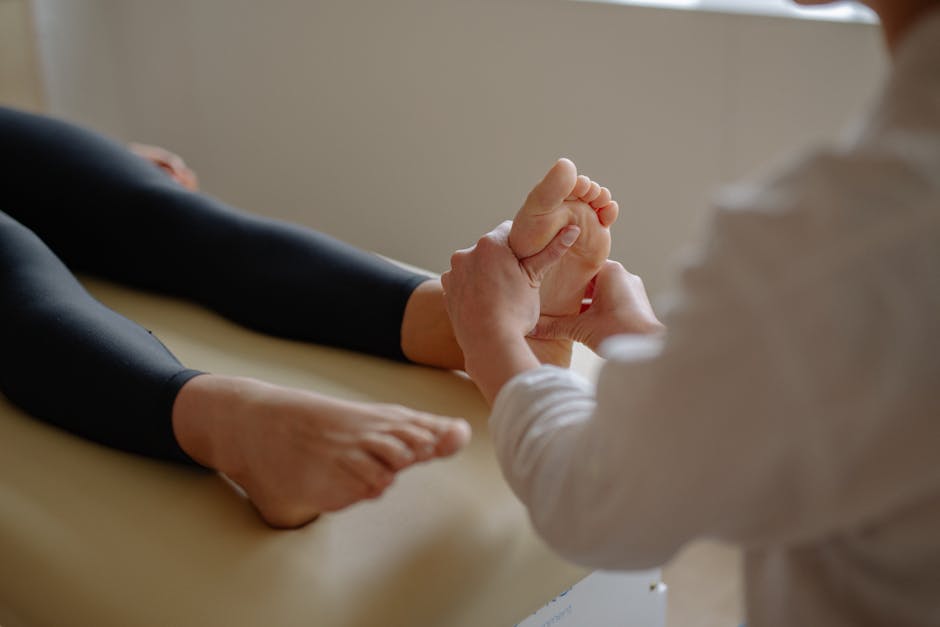
Kidney 1 is the only acupoint located on the sole of the foot. Specifically, it sits in the depression that forms on the upper third of your sole when you curl your toes inward. This is the ultimate grounding point. If you are experiencing a severe panic attack, a racing mind, or acute insomnia, stimulating Kidney 1 helps draw your scattered, anxious energy away from your head and back down to the earth.
How to locate and apply pressure:
Sit comfortably and rest your foot on your opposite knee.
Curl your toes downward and locate the distinct hollow that forms in the center of the upper third of your sole.
Place your thumb firmly in this depression.
Apply deep, steady pressure, massaging in firm circles for 1 to 2 minutes.
This point is highly effective when pressed right before bed to improve sleep quality.
How to Safely Practice Acupressure at Home
Acupressure is an incredibly safe, non-invasive, and intuitive practice, but following a few best practices will help you get the most out of your self-care sessions.
Find a Quiet Space: Whenever possible, step away from distractions. Dim the lights, put your phone on silent, and consider using calming aromatherapy (like lavender or bergamot) to create a multisensory healing experience.
Control Your Pressure: Start with light pressure and gradually increase it until you feel a "sweet spot"—usually characterized by a dull, heavy ache or a slight tingling sensation. It should never feel sharp, bruising, or painful. If it hurts, back off.
Coordinate with Your Breath: The secret to unlocking the nervous system is pairing physical pressure with controlled breathing. Try to inhale for 4 seconds, hold for 4, exhale for 4, and hold for 4 (box breathing) while holding a point.
Be Consistent: Just like going to the gym, the benefits of acupressure are cumulative. While you can get immediate, in-the-moment relief from a 90-second session, practicing for 5 to 10 minutes daily will gradually recalibrate your nervous system's baseline, making you less reactive to stress over time.
Avoid Damaged Skin: Never apply pressure to areas of skin that are bruised, peeling, blistered, swollen, or present open wounds or rashes.
For those looking to expand their home wellness toolkit, using an acupressure mat can be a fantastic way to stimulate hundreds of back and neck points simultaneously, triggering a massive parasympathetic release before bed.
If you find that physical tension and emotional stress are deeply intertwined, exploring specialized mind-body modalities like emotional trauma release therapy or the Neuro Emotional Technique (NET) can help you identify and clear the subconscious stress loops that keep your body in a state of chronic alarm.
Frequently Asked Questions About Acupressure for Anxiety
How quickly do pressure points work for anxiety relief?
Most people feel a noticeable shift in their nervous system within 60 to 90 seconds of applying firm pressure to a calming point. You might feel your shoulders drop, your breathing naturally deepen, or your racing thoughts begin to quiet down.
For more significant, long-lasting relief, we recommend practicing a 5-minute routine where you stimulate 2 or 3 different points sequentially. Over time, consistent daily practice creates a cumulative effect, helping your body return to a calm state much more easily when stress arises.
Can I use these 10 pressure points for anxiety relief during pregnancy?
While acupressure is highly effective for relieving pregnancy-related stress and nausea, certain points are strictly contraindicated because they can stimulate uterine contractions and induce labor.
Specifically, you must avoid the Shoulder Well (Jian Jing) and Union Valley (He Gu) points during pregnancy unless you are under the direct care of a licensed practitioner and have reached full term. Always consult your obstetrician or a licensed prenatal acupuncturist before starting any new acupressure routine while pregnant.
When should I see a professional instead of relying on self-acupressure?
Self-acupressure is a wonderful daily maintenance tool, but it is not a substitute for professional medical care. You should seek professional help if:
Your anxiety is severe, persistent, or interferes with your ability to work, attend school, or maintain healthy relationships.
You are experiencing frequent, debilitating panic attacks.
Your anxiety is accompanied by clinical depression, feelings of hopelessness, or thoughts of self-harm.
If you are ready to transition from temporary, at-home relief to a comprehensive, root-cause healing plan, scheduling professional acupuncture sessions can be life-changing. A licensed acupuncturist can design a highly personalized treatment plan tailored to your body's unique energetic and physiological needs.
Conclusion
Anxiety can make you feel disconnected from your own body, but you don't have to navigate it alone. By utilizing these 10 pressure points for anxiety relief, you can actively participate in calming your nervous system, releasing physical tension, and reclaiming your peace of mind—one breath and one point at a time.
At Zēl Lifestyle Collective in Tallmadge, Ohio, we believe in a holistic, personalized, root-cause approach to healthcare. We don't just treat symptoms; we look at the whole picture—your physical alignment, your nervous system, your lifestyle, and your emotional well-being.
If you are ready to experience deep, lasting relief from chronic stress and physical tension, we invite you to take the next step. Schedule a professional massage therapy session or reach out to our clinical team today to discover how our integrative treatments can help you live a vibrant, balanced life.