

Calm the Chaos with Effective Chronic Stress Relief Strategies
When Stress Won't Quit: What You Need to Know About Chronic Stress Relief
Chronic stress relief is not just about feeling calmer — it is about resetting a nervous system that has been stuck in overdrive for too long.
If you are looking for quick, practical ways to start recovering from chronic stress, here is what actually works:
Regulate your breathing — extended exhales activate your vagus nerve and shift your body out of fight-or-flight within 60–90 seconds
Prioritize sleep — deep sleep clears stress-related waste from your brain through the glymphatic system
Move your body — 150 minutes of moderate exercise per week rebuilds stress resilience at a neurological level
Limit sensory overload — reduce screens, news, and constant notifications to lower your baseline sympathetic activation
Build a support network — real human connection triggers oxytocin and buffers cortisol
Seek professional help — if stress has persisted for weeks or months, lifestyle changes alone may not be enough
Stress is a normal part of life. Short bursts of it can even help you perform. But when stress never fully switches off, it stops being useful and starts doing serious damage.
In 2026, 66% of U.S. professionals reported experiencing burnout. That is not a personal failure. It is a sign that millions of people are running on a nervous system that never gets a real break.
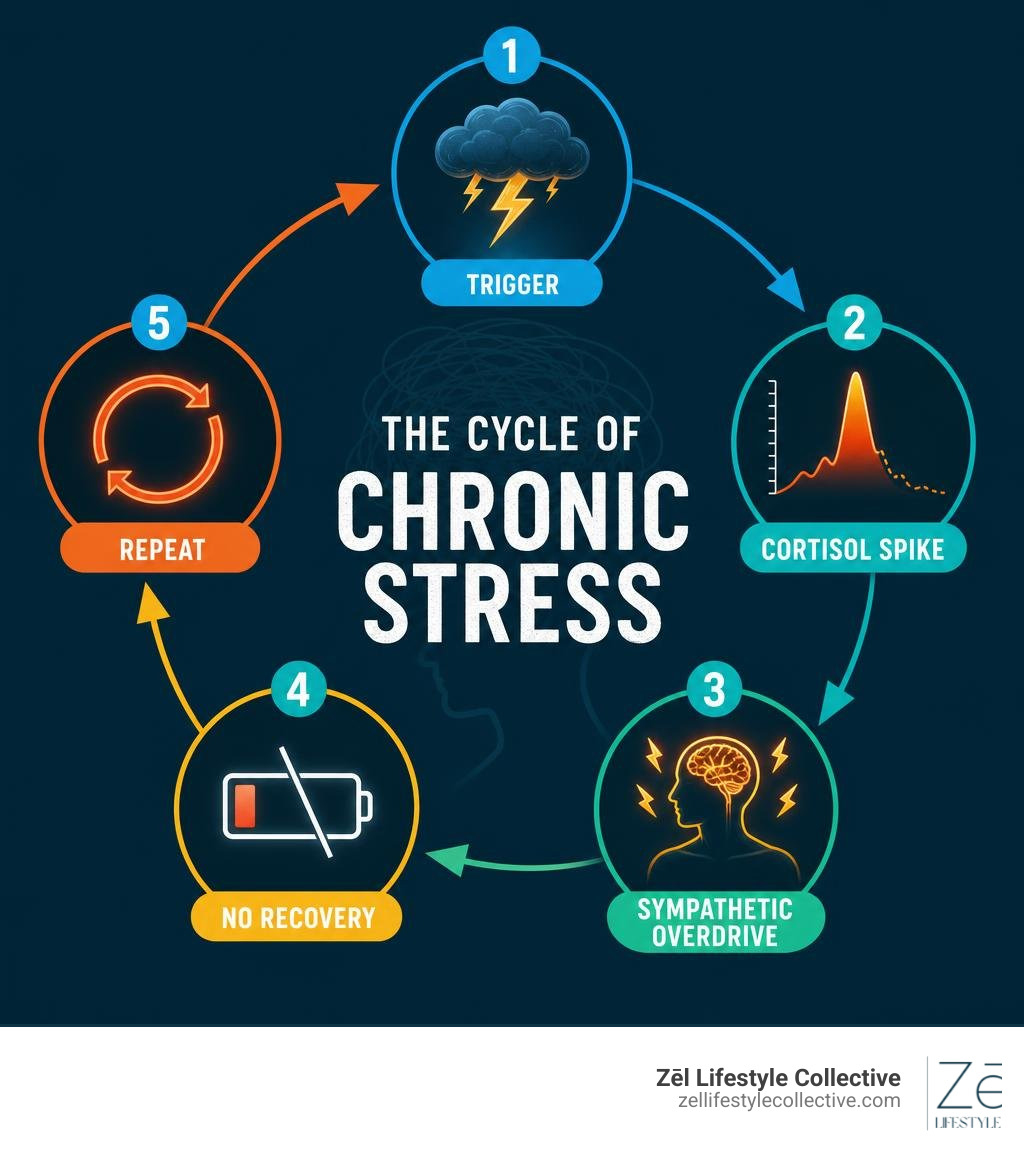
The body was designed to handle short-term threats — then recover. Chronic stress disrupts that recovery cycle completely. Your brain keeps firing alarm signals even when there is no actual danger. Over time, this wears down almost every system in your body.
The good news? The biology of stress is well understood — and so are the strategies that reverse it.
I'm Dr. Serif Krkic, chiropractor, functional medicine practitioner, and co-founder of Zēl Lifestyle Collective, where I specialize in helping high-performing professionals address the root causes of chronic stress relief challenges using data-driven, personalized care. In the sections below, I'll walk you through exactly what is happening in your body — and what you can do about it.
Understanding Chronic Stress vs. Acute Stress
To successfully conquer stress, we first need to understand what we are actually fighting. Stress is not a single, vague emotional state; it is a highly coordinated physiological response designed for survival. However, our bodies react to a stressful work email in the exact same way our ancestors reacted to a physical predator.
Acute stress is the body's immediate, short-term reaction to a perceived threat. When you slam on your car brakes to avoid an accident, or feel your heart rate spike right before giving a major presentation, that is acute stress. Your brain immediately triggers the sympathetic nervous system (the "gas pedal"), releasing a surge of adrenaline and cortisol. This increases your heart rate, quickens your breathing, dilates your pupils, and tenses your muscles to prepare you for immediate physical action. Once the threat passes, your parasympathetic nervous system (the "brakes") takes over, bringing your body back to a calm, balanced state.
Chronic stress is entirely different. It occurs when stressors are persistent and continuous — such as ongoing financial worries, a toxic work environment, or long-term caregiving responsibilities. Instead of a quick spike and a return to baseline, the body's stress response remains permanently activated. The hypothalamic-pituitary-adrenal (HPA) axis, which regulates cortisol production, stays switched on, keeping the body in a constant state of vigilance.
When the body is subjected to this relentless activation without adequate recovery, we accumulate what scientists call "allostatic load." This is the cumulative wear and tear on our tissues, organs, and brain networks. According to a Scientific research on chronic stress pathways, this persistent physiological strain slowly drains psychological resources and fundamentally alters how our brains process threats, creating a highly destructive loop where we become increasingly sensitive to even minor daily hassles.
The Physical and Mental Toll of Prolonged Stress
The consequences of unmanaged chronic stress extend far beyond feeling irritable or tired. Because the stress response is designed to prioritize immediate survival over long-term maintenance, prolonged HPA axis activation systematically starves other vital bodily systems of the energy they need to function properly.
One of the most immediate casualties of chronic stress is the immune system. While acute stress temporarily boosts immune readiness, chronic stress suppresses cellular immunity (specifically Th1 and cytotoxic T-lymphocyte activity) while promoting systemic, low-grade inflammation. This leaves you highly vulnerable to viral infections and can trigger or worsen autoimmune flare-ups of skin conditions like eczema, rosacea, and psoriasis.
At the cardiovascular level, constant sympathetic dominance leads to sustained vasoconstriction and elevated heart rate, contributing directly to hypertension and arterial damage. Over time, this significantly increases the risk of heart disease, stroke, and metabolic syndrome. In fact, medical research indicates that chronic stress is a major contributing factor to six of the leading causes of death: heart disease, cancer, stroke, respiratory disorders, suicide, and accidental injuries.
At the cellular level, chronic stress causes severe mitochondrial dysfunction. Mitochondria are the energy-producing powerhouses of our cells. When they are constantly subjected to high levels of cortisol and oxidative stress, they lose their ability to produce adenosine triphosphate (ATP) efficiently. This cellular energy depletion is a primary driver behind why Chronic Fatigue Is Not Normal and why simply "sleeping it off" on the weekend is rarely enough to restore your vitality. Furthermore, this mitochondrial exhaustion can be exacerbated by environmental factors; for instance, understanding The Silent Impact of Mold and Toxins is crucial, as environmental toxic loads can compound physiological stress and push an already struggling system into complete burnout.
Mentally, chronic stress structurally alters the brain. Prolonged exposure to high cortisol levels actually shrinks the prefrontal cortex — the area responsible for executive function, decision-making, and emotional regulation — while causing the amygdala (the brain's fear center) to grow larger and more sensitive. This structural remodeling is why chronic stress frequently develops into clinical anxiety and depression.
Recognizing the Signs of Chronic Stress in Daily Life
Because chronic stress develops gradually over months or years, many of us adapt to it, accepting a state of constant exhaustion as our "normal." However, your body is always sending warning signals. Recognizing these signs early is key to initiating timely chronic stress relief strategies.
Cognitive Symptoms: Frequent forgetfulness, difficulty concentrating, brain fog, and struggling to make simple daily decisions.
Emotional Signs: Increased irritability, snapping at loved ones, a feeling of constant overwhelm, and emotional withdrawal or isolation from friends and family.
Physical Manifestations: Chronic tension headaches, jaw clenching (bruxism), persistent neck and shoulder stiffness, and unexplained muscle aches.
Digestive Disruption: Because the gut and brain are intimately connected via the vagus nerve, stress frequently manifests as acid reflux, bloating, constipation, or diarrhea.
Sleep Disturbances: Difficulty falling asleep, waking up in the middle of the night with a racing mind, or sleeping for eight hours and still waking up completely exhausted.
Behavioral Changes: Relying on unhealthy coping mechanisms, such as increased alcohol consumption, smoking, overeating comfort foods high in sugar and fat, or avoiding social gatherings entirely.
If you want a highly objective way to measure how your nervous system is coping, we recommend tracking your Heart Rate Variability (HRV). HRV measures the variation in time between consecutive heartbeats. A high HRV indicates a highly adaptable, resilient autonomic nervous system that can easily transition between stress and rest. A low HRV indicates that your nervous system is locked in sympathetic dominance, signaling that it is time to actively intervene with structured recovery protocols.
Evidence-Based Lifestyle Changes for Chronic Stress Relief
Many people believe that finding relief from chronic stress requires radical, disruptive life changes, like quitting their job or moving to a remote island. In reality, the most sustainable and effective way to heal your nervous system is through small, evidence-based lifestyle modifications that you can easily integrate into your existing routine.

These daily habits are designed to improve your "vagal tone" — the activity of your vagus nerve, which acts as the primary highway for your parasympathetic nervous system. By consistently sending safety signals to your brain, you can gradually lower your baseline stress level and build lasting resilience. To explore the deep science behind these biological shifts, you can read more about Science-backed stress management techniques that target the brain's neural pathways directly.
The Pillars of Stress Recovery: Sleep, Nutrition, and Movement
To rebuild a resilient nervous system, we must address the fundamental biological pillars of health: sleep, nutrition, and physical activity.
1. Sleep Optimization and the Glymphatic System
During deep, slow-wave sleep, your brain activates its glymphatic system — a highly specialized waste clearance pathway discovered in 2012. Think of it as the brain's nightly cleaning crew. The spaces between your brain cells expand by up to 60%, allowing cerebrospinal fluid to rapidly flush out metabolic waste and stress-related toxins that accumulate during the day.
To optimize this process:
Maintain a strict, consistent sleep schedule, even on weekends, to synchronize your circadian rhythm.
Avoid screens and blue light for at least 60 minutes before bed, as blue light suppresses melatonin production.
Try sleeping on your side (lateral position), which research suggests is the most effective posture for glymphatic clearance.
2. Targeted Nutrition and the Gut-Brain Axis
What you eat directly influences how your brain handles stress. Chronic HPA axis activation often triggers intense cravings for simple carbohydrates and unhealthy fats. However, feeding these cravings creates blood sugar spikes and systemic inflammation, which only worsens your stress levels.
To support your body's stress tolerance, we highly recommend working with an expert in Integrative Nutrition Health Coaching to build a nutrient-dense, anti-inflammatory eating plan. Focus on:
Omega-3 Fatty Acids: Found in wild-caught salmon, walnuts, and flaxseeds, these healthy fats help buffer the physiological stress response and reduce neuroinflammation.
Polyphenol-Rich Foods: Berries, dark leafy greens, and green tea support mitochondrial health and combat oxidative stress.
Reducing Stimulants: Gradually lowering your caffeine intake prevents unnecessary spikes in cortisol and adrenaline, drastically improving your sleep quality and reducing daily jitteriness.
3. Rhythmic Movement and the BDNF Cascade
While intense, exhaustive workouts can sometimes place additional stress on an already burnt-out system, moderate, consistent physical activity acts as a powerful medicine. Regular aerobic exercise, such as walking briskly for 30 minutes, triggers the release of Brain-Derived Neurotrophic Factor (BDNF). Often called "Miracle-Gro for the brain," BDNF promotes neurogenesis — the growth of new brain cells — particularly in the hippocampus.
In fact, a landmark study showed that older adults who engaged in moderate walking three times per week actually increased their hippocampal volume by 2% over a year, reversing stress-induced brain shrinkage. Aim for 150 minutes of moderate movement per week, always listening to your body to ensure your exercise feels restorative rather than depleting.
Behavioral Strategies and Cognitive Reappraisal for Chronic Stress Relief
While physical habits lay the groundwork for recovery, managing how your mind perceives daily stressors is equally crucial. According to a landmark twin study, trait mindfulness is approximately 32% heritable, which means a significant 66% of your capacity for mindful awareness is determined by environmental factors and the mental skills you choose to practice.
One of the most powerful cognitive tools at your disposal is cognitive reappraisal. This technique involves consciously reframing a stressful situation to change its emotional and physiological impact. When you practice cognitive reappraisal, you activate your dorsolateral prefrontal cortex, which sends direct, inhibitory signals to downregulate an overactive, panicking amygdala. Instead of thinking, "This massive project is going to ruin my week," you reframe it as, "This is a challenging project, but it is an opportunity to showcase my skills and establish clear boundaries on my time."
To complement cognitive reappraisal, you can utilize highly practical, rapid-acting behavioral strategies. To explore a wider variety of these tools, check out these 9 Science-backed stress relief strategies that go far beyond basic deep breathing. Two of our favorite daily techniques include:
The Physiological Sigh: Discovered by researchers as the fastest way to reduce autonomic arousal in real-time, this involves taking two quick, consecutive inhales through your nose (one deep inhale, followed immediately by a sharp "top-off" inhale), and then making a long, slow exhale through your mouth. Repeating this cycle just three to five times instantly activates your vagal brake, slowing your heart rate in under 90 seconds.
Worry Windows: If you find yourself constantly ruminating, schedule a dedicated 10-to-15-minute "worry window" every day (ideally in the afternoon, well before bedtime). During this time, allow yourself to write down every single worry, fear, and stressful thought. If a worried thought pops up outside of this window, gently remind yourself, "That belongs in my worry window," and redirect your attention to the present moment. This practice trains your brain to contain anxiety rather than allowing it to flood your entire day.
Advanced Physiological Modalities and Alternative Therapies
Sometimes, when you have been stuck in a state of high stress for years, your nervous system becomes so deeply dysregulated that traditional self-care habits like meditation or walking can actually feel frustrating or impossible to execute. When your brain is constantly scanning for threats, sitting quietly in a dark room can sometimes amplify your anxiety.
This is where advanced, technology-assisted physiological modalities and alternative therapies become invaluable. These therapies work from the "bottom-up" — meaning they target your physical body and nervous system directly, bypassing your racing mind to force a deep state of relaxation and restore autonomic flexibility.

Technology-Assisted Chronic Stress Relief: Floatation, BrainTap, and Red Light Therapy
At Zēl Lifestyle Collective, we utilize state-of-the-art wellness technologies to accelerate your recovery and help you achieve rapid, deep states of rest.
Floatation-REST (Reduced Environmental Stimulation Therapy): Floating in a private, soundproof tank filled with highly concentrated Epsom salt water completely eliminates gravity and blocks out all external sensory input. This incredible modality reduces your body's neuromuscular workload by approximately 90%. Deprived of external data to process, your brain's busy "Default Mode Network" finally goes quiet, naturally guiding your brainwaves into a deeply restorative theta-wave state (4–8 Hz) usually only accessible to master meditators.
BrainTap Therapy: For those who struggle to quiet their minds, we highly recommend BrainTap Therapy. This advanced system uses a specialized headset to deliver synchronized light and sound frequencies. By gently training your brainwaves through different states, BrainTap helps restore neurological balance, taking you from a high-beta state of panic into a calm, alpha-theta state of deep relaxation.
Red Light Therapy (Photobiomodulation): This therapy uses specific wavelengths of red and near-infrared light to penetrate deep into your tissues. At the cellular level, these light photons are absorbed by your mitochondria, stimulating the production of ATP (cellular energy) and triggering the release of mild nitric oxide. This boosts systemic circulation, reduces oxidative stress, repairs cellular damage, and provides your body with the physical energy required to heal from chronic exhaustion.
Holistic Healing with Acupuncture and Massage Therapy
In addition to modern technology, time-tested holistic therapies offer profound, clinically proven benefits for nervous system regulation.
Acupuncture: This ancient practice works by stimulating specific meridian points on the body, which modern research shows correlates with key nerve pathways. Acupuncture triggers the release of endorphins (your body's natural pain relievers), downregulates the HPA axis, and stimulates the vagus nerve to promote a rapid shift into parasympathetic dominance. To learn more about how this works, read our detailed guide on Acupuncture and discover How Does Acupuncture Work and Who Can Benefit to see if it is the right fit for your recovery journey.
Massage Therapy: Far more than a luxury spa treatment, clinical massage therapy is a powerful tool for physiological reset. It physically breaks up chronic muscle tension, lowers blood pressure, and significantly reduces circulating cortisol levels while boosting serotonin and dopamine. Explore our comprehensive resources on Massage Therapy and our Massage Therapy Complete Guide 2026 to understand how different techniques can be tailored to support your nervous system.
Cupping Therapy: To further relieve deep physical tension and improve local blood flow, we also offer Cupping Therapy. This treatment uses suction to gently pull skin and muscle tissue upward, promoting lymphatic drainage and cellular repair. You can read all about its physical and neurological benefits in our Ultimate Guide to Cupping Therapy.
Building Resilience and Preventing Burnout in High-Performers
For busy executives, business owners, and high-performing professionals, stress is often an unavoidable part of a meaningful, impactful career. The goal is not to eliminate stress entirely, but to build your capacity to handle it without breaking.
To prevent burnout, we must understand the difference between passive distraction and true physiological down-regulation.
Traditional Rest (Often Ineffective) Physiological Down-Regulation (Highly Effective) Scrolling social media on the couch Spending 20 minutes in a natural setting without a phone Taking a passive vacation while checking emails Floating in a sensory deprivation tank to remove all data input Watching TV with a glass of wine to "unwind" Practicing 5 minutes of physiological sighing and tactile grounding Pushing through exhaustion with sheer willpower Scheduling structured recovery sessions like acupuncture or IV therapy
High-performers frequently suffer from "sensory saturation." Because your prefrontal cortex is metabolically expensive, making constant decisions and processing endless digital notifications depletes your brain's glucose and oxygen. If you do not actively clear this load, you experience executive fatigue, which eventually leads to burnout.
To prevent this, we recommend establishing a strict shutdown ritual at the end of your workday. Write down your top three priorities for the next day, physically close your laptop, and say a specific phrase to signal to your brain that your work is complete (e.g., "My workday is officially over").
Furthermore, we utilize habit stacking — pairing a new stress-recovery habit with an existing routine. For example, you can practice your physiological sighing while waiting for your morning coffee to brew, or do a quick tactile grounding exercise right before you start your car to drive home.
If you want a highly customized, strategic plan to balance your high-pressure career with optimal physical and mental health, consider partnering with a professional for Stress Management Coaching. We can help you design a sustainable lifestyle architecture that protects your biological competitive advantage.
Frequently Asked Questions about Chronic Stress Relief
When should I seek professional help for chronic stress?
While lifestyle modifications and holistic therapies are incredibly powerful, there are times when chronic stress crosses the line into clinical anxiety, depression, or severe burnout. You should seek professional support from a licensed mental health clinician or medical doctor if you experience:
Feelings of severe, persistent hopelessness or thoughts of self-harm.
An inability to perform daily basic tasks at work or home.
Using alcohol, prescription medications, or recreational drugs as your primary way to cope with daily life.
Severe physical symptoms like chest pain, chronic panic attacks, or extreme weight loss/gain.
For a comprehensive medical perspective on clinical stress interventions, you can review the clinical guidelines in the Stress Management - StatPearls database. If you are seeking local support in the Tallmadge, Ohio area, there are excellent community resources available, including Counseling and Mental Health Services around Tallmadge, Ohio and specialized psychiatric care through Find Psychiatrists In Tallmadge, Ohio - LifeStance Health.
Can chronic stress be reversed without leaving my job?
Yes, absolutely. Recovering from chronic stress is not about escaping your life; it is about increasing your autonomic capacity to handle your life. By implementing structured down-regulation protocols — such as optimizing your sleep architecture, practicing micro-moments of care throughout the day, setting firm boundaries around your working hours, and utilizing physiological therapies — you can train your nervous system to stay calm and resilient, even in a high-pressure work environment.
What is the fastest way to calm an overactive nervous system?
If you are in the middle of a stressful spiral, the fastest ways to trigger your vagal brake and calm your nervous system are:
The Physiological Sigh: Two quick inhales through the nose, followed by one long, slow exhale through the mouth. Repeat 3 times.
Cold Exposure: Splash ice-cold water on your face for 15 seconds. This triggers the mammalian dive reflex, which immediately slows your heart rate and increases parasympathetic activity.
Tactile Grounding: Hold an ice cube in your hand, or press your palms flat against a cold wall. This intense, safe sensory input immediately pulls your brain out of a cognitive worry loop and anchors you in your physical body.
Conclusion
Recovering from chronic stress and reclaiming your vitality requires looking beyond generic, surface-level advice. True healing happens when we address the physical, neurological, and biochemical root causes of stress.
At Zēl Lifestyle Collective in Tallmadge, Ohio, we are dedicated to providing personalized, holistic, root-cause treatments that help you break free from the cycle of chronic exhaustion. Whether you need to restore your cellular energy with targeted IV Therapy (such as our popular Energy Boost IV Drip, our specialized Recovery IV Therapy Athletes protocol, or a relaxing Wellness IV Drip Tallmadge session), or you want to address systemic imbalances through a comprehensive Functional Medicine assessment, we are here to support you every step of the way.
Stop letting chronic stress dictate your health, your happiness, and your future. Schedule a Consultation with our expert team today, and let us help you build a personalized roadmap to lasting calm, resilience, and vibrant health.