

Massage for Stress Relief: An Essential Guide
Why Stress Lives in Your Body — and What to Do About It
Massage for stress is one of the most evidence-backed ways to calm your nervous system, lower cortisol, and ease the physical tension that chronic stress builds up over time.
Quick answer: How does massage help with stress?
Lowers cortisol — 89% of studies show a significant cortisol drop after just one session
Boosts feel-good hormones — serotonin rises ~28% and dopamine ~31% on average
Activates the parasympathetic nervous system — shifting your body from fight-or-flight to rest-and-recover
Reduces muscle tension — especially in the neck, shoulders, jaw, and back where stress accumulates most
Improves heart rate variability — a key marker of nervous system resilience, measurable after just 10 minutes of massage
Lowers blood pressure — regular sessions reduce both systolic and diastolic readings over time
Stress is unavoidable. Between 70–80% of all diseases and illnesses are linked to it — yet most people try to push through rather than address what stress is doing inside their body.
It shows up physically. Tight shoulders. A clenched jaw. Shallow breathing. Headaches. Poor sleep. That wired-but-exhausted feeling that never quite goes away.
The good news? Your body has a built-in recovery system. And massage is one of the most effective tools for activating it.
This guide breaks down the science of how stress affects your body, how massage works to reverse those effects, and what a smart, consistent approach looks like — whether you're dealing with everyday tension or something deeper.
I'm Dr. Serif Krkic, chiropractor and co-founder of Zēl Lifestyle Collective, where I combine exercise physiology, functional medicine, and hands-on care to address the root causes of chronic stress — including through targeted massage for stress as part of a personalized wellness plan. My clinical background gives me a clear view of how the nervous system responds to both stress and therapeutic touch, and I'll walk you through exactly what the evidence shows.
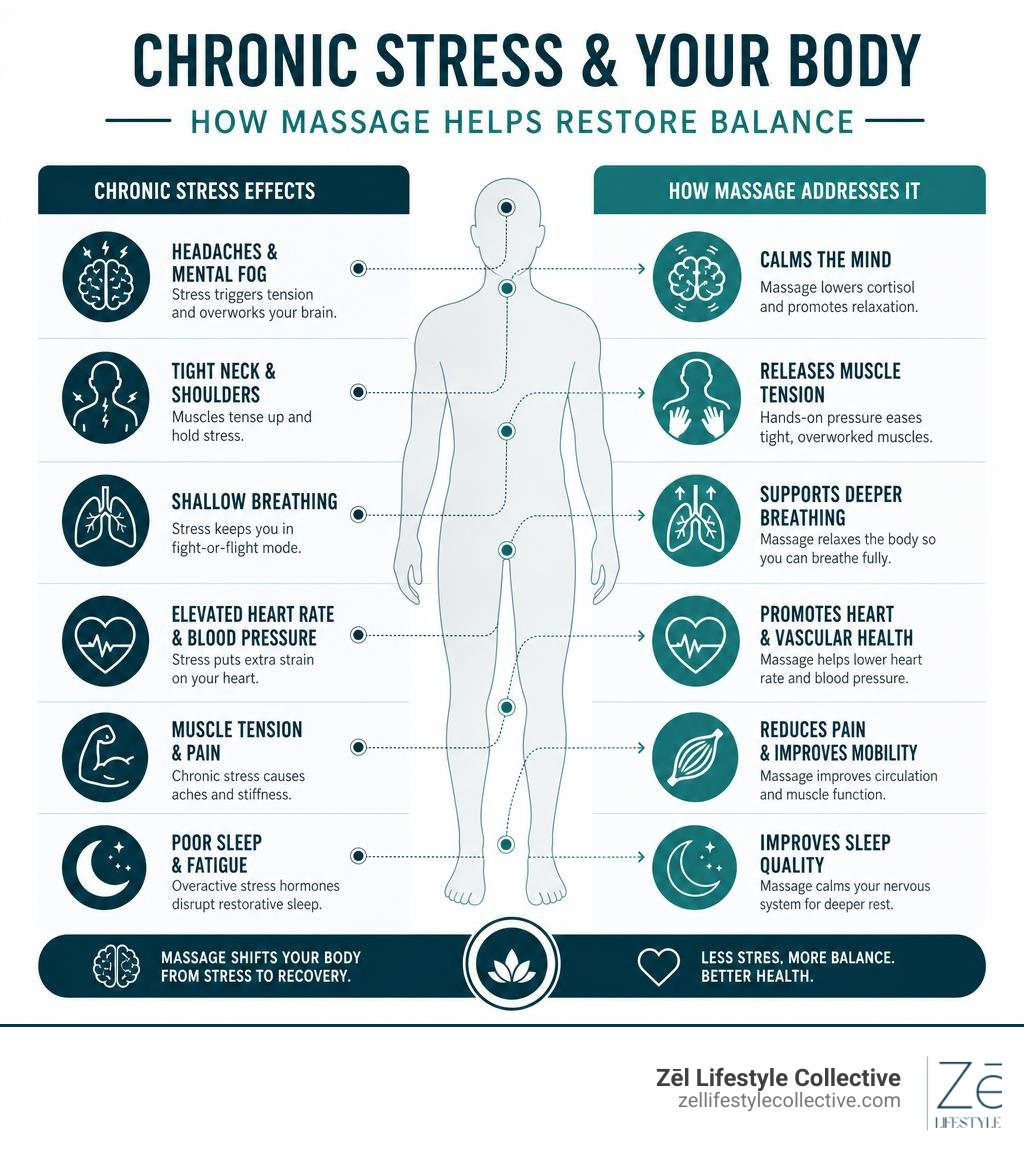
The Physiology of Stress and Its Impact on the Body
When we experience a stressor, our brain doesn't stop to ask whether we are being chased by a predator or simply staring at an overflowing work inbox. It reacts the exact same way. The sympathetic nervous system (SNS) instantly fires up, initiating the well-known "fight-or-flight" response.

During this process, the adrenal glands flood the bloodstream with adrenaline and cortisol. Adrenaline increases your heart rate and elevates your blood pressure, while cortisol—the primary stress hormone—mobilizes glucose to give your muscles immediate energy.
While this evolutionary mechanism is brilliant for short-term survival, modern life keeps this system turned "on" for days, weeks, or even months at a time. This chronic activation leads to a state of constant physical guarding. Your muscles brace themselves against perceived threats, a phenomenon known as muscle guarding. Over time, this constant bracing results in:
Persistent tension headaches and jaw clenching (TMJ discomfort)
Stiff neck and hunched shoulders (often referred to as "stress posture")
Shallow, chest-restricted breathing patterns
Persistent fatigue and emotional exhaustion
When your body remains locked in this defensive posture, it sends a continuous feedback loop of danger signals back to your brain, making it nearly impossible to mentally relax. Breaking this cycle requires more than just "thinking positive"—it requires a physical intervention to signal safety to your nervous system. For those navigating this cycle, finding structured avenues for Chronic Stress Relief is crucial to preventing long-term systemic illness.
The Vagus Nerve: The Body's Natural Stress Regulator
To understand how a massage for stress actually works on a physiological level, we have to look at the vagus nerve. As the longest cranial nerve in the body, the vagus nerve acts as the primary highway for the parasympathetic nervous system (PNS)—the "rest-and-digest" branch of your nervous system.
According to Polyvagal Theory, developed by Dr. Stephen Porges, our nervous system processes stress and safety through three distinct evolutionary stages:
Ventral Vagal State (Social Engagement & Calm): This is the optimal state of safety. When the ventral branch of the vagus nerve is active, your heart rate slows, your breathing deepens, your digestion functions properly, and you feel emotionally connected and relaxed. Ventral vagal impulses can override fight-or-flight chemistry within milliseconds—far faster than the 10 to 20 minutes it takes for stress hormones to naturally clear the bloodstream.
Sympathetic Mobilization (Fight-or-Flight): When a threat is perceived, the sympathetic nervous system takes over, preparing the body for active defense or escape.
Dorsal Vagal State (Shutdown/Freeze): If a stressor is overwhelming or inescapable, the dorsal branch of the vagus nerve triggers a shutdown response. This manifests as feeling physically numb, emotionally flat, deeply exhausted, or completely checked out.
Massage therapy acts as a direct physical portal to activate the ventral vagus nerve. By applying steady, intentional pressure to areas rich in vagal pathways—such as the neck, shoulders, and cranial base—a skilled therapist can help nudge a dysregulated, hyper-vigilant nervous system back into a state of ventral vagal safety. To dive deeper into how this highway of calm operates, you can read more about The Vagus Nerve, Stress Response, and the Power of Massage Therapy.
How Massage for Stress Restores Nervous System Balance
Many people view massage as a luxury or a temporary pampering session. However, the physiological shifts that occur during and after a session prove that massage is a legitimate, clinical intervention for nervous system regulation.

When you receive a massage, the physical manipulation of soft tissue sends immediate, calming sensory inputs to the spinal cord and brain. This touch-induced input triggers a cascade of chemical adjustments:
Hormonal Rebalancing: Peer-reviewed research demonstrates that massage therapy consistently reduces circulating cortisol levels by an average of 31%. At the same time, it boosts production of serotonin (the mood stabilizer) by about 28% and dopamine (the reward and motivation chemical) by roughly 31%.
Heart Rate Variability (HRV) Improvement: A landmark 2020 study demonstrated that just 10 minutes of massage created significant increases in heart rate variability. Higher HRV indicates a resilient, adaptable nervous system that can easily transition from stress back to calm.
Cardiovascular Recovery: Multiple studies, including a notable 2007 study on patients with clinically diagnosed hypertension, showed that regular back massages significantly lower both systolic and diastolic blood pressure. This builds on earlier findings from 1999 that noted immediate blood pressure reductions in hypertensive individuals following massage.
To visualize how these physical changes translate to your daily state of being, consider the stark differences between these two operating modes of your nervous system:
Sympathetic State (Fight-or-Flight) Parasympathetic State (Ventral Vagal Calm) Elevated heart rate & shallow breathing Slowed heart rate & deep diaphragmatic breathing High cortisol and adrenaline levels Lowered cortisol; elevated serotonin & dopamine Muscle guarding and systemic tension Soft, pliable muscles and open posture Digestion and immune functions suppressed Digestion, tissue repair, and immune response active Mindset: Hyper-vigilant, anxious, or overwhelmed Mindset: Present, calm, and emotionally grounded
By shifting your biology from the left column to the right, a professional session acts as a profound reset button. For a comprehensive look at how these physiological benefits support your long-term health, explore our Massage Therapy Complete Guide 2026.
Key Techniques Used in Massage for Stress Relief
Not all massages are created equal when it comes to managing chronic stress. A skilled therapist will utilize a variety of specialized techniques to help your body safely let go of its defensive posture:
Kneading (Petrissage): Working slowly and deeply through major muscle groups, kneading helps reduce localized muscle spasms and improves circulation. Slow kneading is excellent for deep-seated physical tension, while lighter, faster kneading can stimulate surface circulation.
Stroking (Effleurage): Long, gliding strokes are performed with flat hands to soothe sensory nerve endings, improve lymphatic flow, and keep the nervous system from feeling startled. Maintaining continuous contact is essential to prevent sudden transitions that might trigger a startle response in a highly stressed client.
Tapping (Tapotement): Rhythmic, cupped tapping can be used toward the end of a session to gently draw blood flow back to stiff areas and help ground the client’s physical awareness.
Vibrational and Compression Work: Gentle, sustained compression helps clients feel the physical boundaries of their bodies, providing a comforting sense of safety and grounding.
In addition to these physical techniques, modern stress-relief bodywork heavily emphasizes trauma-informed care. A trauma-informed approach means creating a highly predictable, safe environment where the client is in complete control of the pacing, pressure, and boundaries.
When the body finally feels entirely safe, it may experience what is known as an energy discharge. In the wild, animals naturally shake or tremble to release stress hormones after surviving a threat. Humans, however, tend to suppress this response. During a deeply relaxing massage, it is not uncommon for a client to experience a sudden release of blocked energy. This can manifest physically as:
Involuntary sighing or sudden deep breaths
Gentle shivering, trembling, or muscle twitches
Sudden shifts in body temperature (feeling very warm or chilly)
An unexpected wave of emotion
These are completely normal, healthy signs that your nervous system is successfully discharging stored survival energy. To understand how this physical release can help resolve deeper emotional patterns, you can read about Emotional Trauma Release Therapy.
When seeking professional care, it is essential to choose practitioners who understand these delicate physiological balances and prioritize a safe, regulated environment. Working with a qualified clinical team ensures that your body's unique stress patterns are addressed with the appropriate techniques and care.
Why Swedish Massage for Stress is Highly Effective
For pure stress reduction and nervous system down-regulation, Swedish massage is often the gold standard. Utilizing light-to-medium pressure and long, rhythmic, sweeping strokes, Swedish massage is designed to soothe the sensory receptors in your skin.
This style of bodywork is often described as the physical equivalent of an hour-long hug. It fulfills our fundamental human need for safe, nurturing, comforting touch. Because it does not challenge the muscles with intense, painful pressure, it avoids triggering any defensive muscle guarding, making it an excellent choice for mental decompression and burnout recovery.
Deep Tissue Massage for Stress and Muscle Tension
While Swedish massage is perfect for overall relaxation, deep tissue massage is highly effective when stress has manifested as chronic physical pain, stubborn "knots," or localized trigger points. When we are chronically stressed, our shoulders tend to creep up toward our ears, creating a hunched posture that strains the upper back and neck.
Deep tissue work focuses on realigning the deeper layers of muscle and connective tissue. However, a word of caution: if you are severely burned-out or emotionally exhausted, overly aggressive deep tissue work can actually backfire by triggering more muscle guarding. A skilled therapist will always blend deeper, targeted work with slow, soothing strokes to ensure your nervous system stays calm. If your stress-induced tension has settled primarily in your lower or upper back, you can read more about how targeted work helps in our guide on Massage for Back Pain.
Integrating Massage into a Comprehensive Wellness Routine
To get the most out of your sessions, massage for stress should not be treated as a once-a-year emergency fix when you are already at your breaking point. Instead, think of it as a consistent, proactive investment in your baseline well-being.
At Zēl Lifestyle Collective in Tallmadge, Ohio, we believe in a root-cause, integrative approach to health. While massage is an incredible tool for calming the body, combining it with other holistic modalities can multiply its effectiveness:
Chiropractic Care & Acupuncture: Aligning the spine and balancing the body's energetic pathways helps remove physical stressors from the nervous system.
Functional Medicine & Nutrition: Addressing underlying inflammation, gut health, and hormonal imbalances ensures your body has the biochemical resources it needs to handle daily pressures.
Neuro Emotional Techniques: For stress that is deeply tied to emotional patterns, we utilize specialized therapies like the Neuro Emotional Technique (NET) to identify and resolve the physical stressors associated with unresolved emotional events.
To maintain your sense of calm between professional bodywork sessions, try incorporating these simple, daily stress-management practices into your routine:
Slow, Diaphragmatic Breathing: Spend 5 minutes breathing in for a count of 4 and out for a count of 6 to stimulate the vagus nerve.
Mindful Self-Massage: Spend a few minutes using your fingertips to massage your scalp, jaw, and the back of your neck before bed.
Targeted Foam Rolling: Use a foam roller or a massage ball on your upper back and shoulders for 5 to 10 minutes to break up daily screen-time tension.
Consistent Sleep Hygiene: Turn off screens 1 hour before bed and practice a quick wind-down routine to signal to your brain that it is safe to sleep.
Frequently Asked Questions about Massage for Stress
How often should you get a massage for stress relief?
For optimal results, the frequency of your sessions should match your current stress levels. If you are going through an incredibly demanding period, navigating burnout, or dealing with high anxiety, we often recommend a "loading phase" of weekly sessions for 4 to 6 weeks. This consistent input helps train your nervous system to remember what safety feels like. Once your baseline of calm is restored, a maintenance session every 2 to 4 weeks is highly effective for keeping stress from accumulating.
Why do I feel tired or emotional after a massage?
It is incredibly common to feel "massage drunk," deeply tired, or unexpectedly emotional after a session. When your body finally shifts out of a chronic fight-or-flight state, your nervous system is finally given "permission to exhale." The tiredness you feel is your body catching up on deferred rest. Emotional releases or temporary tearfulness are also completely normal signs of energy discharge as your muscles let go of stored emotional tension. Be sure to drink plenty of water and allow yourself a quiet evening to rest and integrate.
Can massage help with anxiety and sleep issues?
Yes, absolutely. By lowering cortisol and boosting serotonin (which is a precursor to melatonin, the sleep hormone), massage directly supports the biological conditions needed for deep, restorative sleep. Regular sessions help quiet the mental chatter and reduce the physical restlessness that keeps you tossing and turning, making it a powerful natural support tool for anxiety and insomnia.
Conclusion
Stress may be an inevitable part of modern life, but letting it break down your physical and mental health is not. By understanding the neurobiology of stress and actively utilizing therapeutic touch, you can take control of your nervous system and build a calmer, more resilient baseline.
At Zēl Lifestyle Collective in Tallmadge, Ohio, we specialize in providing personalized, holistic, root-cause treatments designed to help you thrive. Whether you are seeking deep relaxation, pain relief, or a comprehensive approach to chronic stress, our team is here to support you.
Ready to give your body and mind the space to finally exhale? Book your personalized Massage Therapy session with us today at our Tallmadge clinic and start your journey toward lasting wellness.